
Electronic Portal Development Company in Dubai for Custom Web Solutions for Businesses
Having a custom electronic portal has become an important step for businesses that need to organize their internal transactions and provide interactive services to customers, employees, and suppliers online. Instead of relying solely on a website that displays company information and services, an electronic portal creates an integrated digital environment where each user can access the services, data, and functions assigned to them according to their permissions.
If your business is looking for an electronic portal development company in Dubai to build a solution that suits its operations, it is important to choose a team capable of analyzing your workflows and transforming them into clear, easy-to-use digital functions. The portal can include separate accounts for customers, employees, and suppliers, with different permissions for each user group, as well as an administrative dashboard for managing accounts, data, requests, and operations from one place.
An electronic portal differs from a corporate website because it does more than display content. It provides interactive services that users can access through their accounts, such as submitting requests, tracking their status, updating information, and accessing authorized documents or data. The portal can also be integrated with the company's databases and existing systems to facilitate information exchange and reduce manual procedures.
Top1Markting provides analysis, design, programming, and development services for corporate electronic portals, starting with requirements assessment and defining user types and permissions, then building the required functions, dashboards, and integrations. You can explore the scope of a website development company in Dubai for website development services, or learn more about custom website programming in Dubai when your project requires specialized functions built around your company's actual workflows.
The goal is to develop an electronic portal that offers more than a professional appearance. It should help organize operations, simplify access to services, and improve the user experience, while remaining adaptable as your business requirements evolve.
Customer Portal Development in Dubai for Account and Service Management
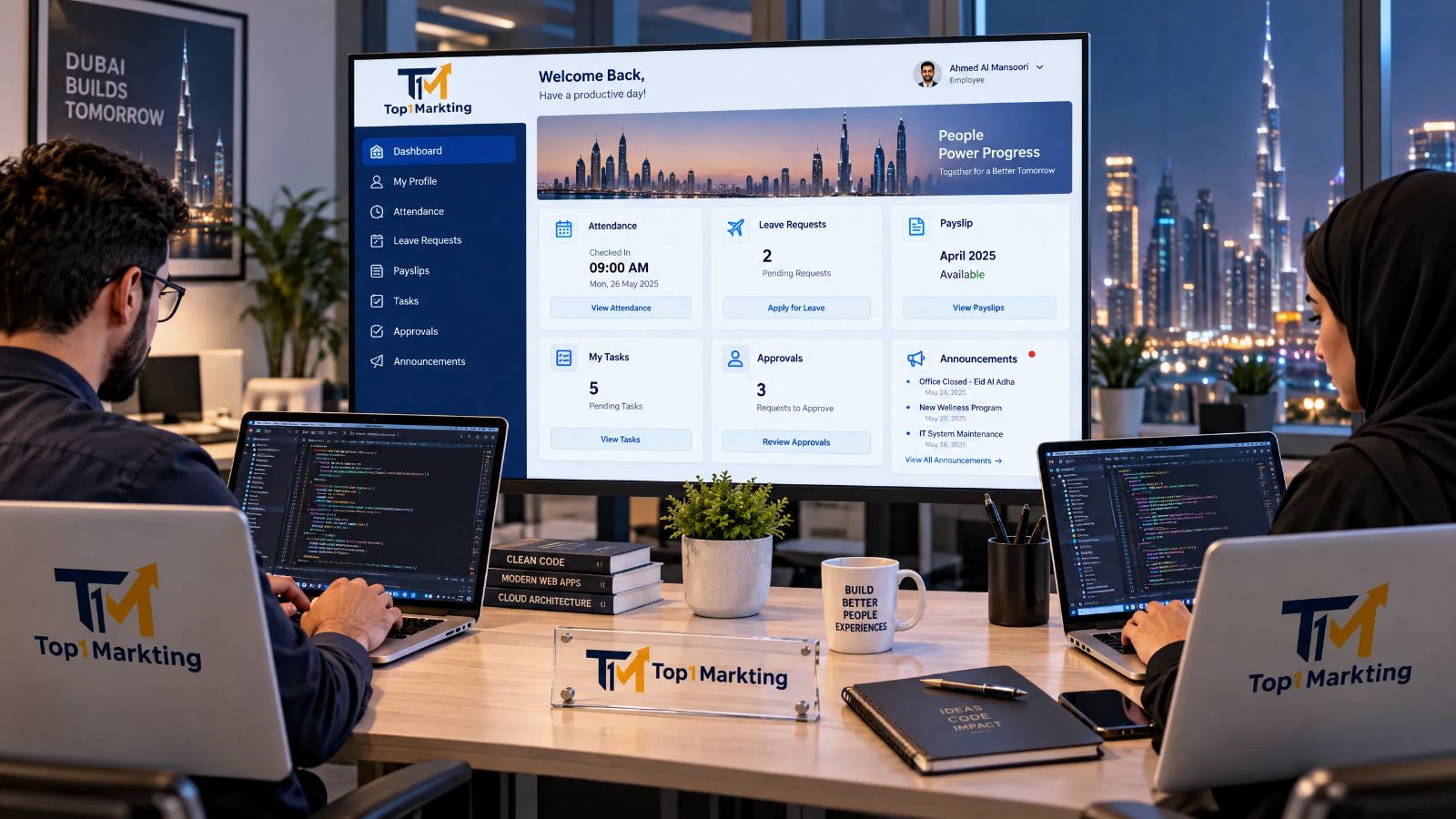
Businesses that deal with a large number of customers need an organized way to let each customer access their services and track transactions without relying on manual communication every time. This is where customer portal development in Dubai becomes important. A custom electronic platform can provide each customer with an individual account through which they can manage their information, access services, and track related requests and documents.
A customer portal helps organize the relationship between a company and its customers through secure login, account-specific data and functions, and an administrative dashboard that allows the team to manage accounts, requests, and updates. The portal can be designed around the company's business activities, whether it provides consulting, commercial, operational, or request-based electronic services.
Customer Portal Development in Dubai with Login and Account Management
Developing a customer portal in Dubai requires an account management system that allows each customer to access their own private space, rather than relying only on a contact form that sends information to the company. Account functions may include:
-
Creating a separate account for each customer using the required registration information.
-
Logging in and resetting passwords when necessary.
-
Updating personal details and contact information.
-
Displaying information and data associated with each customer.
-
Managing accounts and editing their information through the administrative dashboard.
-
Controlling account status according to the company's procedures.
This type of development provides customers with a more organized experience while enabling the company to manage accounts and monitor information through a centralized system.
Customer Service Portal Development in Dubai for Request and Transaction Tracking
A customer service portal in Dubai can be programmed to facilitate electronic transactions, allowing customers to submit requests and track their progress without repeatedly contacting the company's team for updates.
Functions that can be implemented within the portal include:
-
Submitting requests for services electronically.
-
Tracking each request according to the approved workflow stages.
-
Viewing previous requests and transaction history.
-
Attaching required files and documents.
-
Receiving notifications when a request status changes.
-
Displaying updates and notes related to each transaction.
The required functions are determined according to the services provided by the company. Internal approval or review stages can also be added when required by its workflows.
Customer Dashboard Design in Dubai for Displaying Personal Data and Services
The customer dashboard is an essential part of an electronic portal because it provides an organized interface through which customers can access their information and services. At the same time, it helps the company display the appropriate information for each account according to its assigned permissions.
The dashboard may include:
-
A separate page for each customer after login.
-
A display of previous and current requests.
-
Access to files and documents associated with the account.
-
Tracking the status of services and transactions.
-
Displaying personal information and allowing permitted details to be updated.
-
Providing different functions according to account type or customer category.
The dashboard can be connected to the company's service management system to update data and request statuses in an organized manner. You can also benefit from experience in service website design in Dubai when organizing the services displayed to customers and determining how they can access them through the portal.
Employee Portal Development in Dubai for Managing Internal Services and Tasks
Organizations with multiple employees and departments need to organize access to internal data and procedures, particularly when they rely on requests, approvals, and document exchange between teams. Employee portal development in Dubai makes it possible to create an internal platform that gives each employee an individual account to access information and functions related to their job responsibilities.
The portal can be developed to bring together employee data, internal services, and administrative requests in one interface, with usage permissions determined according to each department and job responsibility. This helps reduce reliance on manual procedures and organize transaction tracking within the organization.
Employee Portal Development in Dubai with Separate Login Accounts
Employee portal development in Dubai is based on creating a dedicated account for each employee, allowing them to access their information and permitted functions without viewing information outside their authorization level.
Account functions may include:
-
Creating separate employee accounts.
-
Recording each employee's personal and employment information.
-
Providing secure portal login.
-
Displaying files and information associated with the employee.
-
Defining the functions available to each account according to its permissions.
-
Managing accounts and updating their information through the administrative dashboard.
The employee interface can be customized according to the department or nature of the job, ensuring that each employee sees the tools and services needed to complete their tasks.
Employee Request Portal Development in Dubai for Tracking Internal Procedures
An employee request portal in Dubai can transform recurring administrative procedures into electronic transactions that can be submitted, reviewed, and tracked through the system.
Functions that can be added include:
-
Submitting leave requests electronically.
-
Sending administrative approval requests.
-
Uploading required documents and files.
-
Tracking the status of each request.
-
Receiving approval or rejection notifications.
-
Displaying notes and updates related to the request.
Each request workflow can be configured according to the company's administrative structure. For example, a request may move from the employee to their direct supervisor and then to the relevant department, depending on the approved procedures.
Employee Administrative Portal Development in Dubai with Task and Permission Distribution
Some companies need functions that go beyond login and request submission to include task organization and responsibility tracking across departments. An employee administrative portal in Dubai can therefore include:
-
Assigning tasks according to departments and teams.
-
Defining responsibilities for each user.
-
Tracking task and request statuses.
-
Displaying authorized information to each employee.
-
Organizing administrative procedures between departments.
-
Providing different interfaces for users and managers.
These functions can be connected to an administrative dashboard that helps supervisors monitor workflows and manage users and permissions. Such solutions fall under the services of a business systems programming company in Dubai, particularly when an organization needs a custom system to organize its internal operations.
Internal Corporate Portal Development in Dubai for Organizing Departments and Operations
Companies with multiple departments need a unified way to organize information and procedures and facilitate data transfer between teams. Internal corporate portal development in Dubai makes it possible to create a platform specifically for the organization's employees and departments, bringing together files, data, requests, and tasks in one digital environment.
An internal portal differs from a company's public website because it is designed for authorized users. Access to information and functions can be defined for each department or employee. It can also be developed according to the organization's administrative structure and daily operational requirements.
Internal Corporate Portal Development in Dubai to Connect Departments and Teams
An internal corporate portal in Dubai can be developed to facilitate information exchange and organize transactions between different departments, rather than relying on scattered files or disconnected communication channels.
Its functions may include:
-
Creating accounts for departments and teams.
-
Organizing access to shared data.
-
Tracking transactions between departments.
-
Sharing files and documents.
-
Defining permissions for each department.
-
Organizing the movement of requests and information between teams.
The way data and functions are displayed can be customized according to each department's responsibilities, helping organize work without giving all users access to every piece of information.
Administrative Portal Programming in Dubai to Centralize Data and Internal Procedures
An administrative portal helps bring internal data and procedures together on one platform, with tools for managing records, monitoring operations, and handling approvals.
Functions that can be implemented include:
-
Organizing administrative records and data.
-
Displaying centralized data according to user permissions.
-
Tracking internal operations and procedures.
-
Managing approval and review requests.
-
Preparing administrative reports.
-
Tracking transaction statuses between departments.
The design of these functions depends on the internal procedures the company wants to organize, ensuring that the portal supports actual workflows instead of imposing unsuitable steps on employees.
Enterprise Portal Development in Dubai to Facilitate Communication Between Departments
An enterprise portal can include functions that help organize internal communication and information sharing between employees and departments, such as:
-
Displaying internal updates and announcements.
-
Managing and sharing documents.
-
Tracking shared tasks and procedures.
-
Organizing information specific to each department.
-
Making shared data available to authorized users.
-
Providing a unified interface for accessing internal services.
When more advanced administrative functions are needed, the portal can be connected to custom system programming solutions in Dubai to develop an integrated system suited to the company's operations and databases.
Supplier and Partner Portal Development in Dubai for Managing Business Transactions
Companies that work with multiple suppliers and partners need an organized way to manage registrations, requests, documents, and commercial transactions. Supplier portal development in Dubai helps create an electronic platform that allows each supplier or partner to access their account and track transactions with the company according to defined permissions.
Instead of exchanging files and data through different channels, a portal can be developed to bring together supplier information, purchase orders, invoices, and reports in one place, with administrative tools for reviewing and updating data and tracking transaction statuses. Portal functions can be customized according to the nature of the business and its collaboration processes with suppliers and partners.
Supplier Portal Development in Dubai for Account Registration and Data Management
A supplier portal in Dubai can be developed to simplify new supplier registration and organize their data and files through separate accounts. This helps the company manage its supplier database, review information, and update records.
Functions may include:
-
Allowing suppliers to register and submit applications to join.
-
Reviewing registration details and verifying that information is complete.
-
Managing supplier files and related documents.
-
Updating contact details and commercial information.
-
Classifying suppliers according to their business activities or product and service categories.
-
Managing supplier account status through the dashboard.
Review and approval stages can also be added before activating an account, according to the company's procedures.
Supplier Request Portal Programming in Dubai for Purchase Order Tracking
Supplier request portal programming in Dubai helps organize transactions related to purchase orders, invoices, and documents, allowing suppliers to track their transactions through their electronic accounts.
Functions that can be implemented include:
-
Submitting requests related to commercial transactions.
-
Viewing purchase orders and tracking their status.
-
Uploading required invoices and documents.
-
Updating transaction statuses according to workflow stages.
-
Viewing previous requests and transaction history.
-
Sending notifications when important updates occur.
The workflow can be customized to match the company's review and approval procedures, while allowing responsible employees to track transactions.
Partner Portal Development in Dubai for Sharing Data and Reports
Some companies need to provide partners with a dedicated online space that allows them to access information and documents related to their business collaboration. A partner portal in Dubai can be developed to provide each partner with an individual account, while defining the information they can view and the functions available to them.
The portal may include:
-
Creating separate accounts for partners.
-
Sharing authorized documents and files.
-
Displaying data associated with each partner.
-
Tracking shared transactions and requests.
-
Providing reports specific to each partner.
-
Managing information access permissions.
This helps organize data sharing and commercial transactions while maintaining information privacy and defining the access scope for each account.
Electronic Service Portal Development in Dubai for Delivering Online Services
Companies that want to provide their services electronically need solutions that allow customers to complete procedures, submit requests, and track them online. Electronic service portal development in Dubai makes it possible to transform traditional services into interactive procedures within a dedicated platform, rather than simply displaying service descriptions and contact details.
The portal can combine service information pages, user accounts, electronic forms, document management, and transaction tracking. Online payment can also be added when the nature of the service requires collecting fees over the internet.
Electronic Service Portal Development in Dubai for Online Request Submission
An electronic service portal in Dubai can be developed to allow customers to browse available services, select the appropriate service, and then submit a request through a dedicated electronic form.
Functions may include:
-
Displaying services and classifying them by type.
-
Explaining the requirements for each service.
-
Submitting requests through electronic forms.
-
Recording applicant information.
-
Attaching required files.
-
Sending requests to the relevant department for review.
-
Allowing users to track requests through their accounts.
Submission steps and required fields can be customized according to the company's procedures for each service.
Electronic Portal Programming in Dubai for Form and Document Management
Electronic services often require collecting information and attachments from customers. Therefore, an electronic portal in Dubai can be programmed with a system for managing forms and documents associated with each request.
Functions that can be implemented include:
-
Creating different forms according to service type.
-
Defining the required fields for each form.
-
Receiving files and documents electronically.
-
Linking each document to its request and owner.
-
Reviewing attachments through the administrative dashboard.
-
Requesting additional documents when necessary.
-
Organizing files and enabling authorized users to retrieve them.
This helps reduce disorganized document exchange and makes it easier for relevant employees to review requests.
Transaction Tracking Portal Development in Dubai with Request Status Updates
A transaction tracking portal in Dubai can provide customers with a clear way to identify the current stage of their requests, instead of repeatedly contacting the company for updates.
The portal may include:
-
A reference number for each transaction.
-
Displaying the current request status.
-
Defining review and execution stages.
-
Displaying notes or information required from the customer.
-
Updating transaction status through the administrative dashboard.
-
Sending notifications when a request moves to a new stage.
-
Maintaining a record of previous updates.
Transaction stages are determined according to the nature of the service, whether it requires document reviews, administrative approvals, or execution across several stages.
Electronic Payment Portal Programming in Dubai When Payment Collection Is Required
If the services provided require collecting fees, electronic payment functionality can be added to the service portal in Dubai. This allows customers to pay the required amounts using the payment methods supported by the selected payment gateway.
Functions may include:
-
Displaying the fees associated with the service.
-
Providing access to the approved payment method.
-
Recording the status of each payment transaction.
-
Linking the payment transaction to the relevant request or transaction.
-
Displaying payment history.
-
Issuing electronic payment confirmations according to available integration capabilities.
The choice of payment method and integration approach depends on the company's requirements and payment service provider. You can learn about the difference between informational websites and interactive portals through the website design in Dubai page. Keep in mind that a portal with accounts, permissions, and transactions requires functions programmed according to the project's requirements; it is not simply a page that displays services.
Request and Transaction Management Portal Development in Dubai for Companies and Organizations
When a company handles a large number of requests and transactions, manually tracking each one requires time and effort, particularly when several employees, departments, and execution stages are involved. Request management portal development in Dubai makes it possible to create a unified platform for receiving, classifying, distributing, and tracking transactions until completion.
The portal can be designed around the organization's workflow, allowing users to submit requests while the relevant employees review them and update their statuses through an administrative dashboard.
Request Intake Portal Development in Dubai with Transaction Classification
A request intake portal in Dubai can be developed to collect requests from customers, employees, or suppliers in one system, classifying them according to service type or the department responsible for handling them.
Functions may include:
-
Receiving requests through electronic forms.
-
Identifying and classifying request types.
-
Recording applicant information.
-
Attaching required documents.
-
Directing requests to the relevant department.
-
Creating a reference number for each request.
-
Saving requests in an organized database.
Forms and classifications can be customized according to the company's services and transaction requirements.
Request Tracking System Programming in Dubai with Multiple Processing Statuses
Companies need to know the current stage of each request and which employee or department is responsible for handling it. A request tracking system in Dubai can be programmed to define multiple transaction statuses according to the approved workflow.
Examples of functions include:
-
Registering a request when it is received.
-
Defining its review status.
-
Displaying requests that require additional information.
-
Tracking the approval stage.
-
Updating the execution status.
-
Recording completed or rejected requests.
-
Maintaining a history of status changes between stages.
Customers or employees can track the statuses they are authorized to view, while administrators can manage and update the stages through the dashboard.
Transaction Management Dashboard Design in Dubai by Employee and Department
An administrative dashboard helps organize transaction distribution and track the responsibilities of each employee or department, while displaying information according to user permissions.
It may include:
-
Displaying all requests according to access permissions.
-
Assigning transactions to employees.
-
Classifying requests by department or service type.
-
Tracking requests under review or execution.
-
Displaying delayed transactions or those requiring action.
-
Updating statuses and adding notes.
-
Tracking the history of actions taken on each request.
Different interfaces can be customized for managers, employees, and reviewers, ensuring that each user has access to the tools they need.
Request Reporting System Development in Dubai for Performance and Completion Tracking
A reporting system can be added to the request management portal in Dubai to help management monitor transaction volumes, completion stages, and distribution across departments.
Possible reports include:
-
Number of requests received during a specific period.
-
Completed and in-progress requests.
-
Pending requests or those requiring additional information.
-
Transaction distribution by department and employee.
-
Average request processing time when sufficient data is available.
-
Detailed reports by service type or time period.
Reporting indicators are determined according to available data and management objectives, helping evaluate workflows and support operational decisions.
Electronic Portal Development in Dubai for Companies with Multiple Branches
Companies with multiple branches need a system that allows them to monitor data and operations centrally while giving each branch independent permissions to manage its daily activities. Developing a portal for multi-branch companies in Dubai makes it possible to create a unified platform connecting branches with headquarters and enabling information and report tracking without eliminating each branch's independence in performing its tasks.
The portal can be customized to suit the company's operational structure, whether all branches provide the same services or differ in their activities, employees, and requirements.
Unified Portal Development for Company Branches in Dubai to Manage Centralized Data
A unified portal for company branches in Dubai can be developed to collect essential data in a central database while organizing information display according to branch, department, and user permissions.
Functions may include:
-
Registering branches and managing their information.
-
Displaying branch data through the main administrative dashboard.
-
Organizing requests and transactions by branch.
-
Standardizing selected shared procedures and data.
-
Tracking updates received from branches.
-
Providing centralized reports to the relevant management team.
The company can define which data is shared between branches and which information remains specific to each branch according to its policies.
Branch-Specific Permission Programming in Dubai with Dedicated Dashboards
Companies with multiple branches need to distribute permissions according to each branch's responsibilities. A separate permission system can be programmed for each branch in Dubai, with a dashboard displaying the data and functions available to its users.
Functions that can be implemented include:
-
Creating accounts for branch managers and employees.
-
Defining permissions for each branch.
-
Customizing a dashboard for each branch manager.
-
Controlling access to shared data.
-
Allowing updates to branch-specific information.
-
Tracking operations performed by users.
This helps organize centralized management while maintaining clear responsibilities within each branch.
Operational Reporting Development for Company Branches in Dubai and Performance Comparison
Operational reports for company branches in Dubai can help management track activities, requests, and operations recorded by each branch, with the option to compare branches according to specific indicators.
Reports may include:
-
Request and transaction volumes for each branch.
-
Number of completed and in-progress operations.
-
Task distribution among employees.
-
Tracking performance indicators defined by management.
-
Comparing branch results over specific periods.
-
Generating detailed reports by branch or department.
Report configuration depends on the nature of the data recorded by the portal and the indicators the company wants to monitor.
Connecting Company Branches in Dubai to a Central Database
Company branches can be connected to a central database to facilitate information exchange and standardize the data management needs of headquarters.
This includes:
-
Organizing shared data between branches.
-
Linking portal operations to the database.
-
Defining access and update permissions.
-
Reducing duplicate data entry.
-
Providing updated information to authorized users.
-
Supporting centralized reporting and operational tracking.
The connection method is designed according to the company's technical infrastructure and existing systems, while taking data protection and business continuity requirements into account.
Account and User Management Portal Programming in Dubai with Multiple Permission Levels
Electronic portals that include customers, employees, suppliers, and partners require a clear system for managing accounts and permissions, ensuring that each user can access the functions and data appropriate to their role. Therefore, programming an electronic portal with permissions in Dubai includes developing a system for managing users, roles, and access levels, with the ability to track operations performed within the portal.
A permission system does more than create different accounts. It defines what each user can view, add, edit, or delete according to the company's rules.
Creating Multiple User Accounts Within an Electronic Portal in Dubai
Multiple accounts can be created within an electronic portal in Dubai to accommodate different user groups, such as:
-
The system administrator responsible for managing the portal.
-
The department manager responsible for monitoring departmental operations.
-
The employee responsible for completing assigned tasks.
-
The customer who accesses their services and requests.
-
The supplier who tracks their information and purchase orders.
-
The partner who views authorized information and reports.
Account information, interfaces, and available functions can be customized for each group. Accounts can also be activated, deactivated, or updated through the administrative dashboard.
Role and Permission System Programming for Electronic Portals in Dubai
A role and permission system can be programmed for electronic portals in Dubai to define each user's access scope instead of granting all accounts the same permissions.
Permission levels may include:
-
Permission to read and view data.
-
Permission to add new records or requests.
-
Permission to edit data and information.
-
Permission to delete records according to defined controls.
-
Permission to approve or reject requests.
-
Permission to manage user accounts.
-
Permission to view reports and administrative data.
These permissions can be linked to job roles and departments, with the option to customize exceptions when necessary according to company policy.
Developing Separate User Dashboards in Dubai According to Access Levels
Separate dashboards help provide an appropriate experience for each user group. Customers do not see administrative functions intended for employees, and employees cannot access data outside their assigned permissions.
The portal can include:
-
A system administrator dashboard for managing portal settings and users.
-
A department manager dashboard for monitoring requests and employees within their department.
-
An employee dashboard for viewing assigned tasks and transactions.
-
A customer dashboard for tracking their account, requests, and services.
-
A supplier dashboard for managing information and tracking transactions.
-
A partner dashboard for accessing authorized documents and reports.
The content and tools of each dashboard can be customized according to user requirements and project needs.
Managing User Activity and Operation Logs Within a Dubai Electronic Portal
An operation log can be added to a Dubai electronic portal to help management review important user activities and identify changes made to data and records.
The activity log may include:
-
Recording important operations performed by users.
-
Identifying the account that made each change.
-
Recording the operation type, such as adding, editing, or deleting.
-
Saving the time when the operation was performed.
-
Reviewing changes made to important records.
-
Providing operation logs to authorized administrators.
This helps improve portal usage monitoring and clarify responsibilities, with the option to apply additional controls to sensitive operations according to company requirements.
Electronic Portal Development in Dubai Integrated with CRM Systems for Customer Management
Companies that use customer relationship management systems need to connect their data and electronic services in one environment. This allows customers to access their accounts and track requests while the company's team manages information through its existing CRM system. Developing a portal integrated with CRM in Dubai makes it possible to create an electronic interface connected to the customer management system instead of building a separate platform that requires independent data entry and tracking.
The integration process can be customized according to the existing system and required functions, such as synchronizing customer data, displaying transaction history, tracking requests, and organizing communication between customers and the company's team.
Connecting a Customer Portal to a CRM System in Dubai for Customer Data Synchronization
A customer portal can be connected to a CRM system in Dubai to exchange account data and customer-related information, helping reduce duplicate data entry and organize information access through the electronic interface.
Integration functions may include:
-
Synchronizing customer data between the portal and CRM system.
-
Linking each customer account to its corresponding CRM record.
-
Updating contact information and permitted data.
-
Displaying customer-related information according to access permissions.
-
Organizing the addition of new customers to the CRM database.
-
Defining the data update process between the two systems.
The synchronization direction and exchangeable data are determined according to the capabilities of the existing CRM system and the company's requirements.
Developing a Customer Interface Connected to CRM Records in Dubai
A customer-facing electronic interface connected to CRM records in Dubai can be developed, allowing each customer to log in and access information and services associated with their account without viewing other customers' data.
The interface may include:
-
Displaying account information connected to the CRM system.
-
Showing transaction history that is authorized for display.
-
Tracking requests and inquiries.
-
Updating personal information according to permissions.
-
Sending new inquiries to the company's team.
-
Displaying services or offers associated with the customer's account when needed.
The interface is designed according to the required user experience, with each account linked to the correct customer record within the relationship management system.
Tracking Requests and Communication Through a CRM Portal in Dubai
A CRM portal in Dubai can be developed to facilitate request tracking and communication between customers and the company's team, while linking updates to customer records within the system.
Functions that can be implemented include:
-
Receiving customer requests through the portal.
-
Linking each request to the customer's CRM account.
-
Tracking request status and processing stages.
-
Recording inquiries and customer-related communications.
-
Displaying updates authorized for sharing with the customer.
-
Sending notifications when important changes occur.
-
Providing a history of previous requests and transactions.
This helps bring communication information and requests together in one context instead of distributing them between the portal and the customer management system without integration.
Customizing CRM Portal Functions in Dubai According to Company Procedures
Companies have different requirements depending on their business activities and customer interaction processes. Therefore, CRM portal functions in Dubai can be customized to match actual workflows.
Customization may include:
-
Designing different types of customer accounts.
-
Defining the information displayed within each account.
-
Creating customized request and inquiry forms.
-
Linking requests to workflow stages within CRM.
-
Customizing notifications and alerts.
-
Developing monitoring dashboards for management and customer service teams.
-
Defining access and editing permissions.
-
Connecting the portal to additional functions according to project requirements.
Integration depends on the capabilities of the CRM system in use and the availability of the required APIs and permissions, ensuring that the portal works compatibly with the existing system.
Electronic Portal Development in Dubai Integrated with ERP Systems for Operations Management
Some companies need to make operational data from their ERP systems available through a custom electronic portal, allowing customers, employees, or suppliers to access authorized information without directly interacting with the internal system. Developing a portal integrated with ERP in Dubai makes it possible to create a web interface that exchanges data with the enterprise resource planning system according to the permissions and functions defined by the company.
Integration may include data related to requests, inventory, purchasing, suppliers, and other operational information, while ensuring that financial or administrative data is only displayed to authorized users.
Connecting a Company Portal to an ERP System in Dubai for Data Exchange
A company portal can be connected to an ERP system in Dubai to exchange information between the electronic platform and the operational system, helping standardize data and reduce the need to enter it manually in multiple places.
Integration functions may include:
-
Retrieving required data from the ERP system.
-
Sending requests or updates to the system when necessary.
-
Linking user accounts to the appropriate records.
-
Defining the data that can be displayed through the portal.
-
Organizing information updates between the two systems.
-
Displaying operation results according to user permissions.
The integration method is determined according to the ERP system's architecture and available integration capabilities.
Displaying Order and Inventory Data in an ERP Portal in Dubai
A portal integrated with an ERP system in Dubai can be developed to display order and inventory data that the company needs to make available to authorized users.
Functions may include:
-
Displaying order data associated with an account.
-
Tracking order statuses and execution stages.
-
Displaying inventory information approved for sharing.
-
Showing product availability updates when data is available.
-
Linking orders to internal system records.
-
Defining the level of detail displayed to each user group.
These functions make operational information available through an easy-to-use interface while keeping the management of core data within the approved ERP workflow.
Developing a Supplier Portal Integrated with ERP in Dubai
A supplier portal integrated with ERP in Dubai can be developed to facilitate the tracking of commercial transactions, purchase orders, and invoices through separate supplier accounts.
Functions may include:
-
Registering suppliers and linking their accounts to system records.
-
Displaying authorized purchase orders.
-
Tracking request and transaction statuses.
-
Uploading invoices and documents.
-
Displaying transaction updates.
-
Showing commercial data associated with each supplier.
-
Organizing supplier permissions within the portal.
These functions can be connected to purchasing, review, and approval procedures within the ERP system, according to the capabilities of the existing platform.
Data Synchronization Between an Electronic Portal and ERP System in Dubai
Some projects require data synchronization between an electronic portal and an ERP system in Dubai, ensuring that the required updates appear in both systems according to a defined process.
The synchronization process may include:
-
Identifying the data that needs to be exchanged.
-
Defining the system responsible for each data type.
-
Organizing information update timing.
-
Handling data transfer failures.
-
Reviewing exchanged data.
-
Preventing duplicate records through the integration design.
-
Monitoring synchronization operations.
The capabilities of the existing system must be assessed before determining the implementation method, because integration depends on the availability of APIs, required permissions, database structure, and the technical infrastructure in use.
API Development for Connecting Electronic Portals in Dubai with External Systems
When a company already has systems or databases and wants to build a new electronic portal, it may need API development to enable data exchange between the portal and external systems. API programming for electronic portals in Dubai provides a way to organize communication between applications and services, allowing the portal to use data and functions available in connected systems.
Integration APIs are defined according to project requirements, the types of systems in use, and the data that needs to be exchanged, while taking permissions, verification mechanisms, and secure communication into account.
Developing APIs for Data Exchange Between Corporate Portals in Dubai and External Systems
APIs can be developed to exchange data between corporate portals in Dubai and external systems, allowing the portal to send and receive information according to defined rules.
Examples of functions include:
-
Sending request data to the connected system.
-
Receiving account and service information.
-
Retrieving data required for display within the portal.
-
Updating transaction statuses.
-
Connecting portal functions to external applications.
-
Organizing communication processes and request validation.
-
Defining the data available for each integration operation.
APIs are designed according to the system's nature and required operations, whether the integration involves CRM, ERP, or other applications.
Connecting Databases to Electronic Portals in Dubai According to Project Requirements
An electronic portal can be connected to the company's databases or existing systems when information needs to be displayed or updated through the web interface.
This includes:
-
Reviewing the existing database structure.
-
Identifying the required tables and data.
-
Organizing information access methods.
-
Linking data to user accounts.
-
Defining read and update permissions.
-
Processing data before displaying it within the portal.
-
Testing integration compatibility with the required functions.
The connection must be implemented in a way that suits the system's technical architecture, while avoiding uncontrolled direct access to sensitive databases.
Developing Custom Integrations for Electronic Portals in Dubai
A company may need more than one integration within its portal, such as connecting to a customer management, inventory, accounting, payment, or other internal system.
Custom integrations for electronic portals in Dubai may include:
-
Connecting the portal to CRM systems.
-
Integrating with ERP systems.
-
Connecting electronic payment services when needed.
-
Connecting to inventory and order management systems.
-
Integrating notification delivery services.
-
Connecting company applications and databases.
-
Developing data exchange functions according to business procedures.
The required integrations are determined according to the systems used by the company and the available integration capabilities, avoiding unnecessary connections within the project.
Testing Data Exchange Between Company Systems in Dubai
Before an integration goes live, data exchange between the portal and connected systems must be tested to ensure that functions operate according to the defined requirements.
Testing may include:
-
Verifying data transmission and reception.
-
Reviewing the accuracy of exchanged information.
-
Testing access permissions.
-
Testing successful and failed connection scenarios.
-
Verifying how incomplete data is handled.
-
Testing record updates and duplicate prevention.
-
Reviewing error messages and integration logs.
Testing helps identify integration issues before the portal is launched to users, with the option to improve the integration according to the test results.
Top1Markting provides programming and development services for custom solutions that require functions and integrations beyond traditional websites. You can explore custom website programming in Dubai when you need to develop web functions according to project requirements, as well as system programming services in Dubai for projects that require interconnected systems and company operations management.
An integration project begins by analyzing existing systems and identifying the required data and functions. The next steps involve reviewing available APIs and permissions, then designing and testing the communication process before deployment.
Difference Between an Informational Website and an Electronic Portal in Dubai for Businesses
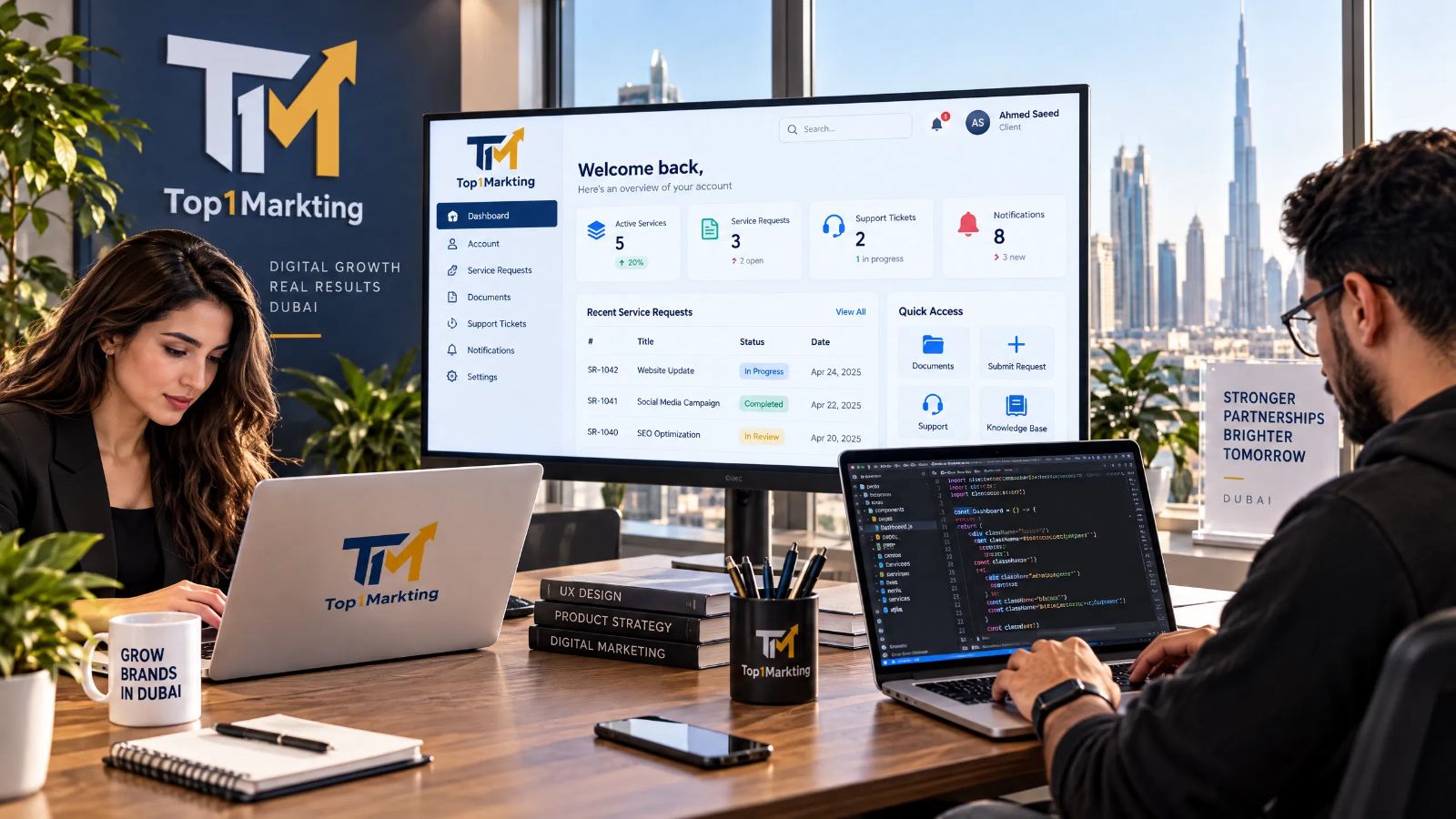
When considering the development of a company's digital presence, it may not be immediately clear whether the business needs an informational website to display its services or an electronic portal that allows customers and employees to perform tasks and track transactions. The choice depends on the company's business activities, how it interacts with customers, and its need to manage data and operations online.
An informational website focuses on presenting company information and services and receiving inquiries. An electronic portal, on the other hand, provides interactive functions such as login, account management, file management, and request tracking. A custom software system is more suitable when a company needs to manage interconnected operational procedures or connect multiple departments and systems within one working environment.
Therefore, it is important to define the intended use before starting the project, ensuring that the company receives the appropriate technical solution without developing unnecessary functions or relying on a basic website that does not meet its operational requirements.
When Is an Informational Website Sufficient for a Company in Dubai to Display Services and Information?
An informational website is suitable for companies in Dubai when the main objective is to present the business professionally and display the services and information customers need before contacting the company or requesting a quotation.
The website can include several pages, such as the homepage, About Us, Services, Company Portfolio, Frequently Asked Questions, and Contact Information. Inquiry and contact request forms can also be added, helping visitors find the information they need and communicate with the company's team easily.
If the company needs this type of digital presence without requiring user accounts or complex transaction management, an informational website may be the most suitable option. You can explore the details of corporate website design in Dubai to choose a website that suits your business activities and commercial objectives.
When Does a Company in Dubai Need an Electronic Portal with User Accounts?
A company needs an electronic portal when its requirements go beyond displaying information and it needs to provide interactive services to each user according to their account and permissions. In this case, public pages alone are not sufficient. The company needs a digital environment that allows users to log in, access their data, and complete specific procedures.
For example, an electronic portal can be developed to allow customers to track requests, view their documents and files, update account information, and submit requests and inquiries. Different permissions can also be assigned to customers, employees, and managers, ensuring that each user can only access authorized information and functions.
These solutions are suitable for companies that deal with large numbers of customers, requests, or documents and need to organize transactions through one platform. These requirements can be implemented through custom website programming in Dubai according to the nature of the services and required workflows.
When Does a Company in Dubai Need a Custom Web System to Manage Operations?
A company may need a custom web system when its operational procedures exceed the capabilities of an informational website or a traditional electronic portal. This is common in companies with multiple departments, interconnected transactions, or a need to organize daily operations through software functions designed around their workflows.
For example, a company may need a system that connects sales, inventory, accounting, and customer service, or one that allows approvals, tasks, and reports to be tracked across different departments. Custom functions can also be developed to exchange data with external systems or prepare reports that reflect operational performance according to company-defined indicators.
In this case, the most suitable solution is to study the workflow and identify software requirements before selecting the system structure and functions. You can benefit from system programming services in Dubai to develop an administrative system that matches your company's needs and operational requirements.
Can a Company's Website in Dubai Be Converted into an Integrated Electronic Portal?
Yes. An existing company website can be developed and converted into a more interactive electronic portal, but the possibility depends on the website's technical architecture and how suitable its current components are for further development. Having an existing website does not necessarily mean that all its components can be reused as they are; some functions may require reprogramming or the development of new components.
The assessment process begins by reviewing the current website, examining its database and content and user management methods, and then identifying the functions the company needs to add, such as login, customer accounts, request tracking, file management, dashboards, and permissions.
The next step is to evaluate whether the existing design, database, or software components can be reused and compare that with the requirements of the new development. Based on this assessment, the scope of work, suitable technologies, estimated development cost, and expected implementation time can be determined.
This process helps the company make a clear decision about whether to upgrade the existing website, rebuild some of its components, or develop a separate electronic portal, meeting operational requirements without incurring unnecessary costs.
Importance of Electronic Portal Development for Companies in Dubai to Improve Operations
Electronic portal development for companies in Dubai is a practical step toward organizing services and procedures between customers, employees, and different departments. Instead of relying on separate methods to exchange information and track requests, a portal makes it possible to bring the required data and functions together on one platform while defining user permissions and each party's responsibilities.
The importance of an electronic portal is not limited to providing a digital interface for the company. It also extends to organizing how work is performed, tracking transactions, and providing a clearer view of operational status. The actual benefits depend on the portal's nature and the functions developed to match the company's requirements.
Organizing Customer Transactions Through an Electronic Portal in Dubai
An electronic portal helps organize customer transactions by providing each customer with a dedicated account through which they can access their related services and data. Instead of repeatedly contacting the company to ask about request statuses or resend documents, customers can track the information available to them through their accounts.
The portal may include request submission, account information updates, file uploads, transaction status tracking, and service-related notifications. The user interface can also be customized according to the company's business activities, ensuring that each customer sees the services and functions they need.
This organization helps make interactions between the company and its customers clearer while providing a unified way to access information and track requests.
Making It Easier for Employees to Access Services and Data in Dubai
An employee portal provides a unified access point for the services and data needed by the team, instead of distributing information across separate files or multiple communication channels. Each employee can log in and access the functions associated with their role within the company.
For example, the portal can provide leave request services, task tracking, access to internal documents, administrative request submission, and approval status reviews. Different permissions can also be assigned to employees, department managers, and management, defining the information and functions available to each user.
This structure helps organize data access and clarify responsibilities, while allowing the portal to be expanded with additional internal services according to the company's needs.
Reducing Reliance on Manual Procedures Within Companies in Dubai
Some companies rely on manual procedures or scattered tools to complete daily tasks, such as receiving requests through email, exchanging files, recording data in separate spreadsheets, and following up on approvals through direct communication. This can make some procedures more difficult to track, particularly when several parties are responsible for completing them.
Through electronic portal programming, some of these procedures can be transformed into organized digital steps, such as creating a request, assigning the responsible department, forwarding it to the relevant employee, updating its status, and recording the actions taken.
This does not mean eliminating every manual procedure within the company. Instead, it allows the organization to identify the operations that can be managed electronically according to its business requirements. This approach helps standardize task execution and provides a clearer record for tracking requests and responsibilities.
Organizing Transactions and Requests Through Electronic Portals in Dubai
An electronic portal helps bring transactions and requests together in one place instead of scattering them across messages, calls, and different files. A clear workflow can be designed, starting with receiving a request, classifying it, and forwarding it to the relevant team, then updating its status and closing it once completed.
Different request types can also be added according to the company's activities, with the required information defined for each type, along with document attachments, notes, and the employee or department responsible for follow-up.
These functions give management a more organized way to review requests and identify what has been completed and what remains in progress, with the option to customize approval and escalation procedures according to the company's transaction requirements.
Improving Operational Tracking Through Company Dashboards in Dubai
Dashboards provide a way to monitor operations and data managed by the electronic portal by displaying important information in an organized interface instead of reviewing multiple records separately.
A dashboard may display the number of new requests, transactions in progress, completed requests, and tasks assigned to employees, alongside customized reports by department, time period, or service type. Each manager can also be given permission to view the data associated with their area of responsibility.
Monitoring indicators differ from one company to another. Therefore, dashboard content is defined according to the nature of operations and the decisions management needs to make. This helps provide a clearer view of workflows and facilitates data review and responsibility tracking.
Supporting Business Expansion in Dubai Through Scalable Portals
As a company expands and adds new services, employees, or branches, technical requirements may emerge that were not present when the portal was first launched. This makes it important to design the portal in a way that allows new functions to be added and its scope of use to be expanded according to the company's growth plan.
Future development may include adding new user account types, creating additional administrative departments, developing new dashboards and reports, or connecting the portal to CRM, ERP, and other systems used within the company, depending on available integration capabilities.
User permissions can also be expanded and new request and approval workflows added without having to change the portal's entire concept. This depends on the quality of the software design and the technical architecture selected at the beginning of the project.
Therefore, developing a scalable electronic portal helps a company build a platform that can adapt to changing business requirements instead of relying on a limited solution that is difficult to expand when new needs arise.
Best Electronic Portal Development Company in Dubai: Choosing the Right Implementation Team
Choosing the best electronic portal development company in Dubai is not based on design or price alone. It depends on the implementation team's ability to understand the project and transform the company's requirements into clear software functions that are usable and scalable. An electronic portal may include multiple accounts, different permissions, databases, dashboards, and integrations with other systems. Therefore, it requires technical assessment before programming begins.
It is important to choose a team capable of analyzing workflows and identifying user requirements, then preparing a clear implementation scope that explains the functions included in the project and the development, testing, and delivery stages. You can also benefit from the guide How to Choose a Website Design Company in Dubai Based on Your Business Activity? to learn about the criteria that can help you select a team suited to your project.
Criteria for Choosing the Best Electronic Portal Development Company in Dubai
Before contracting a programming company, it is best to verify its ability to handle the technical and administrative aspects of the project, rather than simply developing user interfaces. The most important selection criteria include:
-
Understanding requirements before writing code: The programming team should begin by discussing the portal's objectives, the services it will provide, and the operations it will handle, ensuring that development is based on actual requirements.
-
Analyzing user types: Customers, employees, managers, and suppliers have different needs. Therefore, the user groups and functions available to each group must be identified.
-
Experience in custom function development: Make sure the company can develop functions that match your business procedures instead of relying on a limited template that does not meet project requirements.
-
Database development capabilities: The portal needs to organize user data, requests, transactions, and files in a way that supports use, search, and updates.
-
Permission programming: It should be clear what each user can view, add, edit, or manage according to their role within the platform.
-
System integration: If the portal needs to connect to a CRM or ERP system or external services, integration capabilities should be assessed before approving the technical solution.
-
Testing and delivery: Login, permissions, forms, operations, and integrations should be tested to ensure that the agreed functions work before delivery.
-
Clear project scope: Request a written description of functions, pages, user types, integrations, and implementation stages so that each party's responsibilities are clear.
How to Compare Electronic Portal Development Company Offers in Dubai
When receiving offers from more than one company, do not rely on the total price alone. One offer may include only basic functions, while another may include an advanced dashboard, permissions, integrations, and additional testing. Therefore, the scope of work should be compared item by item before making a decision.
You can use the following table to review offers and identify the differences:
| Comparison Item | Offer 1 | Offer 2 |
|---|---|---|
| Number of user types | Check the scope | Check the scope |
| Login and accounts | Check the scope | Check the scope |
| Dashboard | Check the scope | Check the scope |
| Permission system | Check the scope | Check the scope |
| Databases | Check the scope | Check the scope |
| System integrations | Check the scope | Check the scope |
| Function testing | Check the scope | Check the scope |
| Maintenance and support | Check the agreed duration | Check the agreed duration |
| Source code delivery | As stated in the contract | As stated in the contract |
| Project and data ownership | As stated in the contract | As stated in the contract |
It is also important to confirm whether future modifications are included or charged separately, whether technical support is available after launch, and what responsibilities the company has for fixing errors. Source code ownership, data ownership, usage rights, and delivery terms should also be clearly specified in the contract.
Why Choose a Company Specialized in Custom System Programming in Dubai?
An electronic portal requires more than designing interfaces and pages. It is a software project that involves analyzing operations, data, permissions, and how users interact with the system. Therefore, working with a company specialized in custom programming may be a suitable option when project requirements involve internal procedures or services that ready-made solutions do not provide.
Specialization is important in several areas:
-
Integrated analysis and development: The portal requires defining how each function works and how users, data, and operations interact.
-
Function customization: Businesses and organizations in Dubai have different needs, so each portal may require functions and workflows suited to the organization's activities.
-
Technical integration assessment: Connecting to CRM, ERP, or external databases requires confirming the availability of integration interfaces, permissions, and the necessary technical capabilities.
-
Scalability: It is important to build the project in a way that allows additional users, functions, and departments to be added in the future according to the agreed technical architecture.
At Top1Markting, we begin by studying the portal concept and the company's requirements, then identifying the required functions and implementation scope before preparing a technical proposal. You can request an initial assessment of your requirements to identify the suitable solution and how it can be implemented.
Cheapest Electronic Portal Development Prices in Dubai and How to Get a Suitable Cost
Searching for the cheapest electronic portal development prices in Dubai does not necessarily mean choosing the lowest offer. It means finding a suitable cost that delivers the required core functions without paying for features the company does not currently need. Programming costs vary according to portal size, number of users, permissions, functions, databases, and required integrations.
Therefore, the best way to control the budget is to define the project scope clearly, prioritize functions, and then compare company offers based on what they will actually implement rather than the final price alone.
How to Get the Lowest Suitable Cost for Electronic Portal Development in Dubai
A company can organize its project budget by identifying essential requirements and postponing some additional functions to later stages, provided that this does not affect the portal's core architecture or its ability to be developed in the future.
Practical ways to obtain a suitable cost include:
-
Defining the essential functions for the first stage: Start with the functions users need to complete basic tasks, such as login, account management, request submission, and request tracking.
-
Starting with a limited number of user types: Do not add multiple user groups unless there is an actual need, while designing the system so that new groups can be added later.
-
Avoiding unnecessary integrations: If the company does not initially need to connect the portal to external systems, these integrations can be considered for a later stage.
-
Defining the dashboard scope: Identify the data, reports, and procedures management needs to monitor instead of requesting a dashboard filled with unused indicators and functions.
-
Using technical components suited to the project: Choosing technologies and tools appropriate for the portal's size and usage helps avoid unnecessary complexity.
-
Implementing development in stages: The project can be divided into clear stages, starting with essential functions and then expanding according to business requirements and the available budget.
-
Comparing offers according to functions: Review the details of each offer and make sure the same essential requirements are included so the comparison is fair.
These steps help establish a realistic implementation scope that balances the budget and required functions, rather than reducing the price by removing essential components the company may need after launching the portal.
Is the Cheapest Electronic Portal Development Company in Dubai the Best Choice?
Not necessarily. The lowest-priced offer may seem suitable at first, but it may not include important functions, testing and delivery stages, or support. If these details are not clearly defined, additional requirements may arise during implementation or after the portal is launched.
Before accepting an offer, make sure the following elements are clearly specified:
-
Permissions: Does the project include a system for defining permissions for each user group?
-
Function testing: Will login, forms, requests, dashboards, and core functions be tested?
-
Account protection: What agreed measures will be used to protect user accounts and data and manage access?
-
Error handling: Does the agreement include fixing errors identified during testing or within the specified support period?
-
System documentation: Will the company receive appropriate documentation explaining the functions and how to manage the portal?
-
Source code and data delivery: Does the contract specify which software files, databases, project data, and usage rights will be delivered?
-
Support and maintenance: What is the support period? Which services are included? Are there separate costs for maintenance and future development?
The best choice is the offer that clearly explains what the company will receive for the amount paid and defines responsibilities and obligations, not necessarily the lowest-priced offer.
How to Compare Electronic Portal Development Prices in Dubai Between Companies
For a practical comparison, ask each company to provide a technical and financial proposal detailing functions, software components, implementation stages, and delivery. Then use a unified table to review the offers and determine whether all essential requirements are included.
| Comparison Item | Offer 1 | Offer 2 |
|---|---|---|
| Number of user types | As stated in the offer | As stated in the offer |
| Login and accounts | Check the scope | Check the scope |
| Dashboard | Check the scope | Check the scope |
| Permission system | Check the scope | Check the scope |
| Databases | Check the scope | Check the scope |
| Integrations | Check the scope | Check the scope |
| Testing | Check the scope | Check the scope |
| Maintenance | Check the agreed duration | Check the agreed duration |
| Source code delivery | As stated in the contract | As stated in the contract |
After completing the comparison, review the differences between offers in terms of implementation quality, function scope, timeline, and technical support. If one offer is noticeably cheaper, it is important to determine whether it excludes certain functions, relies on ready-made components, or does not include post-delivery services.
How Can Companies in Dubai Get an Electronic Portal at a Suitable Cost That Can Be Developed in the Future?
A suitable cost can be achieved while preserving future development options through proper planning before programming begins. Instead of implementing every idea at once, the company can identify the core functions needed at launch and schedule additional functions for later stages.
Important steps include:
-
Prioritizing functions according to their importance and impact on daily use.
-
Assessing whether starting with a scalable initial version is suitable for the project.
-
Defining the available budget before approving the implementation scope.
-
Separating essential functions from optional ones to clarify the cost of each group.
-
Agreeing on implementation, testing, and delivery stages.
-
Considering the ability to add users, permissions, and integrations in the future.
If you are looking for the cost of electronic portal development in Dubai, you can send us your project idea, required functions, and number of user types so that the scope of work and the factors affecting the price can be assessed. Based on this information, a technical and financial proposal can be prepared to suit your company's needs instead of relying on a general price that does not reflect the nature of the project.
Electronic Portal Development Prices in Dubai According to Project Type
There is no single cost that suits all electronic portal projects in Dubai. Pricing is determined by the type of portal, its functions, number of users, data requirements, and required integrations. A customer portal that allows users to log in and track requests differs from an employee portal that includes approval workflows. It also differs from an internal portal connecting several departments or an integrated portal connected to CRM and ERP systems.
Therefore, it is better to assess each project according to its actual components so that the company understands why programming offers differ and which factors affect the final cost.
Cost of Customer Portal Development in Dubai with Accounts and Login
The cost of customer portal development depends on the functions customers need after logging in, the type of data displayed within their accounts, and the tasks they can perform through the platform.
The main factors affecting the cost include:
-
Number of customers and account types: Will the portal provide one account type or different customer categories with varying permissions?
-
Displayed data: What information can customers access, and does the data differ from one account to another?
-
Request forms: Do customers need to submit new requests, modify existing ones, or attach documents?
-
Request tracking: Are there multiple request statuses, such as New, Under Review, In Progress, and Completed?
-
Administrative dashboard: Which functions does the company's team need to manage, such as reviewing accounts and requests and updating statuses?
The more functions, account types, and operations involved, the greater the required programming scope. Therefore, the cost is determined after understanding the services the portal will provide and how customers will interact with it.
Cost of Employee Portal Development in Dubai with Permissions and Requests
The cost of an employee portal varies according to the number of employees, departments, and administrative procedures handled through it. The portal may be limited to submitting and tracking requests, or it may include a more detailed system for managing approvals, tasks, and reports.
The main factors defining the scope of work include:
-
Number of employees: The size of the user database and account management requirements affect portal design and preparation.
-
Departments: The number of departments and their relationships determine how permissions and request workflows are organized.
-
Request types: Requirements differ between leave requests, business trip requests, document requests, and other administrative requests.
-
Approval levels: A request may require approval from a direct manager, followed by a department manager or relevant administration, according to the company's organizational structure.
-
Reports: Reports can be added to track requests, statuses, and pending tasks according to management requirements.
The company needs to define its actual workflows before requesting a price, because a portal with simple forms has different costs from one that includes multiple approval workflows, permissions, and customized reports.
Cost of Developing an Internal Corporate Portal in Dubai for Multiple Departments
An internal portal for multiple departments requires an assessment of how information is exchanged and operations are carried out between teams, because each department may have different data, functions, and permissions. Therefore, project costs are affected by the size of the administrative structure and the nature of the operations managed through the system.
Factors affecting the cost include:
-
Number of departments: As the number of departments increases and their requirements differ, more work is needed to analyze permissions and functions.
-
Types of operations: The procedures handled through the portal and the relationships between each operation's steps must be identified.
-
Database: The project requires a database designed to suit shared information and department-specific data.
-
File sharing: The portal may need to support document uploads, classification, and permissions for viewing and updating files.
-
Approval management: Costs vary according to the number of approval levels and the people responsible for reviewing each transaction.
The portal may include separate dashboards for management and departments, with operational visibility based on each user's permissions. The cost is estimated after analyzing workflows and identifying the functions the company needs to centralize within the platform.
Cost of Supplier and Partner Portal Development in Dubai
The cost of a supplier and partner portal depends on how external entities register, how their information is reviewed, and how their transactions with the company are managed. An organization may need a platform that allows suppliers to update their profiles, submit documents, and track requests, while other organizations may require additional functions for managing purchase orders, invoices, and commercial transactions.
The main pricing factors include:
-
Number of user groups: Will the portal include suppliers only, or suppliers, partners, and company representatives as well?
-
Registration and review: Does registration require review and approval before an account is activated?
-
Files and documents: What types of files are required, and how will they be uploaded, classified, and reviewed?
-
Requests: Will the portal receive supplier requests and track purchase orders and transactions?
-
Integrations: Does the portal need to connect to the purchasing, accounting, or ERP system?
The cost is determined according to the number of required functions and the complexity of registration, review, and transaction procedures, in addition to integration requirements with the company's existing systems.
Cost of Developing an Electronic Portal in Dubai Integrated with CRM and ERP
A portal integrated with CRM and ERP systems requires additional technical assessment because the cost does not depend on developing the portal interface alone. It also includes how data is exchanged with existing systems.
The main factors affecting the cost of this type of project include:
-
Systems in use: The scope of work differs according to the type and version of the CRM or ERP system and how it manages data.
-
API availability: Suitable integration APIs must be available and usable according to the permissions granted.
-
Number of integrations: A single connection for displaying specific data differs from developing several processes for data synchronization and updates.
-
Data exchange direction: Will the portal only display system data, or will it also allow data to be added, updated, and sent to the other system?
-
Technical testing: Data exchange accuracy, error handling, connection interruptions, and conflicting updates must be tested when necessary.
Therefore, an accurate cost cannot be determined before identifying the systems in use, required functions, and available integration capabilities. Some projects may require custom API development or an intermediate integration layer to organize data exchange between systems.
Cost of Fully Custom Electronic Portal Programming in Dubai
The cost of a fully custom portal varies according to project size, how different its functions are from ready-made solutions, the number of user types, operational complexity, database requirements, and security needs.
The main factors determining the cost include:
-
Project size: The number of departments, interfaces, and functions the company needs to develop.
-
Unique functions: The more the portal requires specialized procedures or non-standard software operations, the greater the analysis and development requirements.
-
Database complexity: The work is affected by the number of entities, relationships between data, and methods of storage, updating, and searching.
-
Number of users and roles: Multiple user groups, permissions, and usage workflows affect system design and testing.
-
Security requirements: Requirements vary according to data type, information sensitivity, login mechanisms, access management, and backup procedures.
-
Development stages: These include requirements analysis, design, programming, testing, and launch. Additional stages may be included depending on project scope.
To obtain a suitable quotation, it is best to prepare a clear project description specifying the portal's objective, user types, essential functions, and required integrations. Based on these details, the Top1Markting team can assess the requirements, define the implementation scope, and provide a quotation that matches the project's size and your company's needs in Dubai.
Request a Quotation for Your Electronic Portal Development Project in Dubai: Send us your project idea and the functions you need, and let us help you identify the right software solution, its implementation stages, and the cost according to your actual requirements.
Factors That Determine the Cost of Developing a Web Portal in Dubai
The cost of developing a web portal in Dubai varies from one project to another because pricing depends on the required functionality, the types of users, the data involved, and the systems the portal needs to connect to. One company may need a simple portal for managing customer accounts and requests, while another project may require multiple software modules, different permission levels, and integration with external management systems.
Therefore, estimating the cost is not based solely on the number of pages or the visual design. It requires an assessment of the technical and operational requirements and a precise definition of the project scope. Understanding the following factors helps business owners evaluate development proposals and identify the reasons behind price differences before signing a contract.
Number of Users and Roles in the Web Portal in Dubai
The number of users and account types affects the cost of portal development, especially when a company needs different interfaces and permissions for each user group. A portal that includes customer accounts only differs from one that includes customers, employees, managers, and suppliers, each with their own functions and data.
The following elements should be identified before requesting a quotation:
-
The number of user groups that will interact with the portal.
-
The number of roles and permissions required for each group.
-
The ability to create, edit, and deactivate accounts.
-
The data and functions each user can access.
-
The need for multiple levels of administration and approval.
The greater the number of user types and the more their permissions differ, the more detailed analysis, programming, and testing the project requires. Therefore, it is important to define the main roles from the beginning while allowing for the possibility of adding new user groups in the future.
Number of Functions and Software Modules Required in Dubai
The number of functions and software modules is one of the main factors determining the cost of a web portal. There is a difference between a portal that allows users to log in and track requests and one that includes multiple modules for managing files, notifications, approvals, reports, and internal operations.
For example, a project may include the following functions:
-
User registration, login, and account management.
-
Submitting requests and tracking their status.
-
Uploading and organizing files and documents.
-
Managing tasks and approvals between departments.
-
Sending notifications and alerts.
-
Generating reports and dashboards.
-
Searching, filtering, and managing records.
Each function requires defining how it works, the data it relies on, and the users authorized to access it. Therefore, as the number of software modules increases and their relationships become more complex, the scope of analysis, development, and testing expands, affecting the overall cost.
Database Size and Process Complexity in Dubai Portals
A web portal relies on a database to organize user information, requests, transactions, files, and records. The required development effort is affected by how this data is connected and the number of operations performed on it, not just by the number of records.
A customer portal may need to store account details, requests, and attachments, while an internal portal serving multiple departments may need to organize department data, employee information, approvals, tasks, and relationships between different processes.
Factors affecting this aspect include:
-
The number of data types and tables required.
-
Relationships between customers, requests, users, and files.
-
The complexity of adding, editing, reviewing, and approving records.
-
Search, filtering, and information retrieval requirements.
-
The need for an audit trail to track changes and actions.
-
The expected data volume and how it may grow as usage expands.
Projects involving interconnected processes require careful database design and information management mechanisms to ensure that the portal meets business requirements and can be expanded when new functions are added.
Cost of Integrating the Portal with CRM and ERP Systems in Dubai
If a company uses CRM systems to manage customers or ERP systems to manage enterprise resources and operations, it may need to integrate its web portal with these systems to exchange data and unify certain procedures. This integration introduces technical requirements that affect the project scope and cost.
Integration costs depend on several factors, most notably:
-
The type and versions of the CRM and ERP systems being used.
-
The availability of API interfaces and access to them.
-
The number of functions and processes that need integration.
-
The direction of data exchange between the portal and the external system.
-
Whether data needs to be synchronized periodically or whenever a specific action is performed.
-
The tests required to verify accurate information transfer and error handling.
For example, displaying customer information from a CRM system inside the portal is different from implementing an integration that allows customer details to be updated, requests to be submitted, and request statuses to be synchronized between both systems. Therefore, existing systems, integration capabilities, and available permissions must be assessed before determining the final cost.
Security and Data Protection Requirements for Corporate Portals in Dubai
Security and data protection requirements affect the scope of portal development, especially when the system handles customer or employee information, documents, or internal transactions. Requirements vary depending on the nature and sensitivity of the data and how the system is used.
The following aspects should be identified during planning:
-
Login mechanisms and user identity verification.
-
Permission management and restrictions on data access.
-
Protection of information transmitted between users and the portal.
-
Logging important actions performed by users.
-
Backup procedures and data recovery mechanisms.
-
Updating software components and addressing vulnerabilities.
-
Hosting requirements and protection of the operating environment.
These procedures do not guarantee absolute protection against all risks. Instead, appropriate measures must be selected according to the nature of the project and reviewed during development and operation. The more sensitive the data and the stricter the access control and auditing requirements, the more detailed the analysis, implementation, and security testing will need to be.
Maintenance and Future Development Costs for Web Portals in Dubai
A project's requirements do not end once the web portal is launched. After deployment, the company may need to fix issues that appear during use, update technical components, or add new functions as business needs change.
Maintenance and development costs vary depending on the agreed support level, portal size, and nature of the required modifications. The following elements should be discussed before signing a contract:
-
Technical maintenance: Monitoring portal performance and resolving technical issues within the scope of the maintenance agreement.
-
Updates: Updating software components and addressing compatibility and security issues.
-
Technical support: Defining how support requests are received and the agreed response time.
-
Adding new functions: Estimating the cost of modules or services the company may need to add in the future.
-
Expanding users and permissions: Assessing the requirements for adding new user groups or modifying existing roles.
-
Developing integrations: Determining the cost of connecting new systems or modifying existing integrations.
It is best to clarify support, maintenance, and future development costs separately from the initial programming cost so the company can plan its project budget over the long term.
Request an accurate quotation for your web portal in Dubai: Send us your project details, the number of user types, the required functions, and the systems that need to be integrated. This will allow us to assess the implementation scope and identify the factors affecting the cost before development begins.
Stages of Programming and Developing a Custom Web Portal in Dubai: From Start to Launch
Programming a custom web portal in Dubai involves several stages, starting with understanding the company's needs and ending with launching and delivering the project, followed by monitoring its performance and developing it according to business requirements. Following clear steps helps reduce uncertainty during implementation, define the development team's responsibilities, and ensure that the final functions match the agreed requirements.
The details of these stages vary depending on the project size and portal type. However, developing custom solutions usually requires requirements analysis, defining users and permissions, designing interfaces, programming functions and databases, and then testing and preparing the system for use.
Analyzing the Company's Needs in Dubai and Defining the Web Portal's Objectives
The development process begins by studying the company's business activity and understanding the operations it wants to organize through the web portal. The objective is not simply to create a platform with pages and accounts, but to develop a solution that addresses specific needs and helps users complete the required tasks.
The analysis stage includes several steps:
-
Studying the company's business activity and the services or operations it provides.
-
Identifying the problem the portal is expected to solve, such as difficulty tracking requests, scattered customer data, or multiple manual procedures.
-
Identifying the groups that will use the system, such as customers, employees, managers, and suppliers.
-
Defining the essential functions required for the project's launch.
-
Documenting requirements that need custom development or integration with other systems.
This assessment helps establish a clear project scope before programming begins. It also makes it possible to estimate the required workload and resources more accurately.
Defining User Types and Permissions in a Dubai Web Portal
After defining the portal's objectives, the users who will interact with it are analyzed, and the information and functions each group can access are determined. This stage is essential for portals with multiple account types because a customer's permissions differ from those of an employee, department manager, or system administrator.
This stage includes:
-
Defining roles, such as customer, employee, manager, supplier, and system administrator.
-
Assigning permissions according to each user's responsibilities.
-
Defining administration and approval levels within the company.
-
Mapping access permissions for pages, data, and functions.
-
Defining permitted actions, such as viewing, adding, editing, deleting, and approving.
This organization helps prevent unauthorized access to information and clarifies each user's responsibilities within the portal. It also allows the design of a permission system that can be modified when new roles or departments are added in the future.
Preparing the Web Portal Structure in Dubai and Distributing Its Functions
At this stage, requirements are translated into a practical structure that explains the portal's components and how they relate to one another. This includes identifying pages, interfaces, dashboards, and software modules, as well as organizing the steps users follow when performing each operation.
This stage involves defining:
-
Pages: Public pages, login pages, account pages, data pages, and service pages.
-
Dashboards: The administration dashboard and interfaces designed for customers, employees, and departments.
-
Software modules: Such as user management, requests, files, notifications, and reports.
-
Workflow: Defining how a request moves from the user to the relevant employee, then to review, approval, or closure.
Preparing the structure in advance helps clarify the scope of work and prevent overlapping functions. It also gives the company and development team a shared understanding of the system before implementing the technical details.
Designing the User Interfaces and User Experience for a Web Portal in Dubai
After defining the structure and functions, the interface and user experience design stage begins. Its objective is to make the portal clear and easy to use for different user groups. Design is not limited to visual appearance; it also includes organizing information, arranging tools, and making important actions easy to access.
The interfaces that can be designed include:
-
User interface: The interface customers or external users interact with to access services and information.
-
Administration interface: A dedicated area for managing accounts, requests, content, and settings.
-
Employee and customer interfaces: Screens that differ according to the functions and permissions assigned to each group.
-
Responsive design: Preparing interfaces to work across computers, mobile phones, and tablets.
The portal's intended use and the number of functions it contains are taken into account to prevent the interfaces from becoming crowded or complicated. Designs can also be reviewed and approved before programming begins to reduce unplanned changes during implementation.
Front-End and Back-End Programming for the Portal in Dubai
At this stage, the designs and requirements are transformed into actual software functions. Programming is generally divided into a front end that users interact with and a back end that manages operations, data, and permissions.
Development work includes:
-
Interface programming: Implementing pages, forms, dashboards, and interactive elements used by visitors, customers, and employees.
-
Business logic: Programming the rules and procedures that control requests, approvals, and operations within the system.
-
Login processes: Developing account creation, login, session management, and access recovery mechanisms according to project requirements.
-
Data management: Implementing processes for saving, retrieving, and updating information and connecting it to the appropriate users and functions.
The implementation approach depends on the technologies selected according to the project's size, usage patterns, and scalability requirements. You can benefit from the services of a [web development company in Dubai] when implementing the portal's interfaces and functions, or use [custom website programming in Dubai] when the project requires functions specifically designed for the company's needs.
Creating the Web Portal Database in Dubai
The portal needs an organized database to store user information, requests, files, transactions, and records related to business operations. The database is therefore designed to match the functions identified during the analysis stage, taking into account data relationships and how information will be used within the system.
This stage includes:
-
Data structuring: Identifying the types of information to be stored in the system and organizing them into suitable tables or structures.
-
Relationships between tables: Connecting users to requests, files, and transactions according to the nature of each function.
-
Record organization: Defining how operations, updates, and information needed for searching and tracking will be stored.
-
Access permissions: Organizing access to data according to user roles and system rules.
Database design affects how the portal operates and how easily it can be developed later. Therefore, it must match the project's size and the nature of its operations rather than relying on a structure that does not meet actual requirements.
Integrating the Web Portal in Dubai with External Systems and API Interfaces
If the company uses external systems to manage customers, accounts, inventory, or internal operations, the portal may need to connect to these systems to exchange information and perform certain procedures in an integrated way.
This stage begins by studying the systems in use and confirming the availability of API interfaces and access to the required data. The information exchanged between the portal and the external system is then identified, along with the direction of data exchange and the update mechanism.
Integration may include displaying customer data from a CRM system, enabling users to track requests linked to an ERP system, or sending form and transaction information to an external service. Integration processes are also tested to verify accurate data exchange and proper handling of potential errors.
The possibility and scope of integration depend on the capabilities of existing systems, technical documentation, and available permissions. Therefore, these factors must be assessed before approving the project's final cost.
Testing the Company's Portal in Dubai and Verifying Permissions and Functions
Before launching the portal, its functions are tested to ensure they work according to the agreed requirements and that users can perform permitted actions without issues affecting usability.
Testing usually includes:
-
Testing login, account creation, and access recovery.
-
Verifying the permissions of each user group.
-
Testing forms, request submission, and status updates.
-
Reviewing dashboards, reports, and displayed data.
-
Testing file uploads and management according to permissions.
-
Verifying integrations with external systems, where applicable.
-
Testing the portal on different devices and browsers.
-
Reviewing and fixing errors before launch.
Testing helps identify and correct problems before the portal is used in actual operations. A review can also be conducted with company representatives to ensure that the implemented functions match the agreed working procedures.
Launching the Web Portal in Dubai and Delivering the Project
After programming and testing are completed and the functions are approved, the portal is prepared for launch in the agreed operating environment. This stage includes configuring hosting, the domain, databases, and the settings required to run the system, followed by confirming that it is ready for access.
Delivery involves identifying the items the company will receive according to the contract, such as administrative login credentials, project files and source code if source-code delivery has been agreed upon, databases, technical documentation, and user guides when included in the scope of work.
It is important to review delivery terms and the project's usage rights and data ownership clearly, while documenting any support or maintenance services agreed upon after launch. This helps clarify the relationship between the company and the development team once the portal moves into the operational stage.
Developing and Maintaining the Web Portal in Dubai After Launch
Launching the portal does not mean that all development work is complete. New requirements may emerge during actual use, or the company's procedures may change over time. Therefore, it is important to define how the system will be monitored and maintained and how the functions the company needs in the future will be added.
Post-launch work may include:
-
Monitoring portal performance and addressing technical issues according to the support agreement.
-
Updating software components when necessary.
-
Reviewing permissions and accounts when the organizational structure changes.
-
Adding new services and software modules.
-
Developing reports and dashboards according to management needs.
-
Connecting the portal to additional systems when integration requirements are available.
-
Improving interfaces and the user experience based on actual feedback.
It is preferable to agree in advance on the scope, duration, and costs of maintenance and support, while separating routine maintenance from development work that requires new functions or major system changes.
Are you planning to build a web portal for your company in Dubai? You can contact Top1Markting and share your project idea, required functions, and user types so that your needs can be assessed and the implementation stages, technical approach, and appropriate cost can be determined.
Programming Web Portals for Companies in Business Bay Dubai and the Dubai International Financial Centre
Companies operating in Business Bay and the Dubai International Financial Centre need digital solutions that help them organize interactions with customers, employees, and partners, particularly in commercial, consulting, professional, and financial activities. Therefore, developing custom web portals is a suitable option for companies that need an interactive platform allowing users to log in, access services and data, and submit requests through organized interfaces.
Top1Markting develops web portals according to each company's business activity and working procedures, while defining user types, permissions, and required functions. These portals may be designed for customers, account management, or organizing interactions between departments and partners.
Developing Customer Portals for Companies in Business Bay Dubai
A customer portal can be developed for companies in Business Bay, allowing each customer to create a personal account and track services, requests, and related transactions in one place. Instead of relying on scattered correspondence, customers get access to an organized online interface where they can view the information available to them according to their account permissions.
A customer portal may include several functions, such as:
-
Registering customers and creating individual user accounts.
-
Displaying services and requests associated with each customer account.
-
Submitting requests and inquiries and tracking their status.
-
Uploading and viewing required files and documents.
-
Receiving notifications about updates and procedures.
-
Providing a dashboard for the company to manage accounts and requests.
These functions are determined according to the services provided by the organization, the expected number of portal users, and the way requests are managed internally. The project can be implemented through [custom website programming services in Dubai] when the company needs functions beyond the capabilities of a traditional informational website.
Programming Business and Financial Services Portals in Dubai International Financial Centre (DIFC)
Organizations operating in the Dubai International Financial Centre (DIFC) need to organize access to digital services, data, and transactions according to their business activities and operational requirements. A custom web portal can be programmed to allow customers, partners, or employees to use specific services through separate accounts and permissions.
For example, the portal may include:
-
Separate accounts for customers and companies dealing with the organization.
-
Online forms for submitting service requests and inquiries.
-
Uploading documents and files and tracking their review status.
-
Displaying account and transaction data that users are authorized to access.
-
Employee dashboards for reviewing requests and managing procedures.
-
A record for tracking operations and updates made within the system.
Financial and administrative functions must be clearly defined before programming begins, taking into account the nature of the data, access levels, and appropriate protection mechanisms. Integration with the organization's existing internal systems can also be assessed if they support technical connectivity and provide the necessary permissions.
Developing Account Management Portals for Companies in Downtown Dubai
Some companies in Downtown Dubai need a centralized portal for managing customer, employee, and partner accounts, especially when they have multiple services, departments, or permission levels. Developing such a portal helps organize user data and define what each group can view or do.
An account management portal may include:
-
Creating user accounts and updating their information.
-
Classifying users according to account type or department.
-
Defining login, viewing, adding, and editing permissions.
-
Managing requests to activate or update accounts.
-
Monitoring user activity and operation records.
-
Providing a management dashboard for reviewing accounts and permissions.
The system is designed so that its interfaces match the company's needs, with the option to add new functions as the business expands or the number of users increases.
Developing Web Portals for Technology Companies in Dubai Internet City and Dubai Silicon Oasis
Technology and digital services companies in Dubai Internet City, Dubai Silicon Oasis, and other technology zones need web portals capable of supporting their business activities, whether they provide software solutions, digital services, or technology platforms for customers. These projects may require developing user accounts, dashboards, and integrations with external systems and databases.
Portal design depends on the nature of the company's digital service, how customers interact with it, and the operations the organization wants to manage electronically. Therefore, custom programming may be more suitable when the company needs functions that ready-made solutions do not provide.
Programming Custom Web Portals for Technology Companies in Dubai Internet City
Custom web portals can be developed for technology companies in Dubai Internet City to provide digital services, manage customer accounts, and organize the use of products or technical solutions. These portals are built according to the nature of the product or service rather than relying on a fixed interface that does not meet operational needs.
The portal may include:
-
Customer accounts and user data management.
-
A dashboard for tracking services and requests.
-
Interfaces for displaying products or technical solutions.
-
Subscription management or service requests when needed.
-
Integration with databases and internal systems.
-
API integrations for exchanging data with external services.
The project's architecture and required functions are defined according to usage volume and the nature of its operations, while taking into account the possibility of developing the portal and adding new services in the future.
Developing Customer Portals for Companies in Dubai Silicon Oasis
Companies in Dubai Silicon Oasis can benefit from customer portals to organize the delivery of digital services and provide a unified interface for interacting with customers. Instead of managing requests through multiple channels, an account can be created for each customer, allowing them to track their services, files, and related updates.
Functions that can be implemented include:
-
Customer registration and account data management.
-
Displaying services or products associated with each account.
-
Submitting support or service requests and tracking their status.
-
Uploading files and receiving documents.
-
Sending notifications when requests are updated.
-
Providing a dashboard for the team to manage accounts and transactions.
The portal's workflow is defined according to the company's business activity, with the possibility of connecting it to an internal management system to make it easier to track customers and requests through one platform.
Programming Digital Service Portals in Dubai Media City
Some companies and organizations operating in Dubai Media City need digital portals to organize service delivery and manage customer and partner requests. A web portal can be developed to allow users to log in, select services, submit requests, and track the stages of their implementation.
The portal may include online forms for receiving requests, dedicated areas for uploading files, and employee dashboards for reviewing data and updating the status of each request. Different user permissions can also be added according to their roles within the organization.
The programming scope depends on the nature of the digital services provided, the number of users, and the operations the company wants to convert into organized electronic procedures.
Developing Technology Company Portals in Dubai Outsource City
Technology organizations operating in Dubai Outsource City need solutions that help them organize customer and employee interactions and manage services and operations through a centralized web portal. The system can be developed to combine a customer-facing interface with internal dashboards for the team, while assigning separate permissions to each user group.
Functions that can be provided include:
-
Managing customer and employee accounts.
-
Receiving service requests and assigning them to the relevant teams.
-
Tracking request and project implementation stages.
-
Managing documents and files associated with customers.
-
Preparing reports on requests and operations.
-
Connecting the portal to management systems and databases when needed.
Custom programming helps adapt the portal to the organization's procedures instead of forcing the team to change its operating methods to fit a ready-made system. You can benefit from the services of a [systems programming company in Dubai] when you need to develop administrative functions that work together with the portal.
Programming Web Portals for Medical Institutions in Dubai Healthcare City and Educational Institutions in Dubai's Academic Areas
Medical and educational institutions have different needs from traditional commercial portals because they deal with multiple user groups, data, requests, and procedures related to the nature of each activity. Therefore, custom web portals can be developed for patients, students, parents, employees, and departments, with access permissions and functions defined for each group.
Project implementation begins by analyzing the procedures the institution wants to manage electronically, then identifying the required account types, data, and user interfaces.
Developing Web Portals for Medical Institutions in Dubai Healthcare City
A web portal can be developed for medical institutions in Dubai Healthcare City to facilitate communication between patients and the facility and organize related services and requests. A patient portal differs from a clinic's informational website. An informational website focuses on displaying specialties, services, and contact details, while a patient portal provides interactive functions that require user accounts, data management, and permissions.
A patient portal may include:
-
Creating patient accounts and updating their information.
-
Submitting appointment booking requests and tracking them.
-
Displaying upcoming appointments and related changes.
-
Sending inquiries or requests to the medical institution.
-
Uploading required documents according to the facility's procedures.
-
Providing an employee dashboard for managing requests and appointments.
The data and functions displayed to each user are determined according to the institution's policies and information protection requirements. If the facility needs an informational website that displays its services and doctors and facilitates communication and appointment booking, it can benefit from the [clinic website design service in Dubai], with the option of developing a separate patient portal or connecting one to the website when needed.
Programming Web Portals for Educational Institutions in Dubai Academic City
Educational institutions in Dubai Academic City need to organize interactions between students, parents, administrations, and faculty members. An educational portal can be programmed to allow each group to access its relevant services and data through a dedicated account and defined permissions.
Functions that can be developed include:
-
Accounts for students, parents, and employees.
-
Displaying educational information and announcements.
-
Submitting requests and inquiries and tracking them.
-
Managing student-related documents and files.
-
Organizing certain administrative procedures electronically.
-
Administrative dashboards for monitoring users and requests.
The final functions are determined according to the institution's nature and educational system, with the possibility of connecting the portal to existing educational systems if they support technical integration.
Developing Service Portals for Institutions in Dubai Knowledge Park
Service portals can be developed for organizations operating in Dubai Knowledge Park to facilitate service delivery and manage requests and interactions with beneficiaries. These portals are suitable for institutions that need an interactive interface beyond displaying information, allowing users to complete online procedures and track their results.
The portal may include:
-
Beneficiary accounts and account data management.
-
Online service request forms.
-
Tracking request and procedure statuses.
-
Uploading required documents and files.
-
Managing appointments or registrations according to the nature of the activity.
-
An employee dashboard for reviewing and managing requests.
The portal's interface and functions can be customized according to the services provided by the institution, while taking into account ease of use and the ability to add new services as the business expands.
Developing Web Portals for Companies in Deira, Bur Dubai, and Al Quoz in Dubai
Commercial, industrial, and service companies in Deira, Bur Dubai, and Al Quoz need to organize daily requests and interactions between customers, employees, and suppliers. Custom web portals can help bring these procedures together in one system instead of distributing them across separate files and multiple correspondence channels.
The portal is designed according to the nature of the business, whether it is intended to manage commercial requests, track suppliers, or organize internal procedures between departments.
Programming Request Management Portals for Companies in Deira Dubai
A request management portal can be developed for companies in Deira Dubai to receive requests from customers or business partners, classify them, and direct them to the relevant employees or departments. This helps track each request and identify its stage and the person responsible for handling it.
The portal may include:
-
Receiving requests through online forms.
-
Recording customer information and request details.
-
Classifying requests according to type or priority.
-
Assigning requests to departments and employees.
-
Updating request status and allowing users to track it.
-
Preparing reports on completed and pending requests.
Different permissions can be added for managers, employees, and customers so that each user sees the information and functions appropriate to their role.
Developing Supplier Portals for Companies in Bur Dubai
Companies in Bur Dubai can use a dedicated supplier portal to organize commercial interactions and track supply-related documents and requests. The portal provides each supplier with an online space and allows the company to manage data and transactions through a centralized dashboard.
Functions that can be implemented include:
-
Registering suppliers and managing their information.
-
Receiving registration or information update requests.
-
Uploading documents, invoices, and files.
-
Tracking purchase orders and request statuses.
-
Enabling communication between suppliers and relevant employees.
-
Preparing reports on suppliers and transactions.
The portal's details are determined according to the company's approved workflow, with the option of connecting it to the procurement system or administrative system in use if integration capabilities are available.
Programming Internal Portals for Organizations in Al Quoz Dubai
Some organizations and companies in Al Quoz Dubai need internal portals to help organize work between departments and employees, especially when there are multiple departments or recurring daily procedures. An internal portal can be developed to bring services, requests, and data together in one interface accessible only to authorized users.
The portal may include:
-
Employee accounts organized by department.
-
Leave requests and internal approvals.
-
Task assignment and progress tracking.
-
Sharing files and documents between departments.
-
Displaying internal announcements and updates.
-
Manager dashboards for monitoring operations.
These functions are designed to match the organization's administrative structure, with permissions defined for each department and its employees.
Programming Web Portals for Multi-Branch Companies in Dubai South and Jebel Ali
Companies managing several branches in Dubai South and Jebel Ali need web portals that help them monitor operations through a centralized system while granting each branch permissions appropriate to its responsibilities. This type of solution helps organize data, requests, and transactions between branches and head office, while providing reports that make performance monitoring easier.
The portal can be designed for commercial, logistics, and industrial companies, as well as organizations dealing with suppliers and partners across multiple locations.
Developing Branch Management Portals for Companies in Dubai South
A branch management portal can be programmed for companies in Dubai South, allowing head office to monitor branch data, requests, and operations through a unified dashboard, while providing separate accounts for managers and employees at each branch.
Portal functions may include:
-
Creating a separate account for each branch.
-
Defining permissions for branch managers and employees.
-
Tracking requests and transactions associated with each location.
-
Consolidating data in a centralized dashboard.
-
Preparing separate reports and comparisons between branches.
-
Tracking tasks and procedures that require head office approval.
New branches can be added and permissions modified as the company expands, according to the system architecture and approved data management approach.
Programming Supplier and Partner Portals in Jebel Ali Dubai
Companies operating in Jebel Ali need to organize their interactions with suppliers and partners, particularly when purchase orders, requests, documents, and commercial procedures become numerous. A custom portal can be developed to allow each supplier or partner to log in to their account and track the transactions associated with them.
The portal may provide the following functions:
-
Registering suppliers and partners and managing their accounts.
-
Submitting registration requests and approving information.
-
Tracking purchase orders and commercial requests.
-
Uploading invoices and documents and reviewing their status.
-
Sending notifications when transactions are updated.
-
Providing management reports on transactions and suppliers.
Supplier and partner permissions are defined so that no user can view data beyond what they are authorized to access. An internal dashboard is also provided for managing and reviewing transactions.
Integrating Company Portals with Management Systems in Jebel Ali Free Zone Dubai
A web portal can be developed for companies in Jebel Ali Free Zone and connected to the management systems used within the organization to reduce repeated data entry and organize information transfer between the portal and internal systems.
Technical integration may include:
-
Connecting the portal to an Enterprise Resource Planning (ERP) system.
-
Exchanging customer, supplier, and request data.
-
Tracking purchase orders and transactions through the portal.
-
Synchronizing data between connected systems.
-
Developing API interfaces to exchange information according to available permissions.
-
Preparing reports that consolidate the required data from multiple systems.
Integration depends on the capabilities of existing systems, the availability of API integration interfaces, and the permissions required to access data. Portal functions and connected systems can be developed through [systems programming services in Dubai] to match the company's procedures and the nature of its operations.
If your company operates in Business Bay, the Dubai International Financial Centre, or one of Dubai's commercial and technology zones, you can contact Top1Markting and explain your business activity, required functions, number of users, and systems that need to be integrated. This will help define the scope of web portal programming and prepare a suitable proposal for your project.
SEO Optimization for Corporate Web Portals in Dubai
Search engine optimization is not limited to informational websites and online stores. It can also be part of developing corporate web portals in Dubai, especially when the portal contains public pages displaying services, solutions, and company information to visitors and potential customers. This requires separating public content intended for search engines from internal pages that require login, allowing the company to benefit from organic visibility without exposing user data or private system functions to indexing.
Therefore, SEO requirements should be considered during portal planning and programming, starting with page structure and titles and extending to loading speed and determining which content search engines are allowed to access.
Optimizing Public Web Portal Pages in Dubai for Search Engines
Public pages in corporate web portals in Dubai can be optimized to make them clear, understandable, and indexable, helping search engines recognize the nature of the organization's services. This includes pages visitors can access without logging in, such as service pages, solutions, company information, and general information.
Optimization work includes:
-
Creating clear page titles that reflect the subject of each page.
-
Writing suitable meta descriptions for public pages.
-
Organizing main and subheadings within the content.
-
Using internal links to connect related service pages.
-
Optimizing permanent URLs to make them clear and organized.
-
Ensuring that search engines can access public pages approved for indexing.
The pages targeted for search visibility are determined according to the company's business activity and the keywords customers search for, while taking into account that the portal may combine public pages with internal sections dedicated to registered users.
Organizing Web Portal Titles and Content in Dubai
Organizing web portal titles and content helps clarify the relationship between service pages and different sections, while making the portal easier for visitors and customers to navigate. Each public page should have a specific subject and a title that reflects its content rather than using similar titles or generic text that does not explain the service provided.
The organization process may include:
-
Distributing services across clear pages according to the nature of each service.
-
Using a suitable main heading for each page.
-
Dividing content into related subheadings.
-
Writing descriptions that explain the service, its features, and how to benefit from it.
-
Adding internal links between related pages.
-
Avoiding duplicate content across different portal pages.
When developing a new web portal, these requirements can be incorporated into the page structure and content management system so the company can update public information and add new pages without affecting website organization.
To implement these elements as part of an integrated plan, you can benefit from [SEO services in Dubai] or review the requirements for [SEO for websites in Dubai] when planning to improve the company's visibility in search results.
Improving the Speed and Performance of Corporate Portal Pages in Dubai
Web portal loading speed affects the user experience, especially when pages contain interactive interfaces, data, files, or multiple elements. Therefore, performance must be considered during portal development, whether for public pages or interfaces used by customers and employees after logging in.
Performance optimization work may include:
-
Compressing images and files used within pages.
-
Reducing the loading of unnecessary code and resources.
-
Improving how interactive elements are loaded.
-
Reviewing database queries when needed.
-
Improving server and hosting performance according to usage volume.
-
Testing page speed on computers and mobile devices.
Performance optimization is not limited to reducing page loading time. It also includes ensuring that portal functions respond appropriately during use. The required improvements are determined according to the software architecture, data volume, number of users, and nature of the operations performed by the portal.
Determining Which Pages Should Be Indexed in Dubai Web Portals
It is important to determine which pages search engines are allowed to index when developing a corporate web portal in Dubai because the portal may contain public pages and internal pages restricted to users. All pages should not be treated in the same way: public service pages differ from account pages, personal data, and internal transactions.
Portal pages can be divided into two main types:
Public pages that can be indexed:
-
Service and solution pages offered by the company.
-
Pages introducing the organization and its business activity.
-
General information pages and frequently asked questions.
-
Content pages intended to attract visitors from search engines.
Internal pages not intended for indexing:
-
Login pages and private account creation pages.
-
Customer and employee dashboards.
-
Personal data and account pages.
-
Internal request and transaction details.
-
Documents and files belonging to users.
Appropriate access controls must be applied to private pages and data. Indexing restrictions alone should not be relied upon to protect them; actual protection requires login authentication, access permissions, and appropriate security controls. Indexing settings, internal links, and search engine directives should also be reviewed to match the portal's structure.
GEO Optimization for Corporate Web Portals in Dubai
GEO optimization can be part of developing corporate web portals in Dubai, particularly when they include public pages explaining the organization's activities, services, and solutions. The objective is to organize and present information clearly so search engines and AI systems can understand the company and what it offers, without confusing public content with protected internal data.
GEO optimization depends on the clarity, consistency, and organization of information within public pages, making it easier for visitors to understand the company's activities, services, and available solutions.
Organizing Company Information Within Public Portal Pages in Dubai
GEO optimization begins by organizing essential company information within the portal's public pages so that the business activity, services, and target audiences are clear to readers, search engines, and AI systems.
This may include:
-
Clarifying the company name and nature of its business.
-
Explaining the services and solutions it provides in specific terms.
-
Identifying the audiences that benefit from each service.
-
Displaying contact information and ways to request services.
-
Organizing company information into clear pages.
-
Maintaining consistency in company details across different pages.
This organization helps present a clear picture of the organization instead of distributing important information across generic statements or pages that are not clearly connected.
Improving Public Service Content for Web Portals in Dubai
Public service pages should explain what the company actually offers, what problems it helps customers solve, and the functions or solutions available. It is preferable to dedicate a clear page to each main service rather than combining different services into one piece of content that is difficult to understand.
Elements of service content optimization include:
-
Writing a direct description of each service.
-
Explaining available functions and features without exaggeration.
-
Identifying the audiences or business activities suited to the service.
-
Answering important questions potential customers may have.
-
Adding illustrative examples related to the service when available.
-
Connecting related service pages through clear internal links.
Published information must also reflect the company's actual capabilities and must not include promises or features that are not available in the project. Content can be organized according to [GEO requirements in Dubai] to improve the clarity of public information and make it easier to understand.
Preparing Clear Content for Search Engines and AI Systems in Dubai
Public portal pages need organized content that explains information directly and uses service-related terminology naturally. This helps reduce ambiguity and clarify the relationship between the company and the services it provides, whether the page is being read by a visitor or analyzed by search engines and AI systems.
Content can be improved through:
-
Using headings that accurately describe each page's subject.
-
Providing clear answers to questions related to the services.
-
Explaining technical terms when necessary.
-
Organizing information into easy-to-read paragraphs and lists.
-
Clarifying the relationship between different services and solutions.
-
Using appropriate structured data when it matches the actual page content.
Content should remain focused on serving customers and explaining what the organization offers rather than simply repeating keywords. Public information must also be separated from internal account and transaction data that should not be displayed to visitors or made available to search engines.
This makes it possible to integrate SEO and GEO requirements into web portal development from the planning stage, keeping public pages organized and understandable while protecting account functions and internal data for authorized users.
Maintenance and Development of Corporate Web Portals in Dubai After Launch
The process of programming a web portal does not end once it has been launched and delivered to the company. New requirements may arise as the number of users increases, the business expands, or work procedures change. Therefore, companies need technical support to maintain portal efficiency, resolve errors, update functions, and add new capabilities according to operational requirements.
Maintaining and developing web portals in Dubai includes monitoring software components, improving performance, reviewing user permissions, updating databases and external integrations, documenting modifications, and keeping appropriate backups. The scope of maintenance and development is determined according to the portal's nature, the technical architecture used, and the company's post-launch needs.
Updating Web Portal Functions in Dubai According to Company Needs
A company may need to modify some web portal functions after it begins using the system, whether because work procedures have changed or new requirements have emerged from customers and employees. Existing functions can be developed or new modules can be added without rebuilding the entire project, provided the software architecture supports this.
Function update work includes:
-
Adding new forms for receiving requests and inquiries.
-
Developing mechanisms for tracking requests and transactions.
-
Adding options for managing files and documents.
-
Updating user interfaces to make services easier to access.
-
Developing approval and notification functions.
-
Updating software components when necessary.
Updates begin with reviewing existing functions and identifying the required changes. Their impact on other system components is then assessed, and the changes are tested before being made available to users. This helps develop the portal gradually in line with the company's growth and changing needs.
Fixing Software Errors in Corporate Portals in Dubai
Web portals may encounter problems during use, such as a specific function failing or errors appearing when users log in, submit requests, or save data. Resolving these issues requires a technical investigation to identify the source of the error, whether it is related to the interface, server, database, or an external integration.
Error resolution work includes:
-
Monitoring issues reported by users.
-
Inspecting functions that do not work as expected.
-
Reviewing system logs to identify the causes of errors.
-
Resolving problems related to saving or retrieving data.
-
Testing affected functions after fixes are implemented.
-
Monitoring the system to ensure that functions remain stable after updates.
The process should not be limited to fixing the visible problem. The cause should also be reviewed to reduce the likelihood of recurrence, and the modifications made to the portal should be documented.
Adding New Accounts and Permissions to Web Portals in Dubai
As a company expands and the number of employees, customers, and suppliers increases, the portal may need new account types or modifications to existing user permissions. The user management system can be developed to match the new organizational structure and the way responsibilities are distributed within the organization.
Modifications may include:
-
Creating new types of user accounts.
-
Adding accounts for employees, customers, or suppliers.
-
Defining separate permissions for each group.
-
Modifying read, add, edit, and delete permissions.
-
Connecting accounts to departments and branches.
-
Reviewing inactive accounts and updating user information.
Regular permission reviews help organize access to information and functions so that each user can perform only the tasks associated with their role. Modifications should also be tested to ensure that internal data or functions are not made available to unauthorized users.
Developing Dashboards and Reports in Dubai Portals
Companies may need to develop dashboards after using the portal for some time, especially when tracking indicators change or the number of operations and data items that management needs to review increases. Existing dashboards can be modified or new reports can be added to help managers and employees access the required information more quickly.
Dashboard development work includes:
-
Adding new indicators for tracking requests and transactions.
-
Creating reports by branch or department.
-
Developing search and filtering options.
-
Displaying user and operation statistics.
-
Customizing different interfaces for managers and employees.
-
Improving data presentation and exporting reports when needed.
The content of each dashboard is determined according to the user's responsibilities so that each group sees the information it needs without overcrowding the interface with unnecessary elements.
Improving Database Performance in Web Portals in Dubai
As the volume of data and number of operations within the portal increase, databases may need to be reviewed and optimized to maintain response speed and efficient function execution. This includes examining how information is stored and retrieved and reviewing queries and operations that affect performance.
Database optimization procedures include:
-
Reviewing table structures and relationships between data.
-
Improving search queries and information retrieval.
-
Reviewing indexes used within the database.
-
Addressing repetitive or unnecessary operations.
-
Monitoring data volume and usage rates.
-
Reviewing backups and data recovery capabilities.
Appropriate improvements are selected after examining the database and how the portal interacts with it, because solutions vary according to the technology used, data volume, and nature of the operations performed by the system.
Developing External Integrations for Corporate Portals in Dubai
After the portal is launched, a company may need to connect it to new external systems or services or update existing integrations because one of the systems in use has changed or new functions have been added. This includes reviewing API interfaces and data exchange mechanisms between the portal and connected systems.
Integration development work may include:
-
Connecting the portal to a CRM or ERP system when needed.
-
Adding integrations with payment or notification services.
-
Developing API interfaces for data exchange.
-
Updating synchronization mechanisms between systems.
-
Resolving connection or information exchange errors.
-
Testing integrations after modifications are implemented.
These updates depend on the capabilities of external systems, the availability of integration interfaces, and the necessary permissions. Data transfer must also be tested to ensure that modifications are compatible with the portal's existing functions.
Monitoring Periodic Maintenance, Backups, and Change Documentation
In addition to function development and error resolution, a web portal needs periodic monitoring of software components, performance, and data to ensure that it remains suitable for use over time. Maintenance work can be organized according to a schedule that matches the portal's importance, usage volume, and the nature of the data it manages.
Technical monitoring includes:
-
Reviewing and updating software components when necessary.
-
Monitoring errors and technical issues.
-
Monitoring performance and identifying the causes of slowdowns.
-
Reviewing user permissions periodically.
-
Keeping backups according to an appropriate policy.
-
Documenting modifications and software versions.
-
Testing essential functions after updates.
Documenting changes helps identify what has been modified within the system and makes future development and maintenance easier. Backup and recovery procedures should also be defined according to data importance and company requirements.
If your company owns a web portal and needs a technical team to maintain it or develop its functions, you can contact Top1Markting to review the current system and identify the required modifications, whether they relate to performance, accounts and permissions, dashboards, databases, or external integrations. The appropriate scope of work can then be determined.
Essential Tips Before Choosing a Web Portal Development Company in Dubai
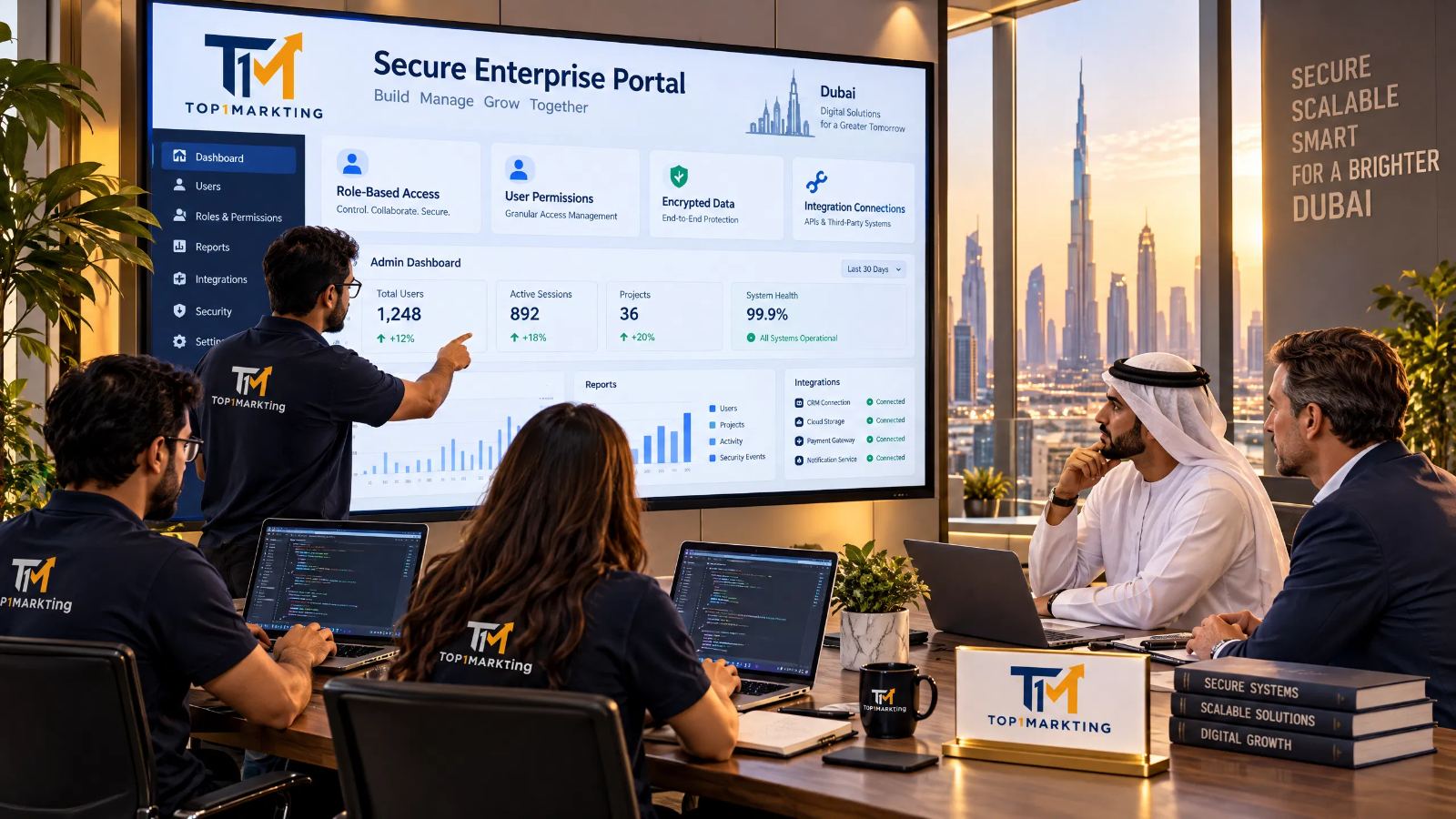
Choosing a web portal development company in Dubai requires reviewing more than just the design or cost. A portal may be an essential part of a company's daily operations and may handle customer, employee, and supplier accounts as well as internal data. Therefore, it is important to define the project requirements and review implementation details before signing a contract so the organization receives a system suited to its business activity that can be developed in the future.
The following tips will help you choose the right development team and build a web portal that meets your company's needs.
Define the Main Objective of Your Web Portal in Dubai Before Requesting Development
Before contacting a development company, define the main purpose of the web portal and the people who will use it. A customer portal has different functions from an employee portal, supplier portal, or internal system designed to manage operations.
For example, your company may need:
-
Customer portal: Allows users to log in and track services, requests, and transactions.
-
Employee portal: Helps manage tasks, internal requests, and administrative procedures.
-
Supplier portal: Organizes supplier information, purchase orders, invoices, and documents.
-
Internal portal: Connects departments and employees and helps organize operations.
-
Electronic services portal: Allows users to submit requests and complete specific procedures online.
The clearer the objective, the easier it becomes to define the required functions, system architecture, and suitable budget instead of starting to program a general portal without a clear idea of how it will be used.
Define the Essential Functions Your Company Portal Needs in Dubai
It is important to prepare a list of the functions your company needs before requesting a quotation, distinguishing between the functions essential for operating the portal and additional functions that can be implemented at later stages.
Essential functions may include login, account management, permissions, dashboards, and receiving and tracking requests. Some additional features, such as advanced reports or non-essential integrations, can be postponed until a later stage.
Requirements can be divided into:
-
Essential functions: Functions required for the portal to operate as intended.
-
Important functions: Functions that improve the user experience and organize work procedures.
-
Future functions: Functions that can be added after launching the first version according to the company's needs.
This classification helps define the project scope practically and avoids paying for functions the company may not need initially. It also allows the portal to be implemented in stages while preserving the ability to develop it later.
Request Clarification of User Permissions Before Programming the Portal in Dubai
User permissions are among the most important elements of any custom corporate web portal because they determine the data and functions each user can access. Therefore, it is not enough to agree on having accounts and login functionality. User roles and the permissions associated with each role must be defined before programming begins.
Ask the development company to explain how permissions will be managed, including:
-
Who can view the data?
-
Who can add new records or requests?
-
Who has permission to edit information?
-
Who can delete data or cancel requests?
-
Who reviews requests and approves them?
-
Do permissions differ between managers, employees, customers, and suppliers?
Defining these details helps build a clear system that prevents overlapping responsibilities and limits users' access to information or functions outside their assigned duties.
Make Sure the Web Portal Can Be Developed in the Future in Dubai
A company's needs may change after the portal is launched due to an increase in customers, employees, or branches, or the addition of new services. Therefore, you should ensure that the system is built in a way that allows expansion and the addition of functions without having to rebuild the entire project whenever a change is required.
Discuss the possibility of:
-
Adding new sections and software modules.
-
Creating additional user account types.
-
Increasing the number of users and branches.
-
Developing dashboards and reports.
-
Connecting the portal to external systems in the future.
-
Modifying existing functions as work procedures change.
This does not mean that all features must be implemented from the beginning. It means ensuring that the project architecture supports gradual development according to a clear plan.
Compare the Cost of Portal Programming in Dubai Based on Scope of Work, Not Price Alone
When comparing proposals from development companies in Dubai, do not rely on the final price alone. One proposal may offer a lower price but exclude essential functions, testing, documentation, or post-launch support. Therefore, each proposal should be reviewed in detail to understand what the company will receive for the quoted cost.
Review the following elements when comparing proposals:
-
The number of pages and interfaces included in the project.
-
Account, login, and permission functions.
-
Dashboards required for each user group.
-
Databases and information management mechanisms.
-
Integrations with external systems and services.
-
Technical testing and error resolution.
-
Source code and documentation delivery.
-
Agreed support and maintenance services.
It is preferable to compare proposals with similar scopes of work so the comparison is fair and you can understand the reasons behind cost differences. You can also divide the project into stages if some functions are not essential for the initial launch.
Agree on Code and Data Ownership and Portal Delivery in Dubai
Before signing the agreement, clarify the company's rights to the project and what it will receive after programming is completed. Owning a web portal is not just about receiving a working URL. It also involves agreeing on source code, data, access credentials, and the files needed to manage and develop the system.
Make sure the following terms are clear:
-
Ownership of the source code and the rights to use and modify it.
-
Delivery of the database and project-related data according to the agreement.
-
Delivery of login credentials for the administration panel, hosting, and related services.
-
Providing the technical documentation needed to understand and operate the system.
-
Clarifying licenses for external libraries or components used.
-
Defining how project files and final versions will be delivered.
A clear agreement helps protect the company's rights and makes it easier to manage the project in the future, whether the company continues working with the same development team or needs another provider to implement new updates.
Define Support and Maintenance Services After Launching the Portal in Dubai
It is important to understand what the development company will provide after the portal is launched because technical support and maintenance do not necessarily mean that all modifications and developments will be free of charge. The difference between fixing software errors, periodic updates, and adding new functions must be clarified, with the scope of each service defined in the agreement.
Ask for clarification on the following points:
-
Error resolution: Fixing software issues that appear in functions covered by the agreement.
-
Technical updates: Updating software components and reviewing compatibility when necessary.
-
Periodic maintenance: Monitoring performance, databases, and backups within the service scope.
-
Additional development: Adding new functions or sections through separate requests or a development agreement.
-
Technical support: Defining how support requests are received and handled.
-
Change documentation: Recording system updates to make future monitoring easier.
Clarifying these details before signing the contract helps avoid disputes after launch and gives the company a clear understanding of the development team's responsibilities and the costs of monitoring and development.
When choosing a provider for your project, it is also useful to review [How to Choose a Website Design Company in Dubai Based on Your Business Activity?] to understand the importance of matching the technical solution to the nature of the business and the organization's needs.
At Top1Markting, we begin web portal projects by understanding the company's business activity and defining the required users, functions, permissions, and integrations. We then establish a clear implementation scope to help build a portal that can be used and developed over time. You can contact us to discuss your project idea and receive a technical proposal and quotation based on your company's requirements.
Comparing Types of Corporate Web Portal Programming in Dubai by Functions and Cost
The cost of programming web portals in Dubai varies according to the intended use, required functions, data management approach, number of users, and integrations with other systems. Therefore, a fixed cost cannot be assigned to each portal type without knowing the project details. A customer portal with limited functions may be more complex than an internal portal if it requires external system integration or the processing of multiple transactions.
The following table helps you compare web portal types in terms of their essential functions and implementation complexity so you can identify the solution closest to your company's needs before requesting a quotation.
| Portal Type in Dubai | Essential Functions | Implementation Complexity |
|---|---|---|
| Customer Portal | User accounts, requests, personal data, and service tracking | Depends on the number of functions and how requests and data are managed |
| Employee Portal | Employee accounts, internal requests, approvals, and task management | Depends on the number of departments, procedures, and permissions |
| Internal Portal | Departments, data, internal operations, and information exchange between departments | Depends on company procedures and the nature of its operations |
| Supplier Portal | Supplier registration, requests, documents, and invoices | Depends on the transaction cycle and required approvals |
| Partner Portal | Partner accounts, data sharing, and transaction tracking | Depends on permission levels and the nature of shared data |
| Branch Portal | Centralized branch management, data and operation monitoring, and reports | Depends on the number of branches, organization size, and management approach |
| CRM Portal | Customer management and connecting accounts and requests to CRM system data | Depends on the CRM system's capabilities and integration requirements |
| ERP Portal | Data exchange and management of operations associated with an ERP system | Depends on the existing ERP system, data volume, and integration interfaces |
| Custom Portal | Functions and interfaces designed according to project needs and company procedures | Depends on the development scope, functions, and required integrations |
How Do You Determine the Right Web Portal Type for Your Company in Dubai?
If your goal is to make it easier for customers to interact with your company, a customer portal may be the most suitable option. However, if you need to organize employee requests, approvals, and administrative procedures, you may need an employee portal or an internal portal. If you deal with a large number of suppliers and partners, a separate portal can be developed to organize accounts, documents, and transactions.
Companies that rely on CRM or ERP systems should review the capabilities of their existing systems before deciding how to integrate them because integration requirements can significantly affect the programming scope and cost.
What Determines the Programming Cost of Each Web Portal Type in Dubai?
The price is not determined by the portal's name alone. It depends on a set of technical and operational factors, most notably:
-
The number of user types and accounts required.
-
The number of functions and software modules within the portal.
-
The complexity of permissions, approvals, and procedures.
-
Data volume and how it is stored and managed.
-
The need to connect the portal to CRM, ERP, or external services.
-
The number of branches and departments that will use the system.
-
Security, testing, and documentation requirements.
-
Support, maintenance, and development services after launch.
Therefore, it is best to define the portal type, essential functions, users, and required integrations before comparing quotations. This helps the development team prepare a clear scope of work and estimate the cost based on the project's actual requirements rather than relying on a general price that does not reflect the company's needs.
At Top1Markting, we help companies identify the web portal type that suits their business activities and analyze the required functions, permissions, and integrations before implementation begins. You can contact us to discuss your project and receive a technical proposal and quotation tailored to the scope of work.
Frequently Asked Questions About Programming Corporate Web Portals in Dubai
How Much Does It Cost to Program a Web Portal in Dubai?
The cost of programming a web portal in Dubai varies according to the portal type, number of users, permissions, required functions, database size, and the need to integrate with external systems such as CRM or ERP. Therefore, the cost is determined after analyzing the company's requirements, project scope, and functions to be implemented.
What Is the Cheapest Price for Programming a Web Portal in Dubai?
There is no single price for all web portals because the cost of a portal limited to user accounts and a few basic functions differs from that of a portal containing multiple departments, integrations, and advanced databases. An appropriate cost can be achieved by identifying essential functions and starting with them, then adding other features in stages according to the company's needs.
What Is the Difference Between a Website and a Web Portal in Dubai?
A traditional website focuses on displaying company information, services, and contact methods, while a web portal allows users to log in and access data and interactive functions according to specific accounts and permissions. The choice between them depends on the organization's business activity and whether it only needs to display information or manage services and transactions online.
Can a Custom Web Portal Be Programmed from Scratch for a Company in Dubai?
Yes. A custom web portal can be developed from scratch according to the company's business activity and working procedures. This includes designing interfaces, creating databases, programming functions, and defining user permissions, with the option of adding integrations with external systems according to project requirements.
Can a Single Web Portal for Customers and Employees Be Created in Dubai?
Yes. A unified portal can include different account types, allowing customers, employees, and management to access interfaces and functions suited to each group. Permissions can be customized to prevent users from accessing data or functions they are not authorized to use.
Can a Multi-User Web Portal with Different Permissions Be Programmed in Dubai?
Yes. A user management system can be developed with multiple roles and permissions, such as manager, employee, customer, and supplier, with control over the ability to view, add, edit, or delete data. This organization helps manage access to portal functions according to the company's organizational structure and requirements.
Can the Web Portal Be Connected to a CRM System in Dubai?
Yes. The web portal can be connected to a CRM system to exchange customer and request data and track transactions through a unified interface. The integration method depends on the capabilities of the CRM system being used, the availability of integration interfaces, and the permissions required to access the data.
Can the Web Portal Be Connected to an ERP System in Dubai?
Yes. An integration between the web portal and an ERP system can be developed to display or exchange operational data, such as requests, inventory, and supplier-related information, according to the company's needs. The integration method is determined after reviewing the existing system, its technical capabilities, and the data the portal needs to handle.
Can a Web Portal Be Developed for Multi-Branch Companies in Dubai?
Yes. A web portal can be programmed to support centralized branch management, with dedicated accounts and permissions for each branch and the ability to monitor data, operations, and reports according to the organization's structure. Access levels can be defined for each branch to control access to shared data and branch-specific operations.
Can New Functions Be Added to a Web Portal After It Has Been Developed in Dubai?
Yes. The portal can be developed and new functions and modules can be added after launch, depending on the software architecture and how the system was built. This may include adding new account types, administrative reports, request management tools, or integrations with external systems after assessing the modification requirements and their impact on existing functions.
Can a Web Portal Be Designed in Arabic and English in Dubai?
Yes. A multilingual web portal can be implemented with support for Arabic and English, taking into account right-to-left text direction in Arabic interfaces and left-to-right direction in English interfaces. Content, menus, and forms can also be organized to ensure ease of use in both languages.
How Long Does It Take to Develop a Corporate Web Portal in Dubai?
The time required to develop a web portal depends on the number of functions, user types, database complexity, and required integrations. The timeline is also affected by how clearly the requirements are defined, how quickly designs are approved, and how quickly the necessary information is provided. A schedule is determined after analyzing the project and dividing it into clear implementation stages.
Does Top1Markting Provide Custom Web Portal Programming in Dubai?
Top1Markting provides website design, programming, and development services for custom web solutions for companies. Project requirements can be assessed to determine the portal type, functions, databases, permissions, and integrations suitable for the business activity. Implementation begins after agreeing on the scope of work and required specifications.
How Can I Request a Quotation for Programming a Web Portal in Dubai?
You can contact Top1Markting at +971507662114 and explain your company's business activity, required portal type, essential functions, user types, and the systems that need to be integrated. This information helps assess the project scope, identify technical requirements, and prepare a quotation suited to your company's needs.
Request a Quotation for Corporate Web Portal Programming in Dubai from Top1Markting
If your company needs a web portal to organize interactions with customers, employees, or suppliers, manage internal operations, or connect departments and branches, the first step is to define the nature of the project and the functions you need. Top1Markting provides custom web portal design and programming services in Dubai according to each company's requirements and working methods, with the portal structure, accounts, permissions, and required integrations defined before implementation begins.
You can request a quotation for web portal programming in Dubai by explaining your project requirements so that the scope of work can be assessed and the appropriate software solution identified.
Get a Quotation for Developing a Custom Web Portal in Dubai
To prepare a suitable quotation, we begin by identifying the portal type and the objective of developing it, whether it is a customer portal, employee portal, supplier portal, or an internal portal for managing company operations. The required functions and number of user types are also identified because these details help estimate the development workload, time, and resources needed for the project.
Define the Account Systems and Permissions Required for Your Company Portal in Dubai
Every web portal needs an account and permission system that matches the groups that will use it. Therefore, it is important to define the required account types, such as:
-
Customer accounts for tracking requests, services, and personal information.
-
Employee accounts for accessing tasks and internal requests.
-
Supplier accounts for tracking transactions, documents, and requests.
-
Management accounts for supervising users, operations, and reports.
-
Department permissions for defining the data and functions available to each department.
Identifying these requirements in advance helps design a clear user management system and organize access to data and functions according to each user's responsibilities.
Request Web Portal Programming in Dubai Integrated with Your Company's Existing Systems
If your company already uses administrative or operational systems, their integration with the web portal can be assessed to exchange data and reduce repeated information entry. This requires identifying several technical details, including:
-
The CRM or ERP system used within the company.
-
The API interfaces available for integration.
-
The databases the portal will interact with.
-
The data exchange operations required between the portal and existing systems.
Integration feasibility is assessed according to the features of the systems in use, available permissions, and supported connection methods. The appropriate integration scope is then determined for the project.
Start Developing Your Web Portal in Dubai with the Top1Markting Team
To begin assessing the project and preparing an accurate quotation, it is preferable to provide the following information:
-
Company business activity: To identify the nature of the work and the sector in which the portal will be used.
-
Portal objective: Such as managing customers, employees, suppliers, or internal operations.
-
User types: The groups that will access the portal and use its services.
-
Number of account types: Such as customer, employee, management, and supplier accounts.
-
Required permissions: The functions and data each group can access.
-
Essential functions: Such as requests, approvals, reports, and document management.
-
Number of departments or branches: The departments or branches that will use the portal or connect to its management system.
-
Systems to be integrated: Such as CRM, ERP, databases, and external services.
-
Existing portal: To determine whether the project requires development, rebuilding, or adding new functions.
-
Project type: Whether it involves creating a new web portal or developing an existing system.
Request a quotation for web portal programming in Dubai from Top1Markting and share your company's requirements so we can assess the needs, define the implementation scope, and identify the appropriate software solution.
Company: Top1Markting
UAE Phone: +971507662114