

Systems Programming Company in Dubai | Custom Software & Solutions Development for Businesses | +971507662114 | Top1Markting
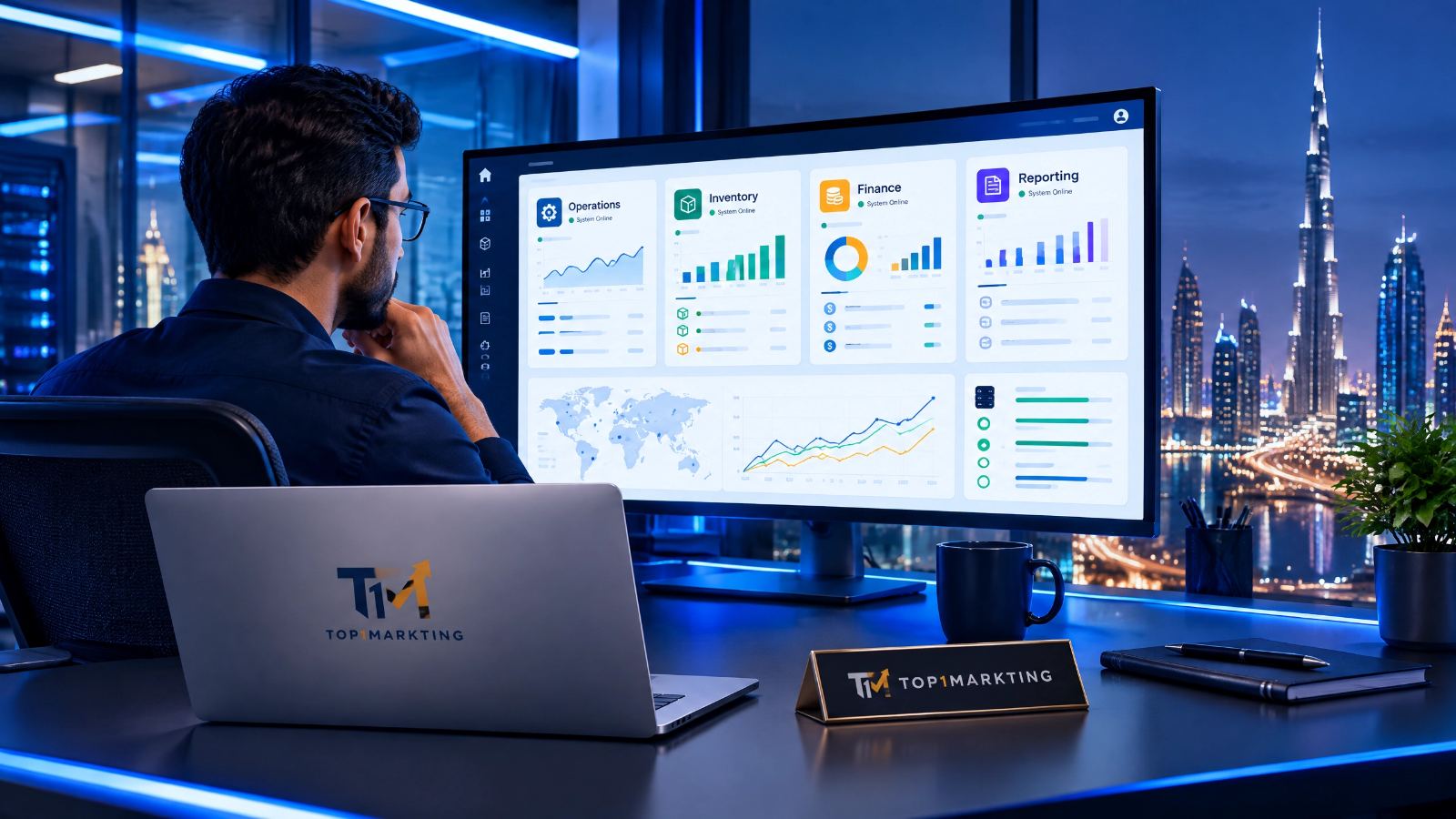
Top1Markting provides systems programming services in Dubai and develops custom solutions and software for companies, organizations, and commercial businesses. We build digital systems designed according to the nature of each business and the needs of its users, rather than relying on ready-made solutions that may not meet the project's requirements. Our services include requirements analysis, database design, Frontend and Backend development, custom admin dashboards, and integrations with different services and platforms.
We develop custom software for companies in Dubai to help organize operations, manage data, and improve workflows, with the ability to develop administrative and commercial systems as well as customized solutions for stores, services, and projects that require advanced software functions. Systems can also be prepared for future scalability and the addition of new features as the business grows and its needs evolve.
To contact Top1Markting and request systems programming services in Dubai: +971507662114.
Why Do Companies Look for a Systems Programming Company in Dubai?
Companies look for a systems programming company in Dubai when they need to transform daily business procedures into more organized digital solutions instead of relying on scattered files, manual processes, or software that does not match the nature of their business. A custom system can be developed according to the company's requirements, with the ability to connect different departments, data, users, and services within one digital environment.
Converting Manual Processes into a Digital System
Many procedures that are performed manually can be converted into digital processes within the system, such as recording orders, following up with customers, managing employees, approvals, invoices, and reports, according to the company's established workflow.
Organizing Company Data in One System
A custom system helps collect company-related data on one platform and organize it within clear databases and sections, making it easier for users to access information according to their assigned permissions.
Reducing Repetitive Processes and Manual Data Entry
Some repetitive steps can be automated and data can be connected between different departments and functions, reducing the need to enter the same information in multiple places, depending on the processes managed by the system.
Managing Employees, Customers, and Orders
The system can be developed to manage employee and customer data, orders, tasks, and process statuses through a centralized dashboard, with appropriate permissions assigned to each department or user.
Obtaining Reports and Analyzable Data
Reports and statistics can be added to extract data from operations performed within the system, with the ability to classify them by period, department, user, or operation type, helping management monitor performance and operational data.
Building a Scalable System as the Company Grows
The system can be designed to allow the addition of new functions, departments, users, and integrations in the future, so it is not limited to current requirements and can evolve as the company expands.
What Does Custom Software System Development in Dubai Include?
Custom software system development in Dubai includes a range of technical and organizational stages, starting with understanding project requirements and ending with launching the system and preparing it for use. The scope of work varies depending on the system type, number of users, functions, and required integrations.
Project Requirements Analysis
The system's objectives, company structure, users, processes, data, and required functions are identified, along with the essential requirements that the system must provide.
Planning System Functions
Requirements are converted into clear functions and workflows, such as registering and managing orders, creating accounts, following up with customers, generating reports, or processing approvals according to the nature of the business.
Database Design
The data that the system needs to store and the relationships between that data are identified, followed by building an appropriate database structure for the functions and processes that will be performed within the system.
User Interface Design
User interfaces and system pages are designed according to the nature of the users and the functions available to them, with interface elements organized to make operations and data easier to access.
Backend Development
The Backend handles the system logic, data processing, account management, permissions, operations, and integrations, while connecting the different components to the database.
Frontend Development
The Frontend is developed for the users who interact with the system, including pages, forms, tables, interactions, and control elements, with the interface connected to the functions available within the system.
Custom Admin Dashboard Development
A custom dashboard can be created for administrators and employees to manage data, users, orders, settings, and reports, with dashboard content customized according to user permissions.
Adding Users and Permissions
Different account types and permission levels can be created according to the company's structure, allowing specific functions and data access to be assigned to each user or department.
Connecting External Services
The system can be connected to external services and platforms through APIs, including payment gateways, shipping services, CRM, ERP, WhatsApp, and Google services, according to each service's capabilities and the project's requirements.
System Testing Before Launch
Functions, interfaces, databases, permissions, integrations, and usage scenarios are tested to identify and resolve issues before the system is officially launched.
Types of Systems That Can Be Developed for Companies in Dubai
A wide range of software systems for companies in Dubai can be developed. The system type is determined based on the nature of the business, the processes the company wants to manage, and the data it needs to organize.
Administrative Systems Programming for Companies
Systems can be developed to manage internal operations, employees, customers, tasks, approvals, documents, and reports, with functions distributed according to departments and permissions.
Sales Systems Programming
Sales systems can be developed to manage sales operations, customers, products, invoices, and orders, with the ability to add reports and statistics and connect the system with payment methods and other services.
Inventory Systems Programming
Inventory systems help manage products, quantities, product movements, and warehouses, with the ability to monitor incoming and outgoing operations and generate reports according to business requirements.
CRM Systems Programming
A custom CRM can be developed to manage customer data, follow-ups, opportunities, orders, and interaction history, with customer stages and processes designed according to the company's sales cycle.
ERP Systems Programming
ERP solutions can be developed to combine several administrative and operational processes within one system, such as sales, inventory, purchasing, human resources, and accounting, according to the project scope and required features.
Human Resources Systems Programming
Systems can be created to manage employee data, leave requests, attendance, applications, files, permissions, and internal procedures, with the ability to add reports and notifications.
Booking Systems Programming
Booking systems can be developed to manage appointments, reservations, services, customers, and schedules, with the ability to connect the system to payments, notifications, and external services.
Order Management Systems Programming
An order management system can be created to manage orders from the moment they are registered until completion, with status tracking, task distribution, notifications, and operation details.
Invoice Systems Programming
Systems can be developed to manage invoices, customers, products, payments, and transaction statuses, with the ability to integrate with other systems or suitable payment gateways.
Admin Dashboard Programming
Custom admin dashboards can be built to display data, statistics, orders, users, and operations within one administrative interface, with content and functions varying according to each user's permission level.
Custom Web Platform Development
Custom web platforms can be developed for companies, organizations, commercial businesses, and service projects, combining interactive interfaces, databases, Backend systems, admin dashboards, and software integrations to provide a digital solution designed according to the project's nature.
Custom Systems Programming for Companies in Dubai
Custom systems programming for companies in Dubai helps businesses build digital solutions that match their specific workflows instead of relying on standardized systems with fixed features. The system is developed according to the nature of the business, daily operations, number of users, data, permissions, and required reports, with the ability to connect it to the website and external services when needed.
Building the System According to the Business Workflow
System development begins by understanding how the company operates and the procedures performed across its different departments, then converting these procedures into clear digital functions. The system can be customized to manage customers, orders, sales, inventory, employees, or any other business-related operations.
Defining Permissions for Each User
Multiple user accounts can be created with different permission levels for each role. Management may require full access to data and reports, while employee permissions can be customized according to their department and responsibilities within the system.
Designing the Workflow Within the System
Business stages are converted into a digital workflow within the system, allowing an order or transaction to move through predefined stages according to company procedures. Approvals, notifications, task assignments, and status updates can be added according to project requirements.
Customizing Screens and Data
Custom interfaces and screens can be designed for each department or user, with specific data, fields, and tables selected according to their needs. This includes management pages, forms, monitoring screens, search and filtering functions, and data management tools.
When a project requires development of the web interface and web system, the system can be connected with Website Development Company in Dubai solutions so that the website and internal system can operate as one connected digital environment when required.
Adding Company-Specific Reports
Custom reports can be developed based on the data stored within the system, such as order, sales, customer, employee, and operational reports, with the ability to define time periods, departments, users, and the data to be displayed.
Preparing the System for Future Scalability
The system can be designed with future development in mind, allowing new functions, departments, users, and integrations to be added as the company grows and its requirements change.
Difference Between Systems Programming and Website Design in Dubai
Website design and systems programming differ in terms of purpose and usage. A website generally focuses on presenting the company, its services, and communicating with customers, while a software system focuses on managing internal operations, data, and business procedures. In some projects, the website and system can be combined to create an integrated digital environment serving both customers and company employees.
When Do You Need Website Design?
A company needs website design when its goal is to create a professional digital interface for presenting services, products, essential information, and introducing its business. The website may include service pages, company information, projects and portfolio, contact details, quotation requests, a blog, and FAQs, with the ability to optimize it for search engines.
If the project requires a professional external digital interface for a company or business, Website Design in Dubai services can be used to create a website that matches the nature of the business and user requirements.
When Do You Need a Software System?
A company needs a custom software system when it has internal processes that need to be organized and managed through a digital platform, such as customer management, orders, sales, inventory, employees, bookings, invoices, and reports.
The system allows user accounts to be created, permissions to be defined, and data to be connected between departments, with the ability to add custom functions according to the company's workflow instead of relying on separate tools for each process.
The Website as a Corporate and Commercial Interface
A website represents the digital interface that customers and visitors interact with. It can provide a clear presentation of the company, its services, business areas, projects, and contact methods. It can also be developed with commercial features such as product displays, order forms, appointment booking, or quotation requests.
Therefore, website design is directly related to the visitor experience and how information and services are presented, while the software system may operate in the background to process data and operations related to these services.
The System as an Operations Management Tool
A software system is used to manage operations within the company, starting from data entry and task distribution to status tracking and report generation. The system can be customized according to departments and users, allowing each employee to access the tools and permissions associated with their role.
The system can also be connected to databases, APIs, and external services, allowing data to be organized and exchanged between different systems according to project requirements.
Combining the Website and System
A website and software system can be combined when a company needs an external customer interface connected to an internal platform for managing operations. For example, a customer can submit a request through the website, after which the request reaches the internal system to be assigned to employees, tracked, recorded, and included in relevant reports.
This allows the website to function as the customer and visitor interface, while the system operates as a platform for managing internal data and processes. Both can be connected through databases or APIs according to the appropriate software architecture for the project.
Custom System Dashboard Programming
The admin dashboard is one of the essential components of custom systems programming for companies in Dubai, as it provides an administrative interface through which data, users, operations, and system performance can be managed from one place. The dashboard is designed according to the nature of the system and the departments using it, with functions and permissions customized according to project requirements.
User Management
The dashboard can be programmed to add users, edit their information, manage accounts, and monitor their activity within the system. Users can also be divided according to departments or functions, with accounts activated or disabled when required.
Permissions and Access Levels
Custom systems allow different permission levels to be created, defining what each user can access, modify, delete, or view. Permissions can be customized according to management, department, or job role within the company.
Data Management
The dashboard provides tools for adding, editing, searching, sorting, and filtering data, while organizing information into clear sections that make it easier for users to work with. Data can be connected to customers, orders, products, employees, or other system elements.
Reports
A dedicated reporting section can be developed to display data in an organized way according to time periods, departments, users, or operation types. Reports help management monitor results and operations and extract the required information from the system database.
Statistics
System indicators and statistics can be displayed within the dashboard to show the volume of operations, orders, customers, and other important data. The displayed indicators are determined according to the system's nature and the project's management objectives.
Operation Monitoring
Operations performed within the system can be recorded and monitored, such as creating orders, updating statuses, assigning tasks, and modifying data. This helps users identify the status of each operation and track its progress through the dashboard.
Notifications and Alerts
A notification and alert system can be added to inform users about important events or changes within the system, such as receiving a new order, updating a transaction status, or having a task requiring follow-up, with recipients defined for each type of notification.
Database Programming and System Data Management
The database is an essential part of any custom software system, as it stores information and organizes relationships between different data elements. Database design depends on the nature of the system, data volume, and operations performed, while considering performance, security, and future scalability.
Database Design
Database design begins by analyzing the data the system needs to store and the relationships between that data, followed by creating appropriate tables, fields, and relationships. Proper database organization helps build a clearer and more scalable system.
Data Organization
Data is organized in a way that makes it easier to manage and connect related information within the system. Data can be divided into tables and sections according to the business nature, such as customer data, orders, products, invoices, and users.
Fast Data Access
Attention is given to how data is stored and retrieved so that the system can execute searches and queries efficiently, especially in systems containing large amounts of data or a high number of daily operations.
Data Protection
Database programming includes appropriate measures to protect data and prevent unauthorized access, with access to information connected to users' permissions and access levels within the system.
Backups
The system can be equipped with backup mechanisms according to project requirements to retain copies of important data and reduce the risk of information loss in the event of technical problems or data loss.
Scalability
The database is designed with future data and functionality additions in mind, allowing the system to be developed and new departments, users, and integrations to be added without rebuilding the entire software architecture.
Integrating Software Systems With External Services
Companies may need to connect their internal systems with various external services and platforms to exchange data and execute operations in a more integrated way. This is achieved through APIs and software integrations according to the nature of each service and the system requirements.
API Development
APIs can be developed and integrated to allow data exchange between the system and other services or applications. APIs are used to send and receive data and execute specific functions between different systems.
Payment Gateway Integration
The system can be connected to electronic payment gateways to process payments and update transaction statuses within the system, while recording transaction data and linking it to the relevant order or customer.
Shipping Company Integration
The system can be integrated with shipping services to send order information, receive shipping and tracking data, and update order statuses within the system.
CRM Integration
The system can be connected to a CRM platform to synchronize customer data, orders, and commercial interactions, allowing customer information to be used across multiple systems according to defined permissions and workflows.
ERP Integration
Integration with ERP systems can be implemented to exchange information related to sales, inventory, purchasing, accounting, or other administrative operations according to the required integration scope.
WhatsApp Integration
The system can be integrated with available business WhatsApp services to send notifications, order updates, or follow-up messages according to the appropriate integration method, with messages connected to system data when required.
Google Services Integration
The system can be connected to selected Google services when needed, such as Maps, analytics, login services, or other Google services used by the project.
Accounting System Integration
Integration with accounting systems can be implemented to exchange invoice, payment, customer, and financial transaction data, reducing the need to enter information manually into multiple systems.
Data Exchange Between Systems
An organized mechanism can be designed for exchanging data between the internal system, websites, applications, and external platforms, defining the data sent and received and how it is updated so that connected systems operate within a clear data workflow.
CRM System Programming for Companies in Dubai

A custom CRM system for companies in Dubai can be developed to manage customer data and organize sales, follow-up, and communication processes through one platform. The system is customized according to the company's business model and the way its sales and customer service teams operate, with the ability to add reports, permissions, and required integrations.
Customer Data Management
A CRM system allows customer and lead data to be stored and organized within a centralized database, including contact information, notes, lead sources, and interaction history.
Lead Management
Leads can be registered and tracked through different stages of the sales cycle, with each customer's status, assigned employee, and required follow-up tasks or actions clearly defined.
Call and Communication Records
A communication history can be added to document customer interactions, including calls, notes, and follow-ups, allowing the team to review the customer's history and identify the latest actions taken.
Sales Management
The system helps organize sales stages and track deals, orders, and different statuses, with sales data connected to customers, employees, and reports within the system.
Customer Reports
Custom reports can be created to display customer and lead data, sources, follow-up statuses, and deals, with the ability to define time periods, employees, or departments.
Sales Team Permissions
Permissions can be assigned to sales team members so each user can access the data and functions associated with their role. Management can receive broader permissions to monitor team performance, view reports, and manage system settings.
ERP System Programming and Business Management Solutions
A custom ERP system for companies in Dubai can be developed to organize administrative and commercial operations and connect data between different departments within one platform. System components are determined according to the company's nature, operational volume, and required functions, with the ability to add suitable integrations, reports, and permissions.
Sales Management
A dedicated section can be programmed to manage sales operations, register orders and invoices, and monitor the status of each transaction, while connecting sales data with customers, products, users, and management reports.
Purchasing Management
The system helps organize purchasing operations by recording suppliers, purchase orders, and invoices and monitoring order stages, with the ability to connect purchasing with inventory and accounting according to the system structure.
Inventory
Products, quantities, incoming and outgoing inventory movements, and stock levels can be managed through the system, with inventory connected to sales, purchasing, branches, and quantity alerts.
Accounting
Functions can be developed to manage financial data, invoices, payments, and business-related transactions, with the option to integrate with a specialized accounting system when required by the project's nature.
Employees
Employee data, departments, permissions, and tasks associated with users can be managed within the system. Employee accounts can also be connected to the operations they perform to facilitate management and monitoring.
Reports
ERP systems allow custom reports to be created for sales, purchasing, inventory, employees, and operations, with the data, periods, and departments displayed in each report clearly defined.
Connecting Company Departments
One of the key functions of the system is connecting departments and data so information can move between sales, inventory, purchasing, accounting, and management according to the defined workflow. This helps reduce duplicate data entry and organize company operations.
Systems Programming for Restaurants and Cafes in Dubai
Custom systems for restaurants and cafes in Dubai can be developed to manage orders, menus, reservations, branches, and customers, with the ability to connect the system to the website, communication channels, and other services used by the business.
Order Management System
A system can be programmed to manage orders received from branches, the website, or available ordering channels, recording order details, tracking statuses, and connecting them to customers, payments, and delivery when required.
Menu Management
A dashboard can be created to manage menu items, prices, add-ons, and categories, with the ability to update information from one location and display it across connected channels.
Reservation System
A table and appointment reservation system can be developed to record customer information, reservation time, number of people, and reservation status, with reservations managed through the admin dashboard.
Branch Management
Branch data, orders, users, and items can be managed for each branch, with the ability to monitor operations and reports by branch or combine them within one administrative dashboard.
Customer Management
Customer information, order history, reservation history, and communication records can be stored, with the ability to use this data for follow-up, customer service, and marketing according to system settings.
Website Integration
The system can be connected to the website so orders, reservations, and data can move between the external interface and internal system. Customers can use the website while restaurant or cafe staff manage operations through the dedicated dashboard.
WhatsApp Integration
The system can be integrated with WhatsApp according to the available integration method to send notifications or updates related to orders, reservations, and customer communication, with the type of messages and exchanged data clearly defined.
Systems Programming for E-commerce Stores and Online Businesses
A custom management system for e-commerce stores and online businesses can be developed to control products, orders, customers, inventory, payments, shipping, and reports. The internal management system differs from the storefront customers see, but both can be connected to operate as one integrated system.
Product Management
Product data, categories, prices, images, options, and inventory can be managed through the system dashboard, with products organized according to the nature and size of the store.
Order Management
The system helps register orders and monitor their status from receipt through preparation, shipping, or delivery, with the order connected to customer, payment, and shipping data.
Customers
A customer database can be created containing account information, orders, and interaction history, with the ability to segment customers, filter their data, and use it in reports and follow-up.
Inventory
Quantities and inventory movements can be monitored and updated based on sales or purchasing operations, with inventory connected to branches, warehouses, and orders according to store requirements.
Payments
The system can be connected to suitable payment gateways to record payment transactions and update order statuses according to the transaction result, while retaining relevant order data within the system.
Shipping
The system can be connected to shipping services to send order data, receive tracking information, and update shipping statuses, connecting shipping operations with the order lifecycle.
Reports
Reports can be created for sales, orders, customers, products, inventory, payments, and shipping, with the ability to define time periods, branches, or departments whose data is being analyzed.
When moving from the store management system to the customer-facing interface, the online store itself can be developed in terms of design, programming, and user experience through an E-commerce Store Design Company in Dubai, creating a clear connection between the e-commerce system and the online sales interface used by customers.
Systems Programming Compatible With SEO and Digital Marketing
SEO and digital marketing requirements can be considered from the system or website programming stage, especially when public pages or interfaces need to appear in search engines and receive traffic from marketing campaigns. This is not limited to adding keywords; it also includes technical structure, page speed, URLs, metadata, and analytics and measurement tools.
Preparing the System Structure for Search Engines
When part of the system is publicly accessible, such as service, product, or content pages, the software structure can be prepared to help search engines understand the pages and their content. This includes organizing headings, content, links, and essential page data.
The preparation of a website or system for search engines includes several technical and content-related aspects. This can be supported through SEO Services in Dubai | Search Engine Optimization for Websites and Online Stores | Top1Markting, according to the nature of the website or system and its search visibility objectives.
Managing Metadata
The dashboard can be programmed to allow management of Title and Meta Description for public pages, along with headings, descriptions, and data associated with products or services when required. This makes it easier to update page elements without modifying the code every time.
URL Structure
A clear URL structure can be created according to website sections and different pages, with control over service, product, and content URLs. Dynamic pages, duplicate URLs, and redirects can also be handled according to project requirements.
System Speed
The way the system and software interface are built affects page loading speed and user responsiveness. Therefore, code, databases, files, images, and caching mechanisms can be optimized according to project requirements, especially on public pages receiving traffic from search engines or advertising campaigns.
Mobile Compatibility
Public system interfaces should work properly across mobile devices and different screen sizes, with page elements designed to make reading, browsing, and interaction easier. This includes menus, buttons, forms, tables, and pages accessed by customers through mobile devices.
Analytics Integration
The website or system can be connected to suitable analytics and measurement tools to monitor traffic, interactions, traffic sources, and user behavior, with the data to be measured determined according to project objectives.
Preparing System Pages for Marketing
Public pages can be prepared for use in marketing campaigns through search engines, digital advertising, or social media channels. Service pages, product pages, or Landing Pages can be created according to campaign objectives and target audience requirements.
When a project requires an SEO strategy beyond technical preparation, including keyword research, content optimization, monitoring, analysis, and continuous development, SEO Company in Dubai services can be used to develop an integrated strategy suitable for the website, store, and business.
Systems Programming to Support Digital Marketing Strategy
A software system can be designed not only to manage internal operations but also to support digital marketing activities by collecting and organizing data and connecting it to different customer and campaign sources. This integration helps transfer customer data from marketing and communication touchpoints to the internal system in an organized manner.
Connecting the System With Marketing Campaigns
The system can be connected to marketing campaigns so customers and orders generated by each campaign or marketing channel can be recorded. This helps organize customer data and connect it to the pages, forms, or sources through which customers arrived.
Collecting Customer Data
Forms can be programmed within websites or marketing pages to send customer information directly to the system, such as name, contact information, requested service, and request source, with fields selected according to business requirements.
Tracking Customer Sources
The source of each customer can be recorded within the system, whether the customer came from a search engine, digital advertisement, landing page, or another marketing channel. This helps analyze customer sources and compare data across different channels.
Connecting Forms With Campaigns
Contact forms, quotation request forms, registration forms, and inquiry forms can be connected to marketing campaigns so submitted data is automatically transferred to the system according to the defined integration process.
Analyzing Customer Data
Data recorded within the system can be used to create reports that help understand customers, orders, follow-up stages, and traffic sources. The indicators to be monitored can be defined according to the business objectives.
Connecting the System With Marketing Tools
Integration between the system and selected digital marketing tools and platforms can be implemented through API or appropriate integration methods, allowing data to be exchanged between the system and platforms used for customer management, campaigns, and analytics.
When integrating the software system with a digital marketing strategy, a Digital Marketing Company in Dubai can help connect the programming side with marketing objectives and digital campaigns, allowing data, pages, and campaigns to operate within a more organized system.
Technologies Used in Systems Programming in Dubai
The technologies used in systems programming in Dubai vary according to the project type, data volume, required functions, and system usage. A project may combine technologies for the Frontend, Backend, databases, and APIs according to the required software architecture.
PHP
PHP is used to develop web applications and systems and the software layer responsible for processing data and requests and executing server-side operations. It can be used across different projects depending on system requirements and the selected technical architecture.
Laravel
Laravel is a PHP framework used to develop web applications and systems that require an organized software architecture. It can be used to build admin dashboards, user management systems, databases, APIs, and different system functions.
JavaScript
JavaScript is used to develop interactive functions within interfaces and can also be used in different parts of web applications according to the project's technology and architecture.
React
React can be used to build interactive user interfaces based on reusable components. It is suitable for projects requiring dynamic interfaces, admin dashboards, and interactive web applications.
Next.js
Next.js can be used to develop web applications requiring a modern architecture combining interface capabilities with server-side functionality. It can be used in projects containing public pages and interactive interfaces within one system.
MySQL
MySQL is used to manage databases and store information related to the system, such as users, customers, orders, products, and transactions, with tables and relationships designed according to project requirements.
REST API
REST API provides an organized method for exchanging data between the system and other services or applications. It can be used to connect websites, applications, external services, payment systems, shipping services, and other required integrations.
Frontend
The Frontend represents the part of the system or website that users interact with, including interfaces, screens, forms, menus, and interactive elements. It is designed according to the user's needs and the functions they need to perform.
Backend
The Backend represents the software layer operating behind the interface. It handles data processing, operations, users, permissions, databases, and APIs. It is developed according to the business logic and functions required within the system.
Software System Security and Protection
Protecting a software system is an essential part of development, especially when the system handles customer, employee, order, and transaction data. Security measures are designed according to the system's nature and usage, with attention given to user accounts, permissions, databases, APIs, and backups.
Protecting User Accounts
Appropriate mechanisms can be implemented to protect user accounts and prevent unauthorized access, including login systems, session management, and verification procedures suitable for the system.
Permission Management
Permission management allows the functions and data accessible to each user to be defined. Users can be divided into different roles and levels so each employee receives the permissions associated with their responsibilities.
Database Protection
Attention is given to protecting databases from unauthorized access and organizing how the system connects to them, with appropriate controls applied to queries and operations performed on the data.
Encrypting Sensitive Data
Appropriate encryption technologies can be used to protect sensitive data during storage or transmission, depending on the type of data, system requirements, and software environment.
API Security
When connecting the system to external services or applications, mechanisms can be implemented to verify requests, organize permissions, and protect API endpoints, while defining the data allowed to be exchanged.
Backups
A backup mechanism can be configured according to the project's nature and data volume, with backup frequency and retention methods defined to reduce the risk of data loss in the event of a technical problem.
Monitoring System Operations
Important operations performed by users can be recorded within the system, such as logins, data modifications, status changes, and administrative actions. This helps monitor activity and review the operation history when needed.
Developing and Improving an Existing System
System development does not always require starting from scratch. In some cases, an existing system can be developed by adding new functions or improving its current architecture according to the system's condition and the company's requirements. Development begins by reviewing the existing system and identifying components that can be improved or redeveloped.
Developing an Old System
An old system can be updated by improving interfaces, functions, or software architecture after reviewing its existing components and database to determine the appropriate development approach.
Adding New Features
New functions can be added, such as additional sections, reports, permissions, forms, or processes, while connecting them to existing functions and minimizing disruption to the main workflow whenever possible.
Improving System Speed
System performance can be improved by reviewing code, databases, queries, files, and data-loading mechanisms, identifying slow components, and addressing them according to project requirements.
Modifying the Admin Dashboard
The dashboard can be reorganized, new screens and functions can be added, or data presentation can be modified to match current user requirements and the evolution of company processes.
Database Development
The database may require reorganization or the addition of new tables, relationships, and fields to support new system features. This is done while maintaining data relationships and minimizing impact on existing operations.
Adding New APIs
New APIs can be developed to connect the system with applications, platforms, or services that were not available in the previous version, with the data and operations to be exchanged clearly defined.
Connecting the System to New Services
New integrations can be added with payment, shipping, CRM, ERP, cloud, and other services according to company requirements and the existing system architecture.
Migrating Data From an Old System
When moving from an old system to a new system, a data migration process can be prepared after reviewing, organizing, and converting the data into the format required by the new system, while preserving required information and minimizing data loss during migration.
Stages of Programming a Custom System With Top1Markting
Custom system programming with Top1Markting begins by understanding the project concept and the company's workflow, then converting requirements into a clear architecture and set of functions that can be developed and tested. The details of each stage vary according to system size, number of users, integrations, and required features.
Studying the System Concept
The system idea, development objective, and problem it is intended to solve are identified, along with the user types and core operations the system needs to support.
Analyzing Company Requirements
Business procedures, required functions, and data to be managed are analyzed, including the required screens, reports, integrations, and permissions within the project scope.
Defining Users and Permissions
Different user types, departments, and roles are identified, followed by defining the permissions each user requires within the system.
Database Planning
Data types and relationships are identified and a database structure is planned to support required operations and functions, while considering performance and future scalability.
Interface Design
System screens, dashboards, and forms are designed according to the nature of the users and the functions they need to perform, with interface elements organized for ease of use.
System Programming
The Frontend, Backend, database, core functions, and integrations are developed according to the approved plan, with system components built and connected to the workflow.
Feature Testing
System functions are tested to ensure operations work as expected, including forms, calculations, permissions, reports, integrations, and other system features.
Security and Performance Testing
Testing includes reviewing security and performance aspects, such as access permissions, data processing, system responsiveness, and operations that may affect performance.
System Launch
After testing and required preparations are completed, the system is prepared for the production environment, required services are connected, and users and data are configured according to the launch plan.
Support and Development
After the system goes live, it can continue to be developed by adding new features and integrations, resolving issues, and improving performance according to the company's evolving requirements.
Systems Programming Company in Dubai or a Ready-Made System?

The choice between a ready-made system and custom programming depends on the company's nature, the operations it wants to manage, and the level of customization required. A ready-made system may be suitable when its functions match the business requirements, while custom programming may be considered when the company needs a workflow or features that the ready-made solution does not provide in the required way.
Features of Ready-Made Systems
Ready-made systems come with predefined functions that can be used after setup and the customization options available within the system. These may include customer management, sales, inventory, accounting, or other functions depending on the software type.
Customization Limitations
The level of customization varies from one ready-made system to another, and certain functions or modifications may depend on what the system or its developer allows. Therefore, project requirements should be compared with the available features before adopting a solution.
Advantages of Custom Programming
Custom programming allows a system to be built according to the required workflow, starting from data structure and permissions through screens, processes, reports, and integrations, with functions developed according to project requirements.
Control Over System Functions
With a custom system, functions, screens, and operational processes can be defined according to company requirements, with the ability to modify components and add new features during development or in the future.
Ownership and Software Development Rights
Ownership rights, code access, and system component rights vary according to the agreement, contract, and development model. Therefore, ownership, usage, development, and maintenance rights should be clearly defined in the project agreement.
Ability to Add Future Features
A custom system can be planned from the beginning to allow additional departments, functions, integrations, and users as the company grows. A scalable software architecture helps develop the system rather than replace it when new requirements arise.
How Do You Choose a Systems Programming Company in Dubai?
Choosing a suitable company for systems programming depends on its ability to understand the project and transform business requirements into a clear and scalable software solution. It is not limited to knowledge of programming languages; it also includes process analysis, databases, permissions, integrations, security, and post-launch support.
Understanding the Company's Project Requirements
Development should begin with an understanding of how the company operates, the processes it wants to organize, and the functions it needs. Accurate requirements analysis helps define the system scope and reduce unplanned changes during development.
Ability to Provide Custom Programming
When a company needs functions and workflows that are unavailable in ready-made systems, the ability to develop a custom software system becomes an important factor. This includes designing functions, interfaces, databases, and permissions according to project requirements.
Database Experience
Systems that depend on large amounts of data require an organized database architecture, with tables, relationships, and queries designed according to operational requirements. Therefore, the development team's database experience is an important part of evaluating its technical ability to execute the project.
API Integration Experience
A system may need to connect to external services such as payment gateways, shipping companies, CRM, ERP, communication services, and analytics platforms. Therefore, it is important to ensure that the programming company can design and implement integrations and APIs according to each service's requirements.
Security Focus
Development should include protection of user accounts, permission management, databases, APIs, and sensitive data, with security measures determined according to the system's nature.
System Scalability
The system should be planned so that new features, users, departments, and integrations can be added in the future. An organized and scalable software architecture helps the system evolve as the company grows rather than requiring a complete rebuild.
Support and Maintenance
After launching the system, new requirements may arise or certain functions may need improvements or updates. Therefore, the scope of support, maintenance, and development after launch should be clearly defined, along with how updates and technical issues will be handled.
Clear Implementation Stages
Clear project stages make it easier to understand what will be implemented from requirements analysis through design, programming, testing, and launch. The scope of features, integrations, and required modifications should also be clearly defined in the project agreement.
Cost of Developing a Custom System in Dubai
There is no fixed cost that applies to all systems programming projects in Dubai, because each system differs in functions, number of users, data volume, integrations, and workflow. Therefore, the cost is determined according to actual requirements, development scope, and required features.
What Determines the Cost of System Development?
System cost depends on several factors, including required functions, number of screens, customization level, database, permissions, integrations, dashboard, security requirements, support, and future development.
Number of System Features
The greater the number of functions the system needs to perform, the greater the analysis, design, programming, and testing work required. A simple system managing one process differs from an integrated system containing multiple departments and workflows.
Number of Users
The number of users, roles, and required permissions affects the system architecture and how accounts and data access are managed. Companies with multiple departments may require different levels of permissions and monitoring.
Database Size
Data volume, organization, number of operations, and queries affect database design and performance requirements. The appropriate architecture is therefore determined according to data characteristics and expected usage.
Number of Integrations
Integrations with payment gateways, shipping services, CRM, ERP, or external services add analysis, development, and testing work. Each integration has different requirements depending on the service, connection method, and data being exchanged.
Admin Dashboard
Dashboard development costs vary according to the number of screens and functions required by management, such as user management, data management, reports, statistics, operation monitoring, and permissions.
Security Level
Security requirements vary depending on data type, system nature, and usage. They may include account protection, permissions, data protection, API security, backups, and operation logging.
Support and Development
Project costs may include support, maintenance, updates, or development of new features after launch, depending on the agreement and company requirements.
Note: A fixed price is not displayed on the page because system development costs vary according to requirements, functions, integrations, and project size.
How Long Does It Take to Develop a System in Dubai?
The duration of system development varies from project to project, and there is no single timeline for all systems. The timeframe depends on system size, number of features, users, integrations, operational complexity, and the time required for testing and modifications before launch.
Timeline for Simple Systems
Simple systems require less development work when functions are limited and the number of screens, users, and integrations is small. The implementation timeline is determined after requirements analysis and defining the features included in the required release.
Timeline for Medium-Sized Systems
Medium-sized systems generally require more functions, screens, databases, permissions, and may contain multiple departments or workflows. Therefore, the development timeline is determined after establishing a clear system concept and scope.
Timeline for Large Systems
Large systems involving multiple departments, users, databases, and integrations require more detailed development and testing stages. They may be implemented in phases or successive releases depending on project size and priorities.
Impact of Features on Development Time
The number of features, screens, and workflows affects the amount of analysis, design, programming, and testing required. Complex or highly customized features may require additional development and testing time compared with simple functions.
Impact of Integrations on Development Time
Development time may increase when external integrations are added because each integration requires studying connection methods, data, permissions, error handling, and testing with the main system.
Testing Before Launch
Project duration does not only include coding. It also includes testing functions, permissions, databases, integrations, performance, and user experience. Testing before launch helps identify problems and make necessary changes before the system becomes operational.
Systems Programming for Companies in Different Areas of Dubai
Software requirements vary according to business type, operational volume, and the way customers, employees, and branches are managed. Therefore, custom systems can be developed for companies across different areas of Dubai according to actual project processes, whether the system is designed to manage sales, customers, inventory, bookings, orders, reports, or integrations.
Systems Programming Company in Downtown Dubai
Companies and commercial businesses in Downtown Dubai may need digital solutions that help organize operations and manage customers and services. Custom systems can be developed for companies with multiple users or those requiring dashboards, reports, and connections between websites and internal operations.
Systems Programming Company in Business Bay
Many businesses in Business Bay need systems that help organize customers, orders, sales, and administrative operations. The system can be customized according to the company type, with multiple permissions, management reports, and external service integrations through API when required.
Systems Programming Company in Dubai Marina
Systems can be designed for companies and businesses in Dubai Marina to manage bookings, customers, services, and orders, particularly for businesses that interact directly with customers. The system can also be connected to websites, booking forms, and different communication channels.
Systems Programming Company in Jumeirah
System requirements in Jumeirah vary according to business type. Companies may need to manage customers, appointments, services, invoices, or orders. A dashboard can be built to combine these operations within one system, with employee permissions defined as required.
Systems Programming Company in Deira
Businesses in Deira may need solutions capable of handling sales, inventory, customers, suppliers, and invoices, especially when multiple commercial operations are involved. A system can be developed to connect these data points and allow management to monitor operations through one dashboard.
Systems Programming Company in Bur Dubai
Custom systems can be developed for companies in Bur Dubai to manage services, customers, orders, invoices, and employees, with reports and different permission levels added according to business size and task distribution.
Systems Programming Company in Barsha
Solutions can be programmed for businesses in Barsha to manage daily operations such as customers, appointments, orders, and sales. The system can be customized to match the actual workflow and include the integrations required by the project.
Systems Programming Company in Al Quoz
Some companies and businesses in Al Quoz may need systems connected to operations, inventory, orders, projects, and customers. The system can be designed according to internal processes, with warehouses, branches, users, and reports connected within one architecture.
Systems Programming Company in Dubai Silicon Oasis
Systems can be developed for technology and commercial companies in Dubai Silicon Oasis, including advanced dashboards, organized databases, APIs, and integrations with external services. The system can also be built to allow new features to be added as the project expands and the number of users increases.
Why Choose Top1Markting for Systems Programming in Dubai?

Top1Markting provides custom system development services according to project requirements and the operations the company needs to manage, starting with requirements analysis and database planning through Frontend, Backend, dashboard, and software integration development.
Custom Solutions Based on Project Requirements
System functions are designed according to the business workflow rather than relying on a fixed set of features. Workflows, users, permissions, reports, and required functions can be defined according to project requirements.
Custom Admin Dashboard Development
A custom dashboard can be developed to manage users, data, orders, customers, reports, and operations, with screens organized according to different departments and roles within the company.
Building Suitable Databases
The database is planned according to information types, relationships, and system operations, while considering data organization, performance, and the ability to add new features in the future.
Connecting Systems With External Services
Required integrations can be developed with external services through API, including payment gateways, shipping, CRM, ERP, communication, analytics, and other services required by the project.
Frontend and Backend Development
System development includes building the Frontend used by customers and employees and the Backend responsible for processing operations, data, permissions, and databases, with all components connected within the system architecture.
Preparing the System for Scalability
The software architecture can be planned to allow new features, departments, users, and integrations to be added in the future according to company growth and changing requirements.
Integration With SEO and Digital Marketing
When the system includes public pages or interfaces targeting customers and search engines, SEO requirements can be considered, including metadata, URLs, performance, and analytics integration. The system can also be connected to marketing strategies to record customer sources, orders, and campaign-generated data.
Frequently Asked Questions About Systems Programming Companies in Dubai
What Is a Systems Programming Company?
It is a company specialized in analyzing and developing software solutions that help businesses manage operations, data, users, and services through systems designed according to project requirements.
What Is the Difference Between Systems Programming and Website Programming?
A website generally focuses on the interface customers and visitors interact with and presents services and information, while a software system focuses on managing operations, data, permissions, and internal functions. The website can be connected to the system when required.
Can a Custom System Be Developed for a Company?
Yes. A custom system can be developed according to the company's nature, starting with defining the workflow, users, and permissions through database, interface, report, and integration development.
Can the System Be Connected to CRM?
The system can be connected to a CRM platform to exchange customer, order, and interaction data according to the integration method and data requirements of the project.
Can the System Be Connected to ERP?
Integration with an ERP system can be implemented to exchange data related to sales, inventory, purchasing, accounting, or other operations included in the integration.
Can the System Be Connected to WhatsApp?
Integration with suitable WhatsApp services can be implemented to send notifications, updates, or messages related to orders and customers according to the available integration method.
Can a Custom Admin Dashboard Be Developed?
Yes. A custom dashboard can be developed to manage users, data, permissions, reports, statistics, and operations according to the nature of the system.
Can an Existing System Be Developed?
An existing system can be developed after reviewing its software architecture and database, whether by adding new features, improving performance, modifying the dashboard, or adding new integrations.
How Much Does System Development Cost in Dubai?
The cost varies according to the number of features, users, database size, integrations, dashboard requirements, security, support, and future development. The cost is therefore determined after analyzing project requirements.
How Long Does System Development Take?
The development period varies according to system size, function complexity, number of users, required integrations, testing, user experience, and modifications before launch.
Can New Features Be Added to the System in the Future?
Yes. The system can be designed with scalability in mind, allowing new features, departments, users, and integrations to be added according to future company requirements.
Does Top1Markting Provide Custom Systems Programming?
Yes. Top1Markting provides custom systems development and programming services for companies, including requirements analysis, database development, interfaces, admin dashboards, Backend development, software integrations, and post-launch system development.
Start Your Custom System Development Project in Dubai With Top1Markting
Top1Markting provides custom systems programming and development services for companies in Dubai, starting with project requirements analysis and system and database planning through interface development, admin dashboards, and software integrations.
The system can be developed according to the nature of the business and its internal operations, with the ability to add new features and develop the solution in the future according to project growth and user requirements.
To contact Top1Markting:
+971 50 766 2114