

Service Website Design in Dubai | Website Design and Development to Showcase Services and Attract Customers
Before Designing the Website: What Does the Service Company Actually Sell?
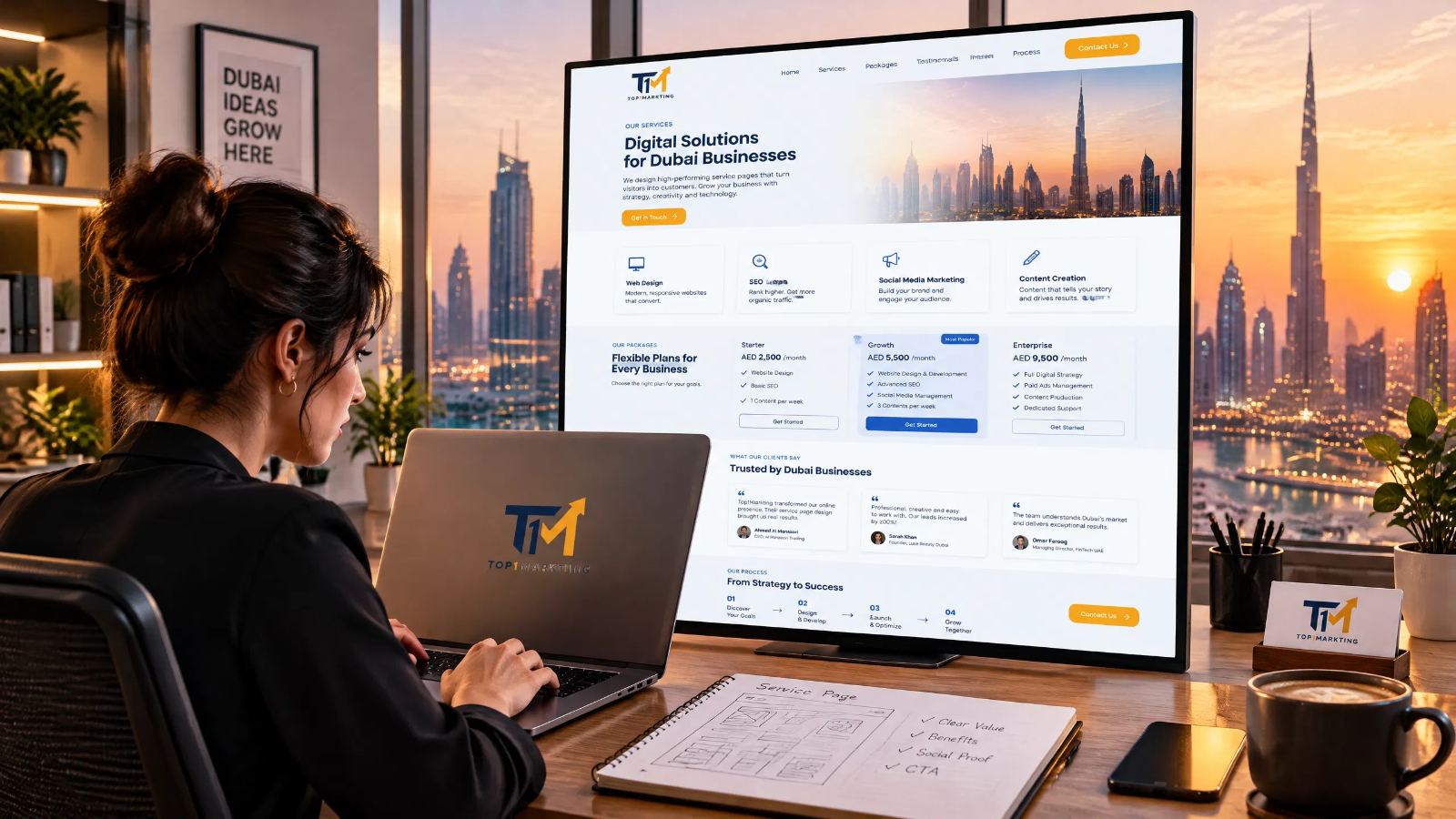
When designing a service website in Dubai, the process should not begin with colors or the appearance of the homepage. It should begin with understanding the service the company provides and how customers make purchasing decisions. Some services can be requested directly, while others require an explanation, site visit, or quotation before the customer can make a decision.
The Difference Between a Service and a Product When Building a Website
A product can usually be described through clear specifications, a fixed price, and direct options, while a service may vary from one customer to another depending on the nature and requirements of the project. Therefore, the website should reflect the way the service is sold by clearly explaining what is being offered, what the implementation includes, and what information is required before work begins.
Services That Require an Explanation Before Being Requested
Some services cannot be properly evaluated based on their names alone, especially technical or specialized services. The website should therefore provide a simple explanation of the problem the service addresses, what the customer receives, the stages of the work, and the expected results or deliverables. This helps visitors understand the service before moving on to contact the company or request it.
Services That Require a Site Visit Before Pricing
Some services are priced according to the condition of the site, the size of the project, or the nature of the implementation, making a fixed price unsuitable. In this case, the website can explain the importance of a site visit, clarify the elements that are evaluated, and then direct the customer to request an inspection or contact the company for the appropriate details.
Services That Depend on a Quote Request
Some services are delivered according to specific requirements, so the customer needs to provide project information before the company can prepare a suitable quotation. The service page can include a clear quotation request form with concise questions that collect the essential information instead of relying solely on a “Contact Us” button.
Services That Can Be Requested Directly
If the service is clear and can be delivered without prior assessment or a customized quotation, access to it can be made more direct. The website presents the service details, available options, ordering method, and appropriate communication channel, allowing the customer to move from understanding the service to taking action without unnecessary steps.
Identifying the Information Customers Need Before Contacting the Company
Before contacting the company, customers should be able to find the information they need to take the next step. This may include the service scope, implementation process, approximate timeframe, requirements, frequently asked questions, and whether the price requires a customized quotation. In this way, the website becomes a tool for organizing the customer journey rather than simply serving as an informational interface.
Top1Markting approaches service website design by first understanding the nature of the service and the customer journey, then transforming this understanding into pages, content, and a user experience that helps visitors reach the appropriate action.
How Can a Company’s Service List Be Transformed into a Clear Website Structure?
A service list alone is not enough to build an organized website. When designing service websites in Dubai, actual services should be transformed into a structure that customers can navigate easily, while defining the relationship between primary and secondary services and the pages required for each service.
Listing Primary and Secondary Services
The structure begins by identifying all services the company actually provides, then dividing them into primary and secondary services. This classification helps determine the website size before design begins and identifies the pages customers need to reach the appropriate service.
Grouping Related Services
If a company provides a group of services within the same field, it is better to place them within a clear category instead of distributing them randomly throughout the website. Logical grouping makes navigation easier and helps visitors discover services related to their needs.
Determining the Appropriate Page for Each Service
Each service has a different search intent and customer need, so the appropriate page for explaining it clearly must be determined. A service may appear within a main services page, or it may require a dedicated page containing detailed information, questions, and the service request process.
When Does a Service Need a Dedicated Page?
A service generally needs its own page when it has a distinct audience, search intent, or implementation process compared with other services, or when it requires extensive explanation that would not fit appropriately within a general page. Simple and highly related services, however, may be clearer when grouped together on one page.
Preventing the Same Service from Being Repeated in Multiple Places
Repeating the same service across several pages without a clear reason can make the website structure confusing for customers. It is better to define the primary page for the service and reference it from other pages when necessary, while maintaining a different purpose for each page.
Building a Structure That Customers Can Understand Quickly
A good structure allows customers to understand where they are, what the company offers, and where to find the service they are looking for. Section names should therefore be clear, categories logical, and the path to the required service as short as possible.
Example of a Company Offering Multiple Services in Dubai
If a Dubai-based company provides website design, e-commerce stores, custom programming, systems, and digital marketing services, it is better to divide the website into clear sections and place the related services within the appropriate category instead of creating one long, unorganized list.
Example of a Company with One Main Service and Several Sub-Services
If a company offers a primary service such as website design, with sub-services including corporate website design, service website design, and landing page design, it can create a main page for the primary service and dedicated pages for sub-services that require detailed explanations or target different customer needs.
The Homepage of a Service Company: What Should the Customer Understand From It?
The homepage is not the place to display every detail of the company’s services. Instead, it is the starting point that helps customers quickly form an understanding of the company and what it offers. The page should answer the basic questions before visitors begin navigating through the different sections.
What Does the Company Offer?
Visitors should be able to understand within seconds the field in which the company operates and its core services, using clear statements rather than generic headlines that do not explain the nature of the business.
Who Are the Services For?
The way a service is presented may vary according to the type of customer. A company may target restaurants, businesses, stores, project owners, or organizations. Clarifying the target audience helps visitors determine whether the service is suitable for their situation.
Where Does the Company Provide Services in Dubai?
If the company serves specific areas of Dubai, the service coverage can be explained naturally by mentioning the areas or sectors in which it operates, without overloading the page with location names.
What Makes the Company’s Approach Different?
Instead of relying on generic statements, the website can explain how the company handles projects, such as requirements analysis, planning, implementation, follow-up, or support, depending on the actual nature of the service.
How Does the Customer Reach the Service They Need?
Core services should be visible from the homepage with clear links leading to their detailed pages. The goal is to allow customers to move from learning about the company to finding the required service without searching through the website.
How Can the Customer Request the Service?
After understanding the service, customers need a clear action such as requesting a quotation, contacting the company, booking a consultation, or submitting project requirements. This action should appear in appropriate locations without forcing visitors to return to the homepage.
A Service Page Is Not a Copy of the Company Page
A service page has a different purpose from the homepage. Visitors who reach it are usually interested in a specific service and want to understand its details before contacting the company. Therefore, the page should focus on their needs rather than repeat the company’s full introduction.
What Does the Customer Look for on a Service Page?
Customers want to know what the service is, what they receive, how it is delivered, what the requirements are, what factors affect the price, and how they can get started. The information should therefore be organized according to the questions customers need answered.
Defining the Service Directly
The page should begin by explaining the service itself without a long introduction. Visitors should understand from the beginning what the company provides and what type of project or need the service is intended to address.
The Problem the Service Solves
A service is not sold by its name alone, but by the solution it provides. The page can therefore explain the problem or need that leads customers to search for the service and connect it with what the company actually provides.
What Does the Implementation Include?
The scope of the service should be clearly explained so customers understand what is included in the implementation and what may require additional services. This reduces confusion and helps establish clear expectations before the project begins.
Service Delivery Steps
Briefly presenting the work stages helps customers understand what happens after contacting the company, such as requirements analysis, planning, implementation, review, delivery, or follow-up, with the stages adjusted according to the nature of the service.
Implementation Time When It Can Be Determined
If the service duration can be realistically estimated, the timeframe or the factors that determine it can be explained. If the duration varies according to the project, it is better to explain this rather than provide a fixed number that does not apply to every case.
Factors That Affect the Price
Not every service needs a fixed price displayed on the website. The page can explain the elements that affect the cost, such as project size, number of pages, required features, level of customization, or implementation scope, and then direct the customer to request an appropriate quotation.
Images and Examples Related to the Service
Images and previous work help customers understand the nature of the implementation, especially for services where the final appearance or visible results matter. Examples should be directly related to the service rather than being presented as a general portfolio gallery.
Questions Customers Ask Before Requesting the Service
A dedicated FAQ section can address common questions before contracting, such as requirements, timeframe, revisions, support, payment process, or implementation scope, giving customers clear answers before they make contact.
How to Request the Service
The page should end with a clear practical action appropriate to the nature of the service, whether that means requesting a quotation, submitting project details, contacting the company directly, or booking a consultation. This transforms the service page from an informational page into a point where the customer can actually begin the process.
How Do We Design a Service Page That Leads Customers to Contact the Company?
A service page should not simply present information; it should make the next step clear to the customer. The appropriate action varies according to the nature of the service. Therefore, the goal is not to place as many contact buttons as possible, but to choose a suitable method for the customer’s stage and needs.
Placing the CTA in the Right Location
The call-to-action should appear where the customer has received enough information to take the next step. It can be placed after the introduction, after explaining the service scope, and at the end of the page, with the wording adapted to the intended action.
Service Request Form
A short form can be used when the company needs initial information about the project. The form should be easy to complete and should explain to the customer what will happen after submitting the request.
Call Button
Direct calling is suitable for services that require a quick discussion or when the customer is ready to speak with the company. The call button can be displayed clearly on both mobile devices and the website, particularly on service pages with strong purchase intent.
WhatsApp Button
WhatsApp can be provided as a quick communication option for sending project details, images, and files when needed. Ideally, the button should be connected to a clear reason for contacting the company, such as “Ask About the Service” or “Send Your Project Details.”
Request a Quote
When the cost of a service varies from one project to another, requesting a quotation is more appropriate than directing customers to search for a price that does not exist. The button can be connected to a form that collects the basic information required to prepare the quotation.
Request a Site Visit
If determining the service or cost requires inspecting the site or project, customers can be directed to request a site visit. The form should collect basic information such as the location, service type, and preferred inspection time.
Book an Appointment
Some services begin with a consultation or meeting before implementation. In such cases, appointment booking can be the primary action. This helps organize communication rather than relying solely on messages and phone calls.
Selecting the Service in the Form
If the company provides multiple services, a field can be added to allow customers to select the service they are interested in. This reduces repetitive questions and helps the company’s team understand the reason for contact before responding.
Collecting Only the Information the Customer Needs to Provide
Every additional form field represents another step for the customer. Therefore, only information genuinely required at the initial stage should be collected, while non-essential details can be requested later during communication or project assessment.
When the Price Is Not Fixed: How Should the Website Present the Pricing Process?
Not every service website needs a fixed price list. In many cases, costs vary according to project size, location, requirements, materials, or level of customization. The website should therefore explain how the price is determined rather than simply saying “Contact Us.”
Services That Require a Site Visit
If determining the cost depends on the condition of the site or project, the website can explain that the final price requires an inspection. Customers benefit from understanding why the visit is necessary and what will be evaluated during it.
Services Based on Project Size
Some services are linked to area or volume. The website can explain the factors included in calculating the cost, such as total area, number of units, or the amount of work required.
Services That Vary According to Requirements
One customer may request a basic implementation while another may need additional features or services. The website should therefore explain that the price changes according to the scope of work and required specifications.
Services That Require Assessment Before Pricing
For large projects or customized solutions, the company may need to study the requirements before determining the cost. The website can explain the project assessment stages and the information the team needs to prepare a quotation.
When Is a Quote Request Better Than Displaying a Fixed Price?
Requesting a quotation is more suitable when a uniform cost cannot be determined for all customers. Displaying a fixed price for a service whose cost varies significantly may give customers an inaccurate idea of the final price.
What Information Should Be Collected Before Sending a Pricing Request?
This varies according to the service, but the information may include the project type, location, scope of work, area or size when necessary, basic requirements, expected implementation date, and contact details. The goal is to provide the company with enough information to begin reviewing the request without turning the form into a lengthy questionnaire.
How Should a Service Company Website Present Its Coverage Across Dubai?
If a company operates in multiple areas of Dubai, this does not mean creating a separate page for every area automatically. Each location page should have a clear purpose and content connected to the service and an actual customer need.
Identifying Service Areas
The website should begin by clarifying the areas the company actually serves. These can be displayed within the services page or on a dedicated service coverage page, depending on the size of the business and number of locations.
Connecting the Service to a Location When There Is Genuine Demand
If a particular service is clearly requested in a specific area, the service can be connected to that location within the content. This is better than adding location names simply to target local search keywords.
Clarifying the Areas the Company Serves
A simple section can explain the company’s coverage across Dubai, using area names naturally and helpfully for customers rather than repeating them throughout every page.
Managing Companies That Serve Multiple Areas
If the company provides services across multiple areas, they can be organized under the main service page with clear coverage information. Separate location pages should only be created when there is genuine information that can be provided for each area.
When Does a Location Need a Dedicated Page?
A location needs a dedicated page when it has a clear search intent, an actual service offering, and unique content that can benefit the customer. Simply having the name of a location is not enough to justify creating a new page.
How Can a Website Avoid Similar Location Pages?
Each location page should have a clear reason for existing, with information connected to the location and service rather than simply replacing the location name within the same text. Nearby areas can also be combined into one page when there is no genuine need to separate them.
Company Services in Downtown Dubai
This section can be dedicated to the services the company actually provides to businesses and projects in Downtown Dubai, focusing on customer needs in the area rather than creating generic repeated content.
Company Services in Business Bay
This section presents the services available in Business Bay and connects them to the types of projects or customers the company targets when there is genuine information worth mentioning.
Company Services in Dubai Marina
If the company provides services in Dubai Marina, the available services and communication or implementation process can be explained, provided the page adds useful information beyond simply mentioning the area name.
Company Services in Jumeirah
The services available in Jumeirah can be explained, connecting the area to the appropriate service when this is genuinely part of the company’s service coverage.
Company Services in Deira
This page or section can clarify the services available in Deira, focusing on what customers actually need and how they can begin the service request process.
Company Services in Bur Dubai
The services provided by the company in Bur Dubai can be presented along with coverage details and the process for obtaining the service when there is genuine demand in the area.
Company Services in Al Barsha
Al Barsha can be connected to the services the company provides there, with genuine local information instead of simply repeating the content of the main service page.
Company Services in Al Quoz
The available services in Al Quoz can be explained and connected to the types of projects or customers served in the area when such information is genuinely available.
Company Services in Dubai Silicon Oasis
This section can be dedicated to the services the company provides in Dubai Silicon Oasis, following the same principle: useful and location-specific content rather than simply changing the location name inside the same template.
Basic Rule: Do not automatically create a separate page for every area. A local page deserves to exist when it provides genuine value to customers and offers information connected to both the service and the location, rather than simply increasing the number of website pages.
Does Every Service in Dubai Need a Location Page?
Having a company in Dubai does not necessarily mean creating a separate page for every service in every area. The decision depends on the nature of the service, whether there is genuine demand for it, and whether the page can provide useful local information to customers.
When Is the Service Page Enough?
The main service page is sufficient when the company serves multiple areas in the same way and there are no meaningful differences in implementation or requirements from one area to another. In this case, the service coverage can be explained within the service page without creating separate local pages.
When Does a Location Page Become Useful?
A location page becomes useful when there is clear demand for the service in a specific area, or when the nature of projects, customers, or service delivery differs. In that case, the page can provide genuine local information that helps the customer rather than simply mentioning the area name.
The Difference Between a Service Page and a Service Page for a Specific Area
A service page explains the service itself: what it is, what it includes, how it is delivered, and how customers can request it.
A service page targeting a specific area combines the service with the local context, such as service coverage, types of projects found in the area, access or site-visit procedures, and projects previously completed there when such information is available.
How Can We Avoid Duplicate Content?
A single version of the service page should not be duplicated simply by changing the location name. If there is no genuinely different and useful information for each area, it is better to rely on the main service page. Genuine local pages, however, should contain information and examples related specifically to the area.
How Should Service Pages and Location Pages Be Linked Logically?
The main service page can link to the areas the company serves, while location pages can link back to the related services. The linking structure should be useful to visitors, allowing them to move through service → location → service details or request without creating an arbitrary network of links.
A Portfolio Is More Than Just a Photo Gallery
A portfolio can help customers understand the quality of implementation and the types of projects the company has handled. Therefore, displaying a collection of images alone is not enough. It is better to turn each project into a short case study that explains what was implemented and the context surrounding it.
Why Does the Customer Need to See Previous Projects?
A previous project gives customers a practical idea of the type of work the company can deliver. It also helps them compare their own needs with projects the company has completed before.
Categorizing Projects by Service Type
Projects can be organized by service, such as website design, programming, e-commerce stores, or systems. This allows customers to find work directly related to what they are looking for instead of browsing through one unorganized gallery.
Presenting the Problem, Solution, and Result
Instead of displaying an image alone, the project can be explained through three key points: what the problem or need was, what solution was implemented, and what was delivered to the customer. This transforms the project from a simple image into an understandable practical case.
Mentioning the Project Location in Dubai
When the information is accurate and appropriate to publish, the area where the project was implemented can be mentioned, such as Business Bay or Dubai Marina, providing local context without artificially inserting location names.
Using Before-and-After Images When Appropriate
For services where the difference is visually noticeable, before-and-after images can be used to demonstrate the transformation. For digital or technical services, interface screenshots, project stages, or results that are permitted for display may be more useful.
Linking the Project to the Service That Was Delivered
Visitors should be able to identify the service implemented as part of the project. A direct link to the related service page can be added, allowing customers to move from viewing the example to learning more about the service.
Turning the Portfolio Into a Trust Element
The clearer and more authentic the project information is, the more useful the portfolio becomes during the decision-making stage. Project information can include the project type, implementation scope, location when available, images, and the services delivered.
How Does a Service Company Website Demonstrate Its Expertise?
Demonstrating expertise should not rely on statements such as “the best” or “the most professional.” Instead, it should be based on information and evidence that customers can review. The website should therefore present experience-related elements clearly and in a way that is connected to the company’s actual business.
Years of Experience
The company can mention the number of years it has been operating when the information is accurate, along with the period or business start date when appropriate.
Areas of Expertise
Showing the fields in which the company operates helps customers understand how closely its experience matches their needs, particularly when the company provides multiple types of services.
Previous Projects
Completed projects provide practical evidence of the types of work the company has handled, especially when they are documented with clear details, images, or results that can be shared.
Customer Testimonials
Customer reviews or testimonials can be displayed when they are genuine and authorized for use. Ideally, each testimonial should explain something about the service or project rather than simply providing a general statement.
Implementation Images
Original project images can support written information and demonstrate the nature of the implementation. The selected images should be directly relevant to the service being presented.
Certifications and Accreditations When Available
If the company holds professional certifications or official accreditations related to its business, they can be displayed along with the issuing organization and relevant accreditation details rather than using unverified logos or certificates.
The Team When Showing It Adds Value
Presenting the team can be useful when the expertise of specific people is an important part of the customer’s decision, such as consulting or specialized technical services. The company can focus on relevant roles and expertise instead of creating a large team section that does not contribute to the decision to make contact.
Information That Helps Customers Decide to Contact the Company
Ultimately, customers need to know who they are dealing with, what the company can deliver, what types of projects it has handled, and how to take the next step. Experience-related information should therefore always be connected to the actual service rather than presented as an isolated corporate section.
The Customer Journey Inside a Dubai Service Company Website
A successful website should not assume that every customer will start from the homepage. Visitors may enter directly from Google through a service page, location page, or an article answering a specific question. Pages should therefore be designed so visitors can continue their journey regardless of where they enter.
The Customer Arrives From Google
A searcher may arrive at a specific service page, local page, or article that answers a question. Every page should therefore make its topic and relationship to the company’s services clear from the beginning.
The Customer Discovers the Right Service
After reaching the website, customers need to determine whether the service presented matches their needs. This is where a clear title, service description, and implementation scope become important.
The Customer Confirms the Service Coverage
If the customer is looking for a company that operates in Dubai or in a specific area, clear information about service coverage and delivery should be easy to find.
The Customer Reviews Previous Work
After understanding the service, customers may move to previous projects or implementation examples to see the types of work the company has handled.
The Customer Looks for a Contact Method
When the customer is ready to take the next step, they should not have to search through the website for a phone number, WhatsApp button, or request form.
The Customer Sends a Request or Makes a Call
The customer chooses the communication method that fits the service: requesting a quotation, requesting a site visit, booking an appointment, contacting the company through WhatsApp, or making a direct call.
What Happens After the Request Is Submitted?
It is useful for the website to explain the next step, such as reviewing the request, contacting the customer, collecting additional details, scheduling an appointment, preparing a quotation, or beginning the project assessment. This makes the communication process clearer and gives customers an idea of what happens after they click the request button.
Designing the Website According to How the Company Acquires Customers
Designing a service company website depends not only on the type of service, but also on how the relationship with the customer begins. A company that receives most of its inquiries by phone needs a different experience from a company that relies on request forms, booking systems, or WhatsApp. Therefore, the communication journey should be part of the website planning process from the beginning.
Companies That Rely on Phone Calls
If phone calls are the primary customer acquisition channel, the phone number should be clear and easy to access, with direct call buttons, particularly on mobile devices. The number can also be displayed alongside services that require a quick discussion before implementation.
Companies That Rely on WhatsApp
When WhatsApp is a primary communication channel, service pages can include a direct button that opens a conversation with the company, along with clear wording explaining the reason for contact. An initial message related to the service can also be prepared to make starting the conversation easier.
Companies That Rely on Request Forms
A form is suitable when the company needs to collect information before contacting the customer. It should be concise and logically structured, with a clear explanation of the required fields and what will happen after the request is submitted.
Companies That Rely on Quote Requests
For services whose cost varies according to the project, “Request a Quote” can be the primary action on the page. The form should explain the information the company needs to prepare the quotation, such as project type, scope of work, and basic requirements.
Companies That Rely on Booking
If the service begins with a consultation or meeting, booking can be integrated into the website so customers can select a suitable time and understand what will happen during the meeting before confirming it.
Companies That Rely on Site Visits and Inspections
Some services cannot be accurately assessed without visiting the site. In this case, the website should explain the areas covered by the inspection, the information required to request it, and whether any steps need to be completed before the visit.
Companies That Combine Multiple Channels
A company may need to use phone calls, WhatsApp, forms, and booking at the same time. These channels should not be placed randomly. Instead, each channel should be connected to the appropriate stage of the customer journey, with one clear primary option and alternatives available when needed.
What Should the Customer Know Before Requesting the Service?
Before submitting a request, customers need enough information to understand what they are requesting and what they can expect after making contact. The clearer this information is, the more effective the request form or communication process becomes.
Service Scope
The website should clearly define what the service provides and what is included in the implementation so customers understand its boundaries before submitting a request.
Areas Covered by the Company
The company can clarify the areas it serves within Dubai, particularly when the service requires a site visit or on-site implementation.
Implementation Process
Briefly explaining the work stages helps customers understand what happens after the project begins, from requirements analysis through implementation and delivery.
Preliminary Requirements
Some services may require files, measurements, images, or project information before work can begin. These requirements should be explained in advance whenever possible.
Expected Duration When Known
If the implementation time can be estimated, it can be stated clearly. If it varies from one project to another, the factors that determine the duration can be explained instead of making a fixed promise.
Factors Affecting Cost
The website can explain the elements used to determine pricing, such as project size, level of customization, number of required services, or implementation scope, depending on the nature of the business.
Frequently Asked Questions
An FAQ section addresses questions that may prevent customers from submitting a request, such as duration, requirements, revisions, support, payment methods, or implementation procedures.
How to Start the Project
Customers should clearly understand the first step: Should they submit details? Book an appointment? Request an inspection? Or contact the company for a quotation? A clear action reduces hesitation before contacting the company.
Designing a Website for a Company That Offers Dozens of Services
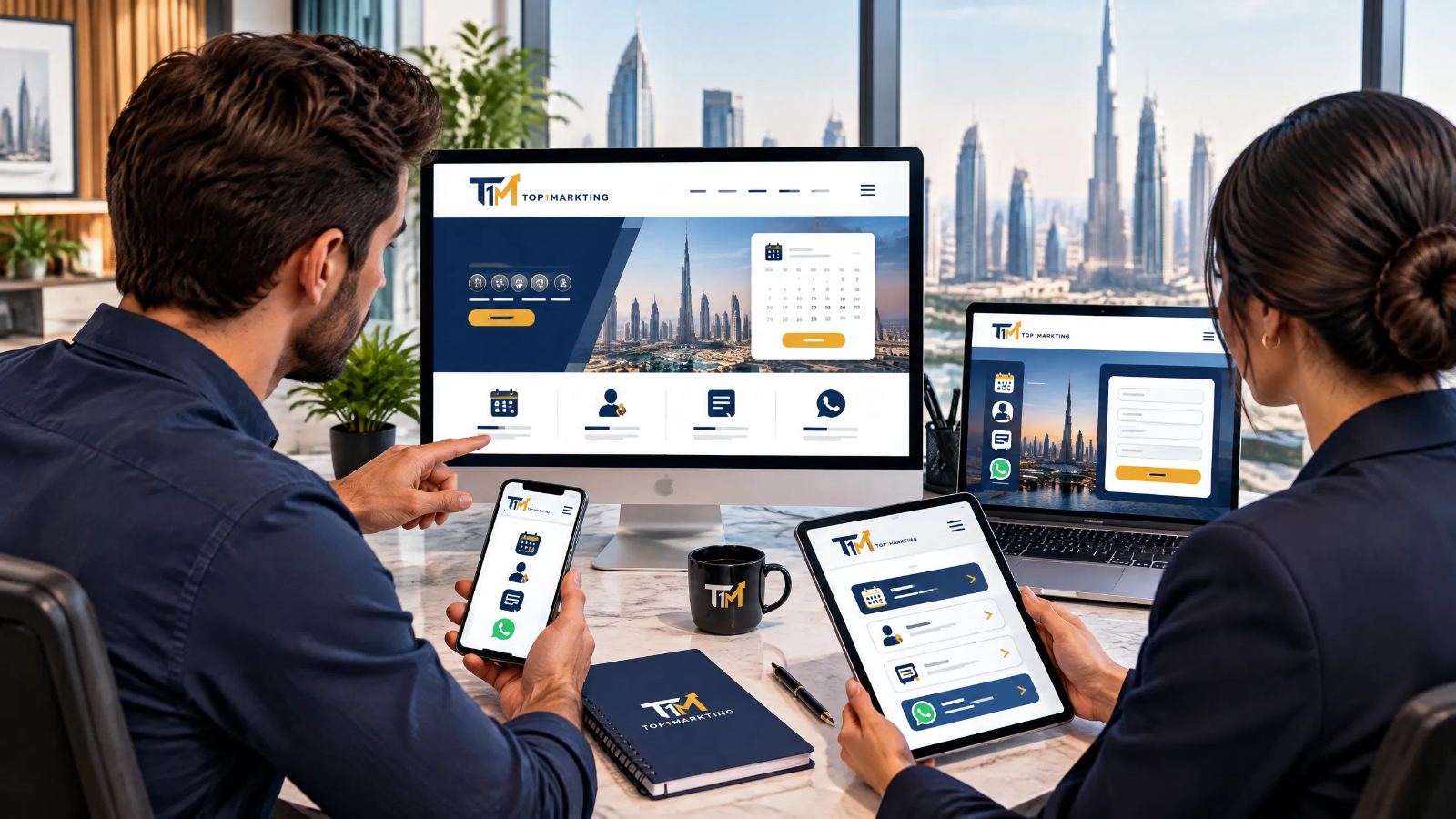
When a company offers a large number of services, organizing information becomes more important than adding more elements to the homepage. The goal is to allow customers to reach what they need without navigating through a long list of options.
Creating a Clear Service Classification
Services should be grouped into understandable categories according to their nature or field, allowing customers to identify where the service they need is located without reading every service listed on the website.
Primary Services vs. Supporting Services
Not all services have the same importance or request process. The primary services that represent the company’s core business can be highlighted, while supporting services can appear in locations related to them.
Website Search
When the number of services and pages becomes large, internal search can help customers quickly find the service or topic they are looking for.
Dropdown Menus
Dropdown menus can present service groups in an organized way, but they should not become huge lists that are difficult to read. It is better to divide them into short, clear categories.
Related Service Pages
Each service page can display related services when there is a genuine connection between them. For example, a customer may move from a primary service to a complementary service required for the same project.
Linking Between Services
Internal linking helps customers discover services they may need within the same project. However, links should be logical and based on the actual relationship between services.
Preventing Customers From Being Overwhelmed by Too Many Options
Having dozens of services does not mean displaying all of them on every page. Customers should be given an appropriate number of options at each stage, with the ability to explore further when necessary.
What If the Service Differs According to the Customer Type?
A company may provide the same service to multiple customer groups, but each group may have different needs and decision-making processes. Different paths can therefore be designed within the website while maintaining the main service page.
B2B Services
Business customers may be interested in project scope, previous experience, contracting procedures, support, integrations, timelines, and technical requirements. The website can therefore provide information suitable for the business purchasing cycle without overwhelming the general service page with unnecessary details.
Services for Individuals
Individual customers may look for a simple explanation of the service, cost or pricing method, timeframe, implementation scope, and communication method. The information can therefore be simplified and the customer directed toward the appropriate action.
Real Estate and Project Services
Real estate projects may require different information, such as project size, implementation stages, scope of work, timelines, and coordination procedures. This information can be presented through a path suited to the nature of larger projects.
Services for Small and Medium-Sized Businesses in Dubai
Small and medium-sized businesses may need to understand whether the service suits their business size, budget, and current requirements. The website can therefore clarify the available solutions and how to get started without assuming that their needs are identical to those of larger companies.
Designing Different Paths for Each Customer Type
The page can begin by identifying the customer type or presenting links to different paths, then directing each group to the information, services, and actions most relevant to them. This prevents the website from becoming a collection of disconnected pages and instead turns it into a system that guides each visitor toward the information they need.
Websites for Companies That Provide Services Requiring Site Visits
When a service depends on visiting the customer’s location or project site, the website should treat the visit as an essential part of the request journey rather than simply adding a phone number. The form can be designed to collect the information the team needs before arriving at the site.
Requesting a Site Visit
The website allows customers to submit an inspection request directly while explaining the service type and required information. After submission, the customer can be informed of the next step, such as reviewing the request or contacting them to confirm the appointment.
Specifying the Project Location
The form can request the project address or area within Dubai so the team knows where the implementation will take place before contacting the customer. For services with a specific geographic coverage area, this also helps confirm whether the company can serve the location.
Uploading Images or Files
Allowing customers to upload images or files helps the team develop an initial understanding of the project before the site visit. The required file or image types can be specified according to the nature of the service.
Selecting the Service Type
If the company provides multiple on-site services, customers can select the service they need from a clear list so the request reaches the appropriate department or team.
Describing the Customer’s Requirement
A short field can allow customers to explain what they need without creating a long questionnaire that makes the form difficult to use. This information can help the team understand the request before conducting the inspection.
Selecting an Appointment
Customers can choose a suitable day or time for the inspection when a booking system is available, or select a preferred time period if the final appointment needs to be confirmed by the company.
Receiving Requests Through the Dashboard
After a request is submitted, it should not end with an email notification alone. It can be stored inside a dashboard showing customer details, project location, requested service, attached files, appointment information, and request status, allowing the team to manage everything from one place.
How Can a Website Handle Service Requests?
As the number of requests and services increases, managing data after a form submission becomes part of the website design itself. The request journey should therefore be considered from the moment the form is submitted until the request reaches the responsible employee and is followed up.
Unified Request Form
A single form can be used for services that require similar information, with basic fields such as name, contact method, service, area, and request description.
Different Form for Each Service
When service requirements differ significantly, a dedicated form can be created for each service. A site inspection request may require location and images, while a programming request may require a description of the requirements and technical files.
Receiving Customer Data
Customer-submitted information should be stored in an organized way, including the request date, requested service, and any additional information provided.
Categorizing Requests
Requests can be categorized according to service, location, customer type, or request status. This helps the team understand priorities and distribute requests efficiently.
Request Notifications
A notification can be sent to the responsible person or team whenever a new request arrives so that new inquiries do not remain unattended.
Transferring Requests to the Sales Team
When a request requires commercial follow-up, it can be transferred directly to the sales team while preserving all information submitted by the customer.
Connecting Requests to Email or WhatsApp
The system can be connected to the communication channels used by the company so request notifications reach the appropriate channels while the core data remains stored within the system.
Storing Requests in the Dashboard
A dashboard makes the website more than a simple reception interface. The team can review requests, update their status, add notes, and determine whether a request is new, being followed up, or already handled.
When Does a Service Company Website Need Custom Functions?
Not every company needs a complex system, but some services require functionality beyond traditional content pages and forms. When the operational process becomes part of the customer journey, custom functionality can be developed within the website.
Service Cost Calculator
A calculator can be created when the cost depends on a clear set of variables, such as area, service type, or number of units. The calculator should be built according to the company’s actual pricing process.
Advanced Request Form
If the company needs different types or large amounts of information depending on the service, a dynamic form can be developed to display the appropriate fields based on the customer’s selections.
Appointment Booking System
A booking system can be integrated when the service depends on consultations, inspections, or appointments. The system can organize available times and record bookings within the dashboard.
File and Image Uploads
File uploads can be added when the company needs project drawings, images, documents, or related files. File types and size limits should be defined according to the system requirements.
Area Selection
Requests can be connected to the project location so the company can identify the geographic scope of incoming requests and direct them to the appropriate team.
Request Status Tracking
For some projects, customers may need to know the status of their request, such as: request received, under review, awaiting information, appointment scheduled, or quotation sent.
Dedicated Sales Team Dashboard
A dedicated dashboard can display requests, customer details, and the status of each request, with tools for searching, filtering, adding notes, and monitoring communication stages.
Connecting the Website to a CRM
When a company relies on a CRM system to manage customers, the website can be connected to it so new request data is transferred automatically instead of being entered manually each time.
Internal Link: When functionality beyond a traditional website is required, you can visit the Custom Website Development in Dubai page to learn more about customized solutions and connecting the website with the company’s internal workflows.
How Can Website Design Support Marketing Rather Than Work Against It?
A service company website should not be merely an informational interface. It should be part of the journey that begins with an advertisement or search and ends with a service request. Pages and contact points should therefore be designed according to how customers reach the company, whether through Google, advertising campaigns, or social media platforms.
Service Landing Pages
When running a marketing campaign for a specific service, it is generally more appropriate to direct customers to a page directly related to that service instead of sending them to the homepage. The landing page contains the information customers need to take the next step, such as service details, implementation scope, benefits, FAQs, and the service request process.
Dedicated landing pages can also be created for specific services or customer segments, while maintaining different content and objectives so the pages do not become repetitive copies of one another.
Advertising Campaign Pages
Advertising campaigns require pages that align with the message presented in the advertisement. If a campaign targets a specific service in Dubai, visitors should find the same service and related information when they open the page, along with a clear way to contact the company or request a quotation.
This connection between the advertisement and landing page helps reduce the number of steps required by the customer and gives the company a better opportunity to measure the performance of each campaign and page separately.
Receiving Customers From Social Media
Visitors coming from Instagram, Facebook, TikTok, or other platforms do not necessarily interact with a website in the same way as someone searching on Google. The website can therefore provide suitable paths for visitors coming from social content, such as concise service pages, dedicated offer pages, or quick contact forms.
The important point is that the next step should be clear, whether it is reading service details, submitting an inquiry, contacting the company through WhatsApp, or requesting a quotation.
Tracking Contact Requests
Every request received through the website represents an opportunity that can be monitored and analyzed. It is therefore useful to record basic request data, such as the requested service, contact method, submission time, and traffic source when the website system supports this.
This allows the company to understand which pages generate actual inquiries rather than simply identifying which pages receive visits.
Connecting WhatsApp
Connecting WhatsApp to the website provides a direct channel for customers who prefer conversation over completing a long form. The contact button can be placed in appropriate locations within service pages, with an initial message related to the service the customer was reading about.
Multiple communication points can also be used according to the nature of the service, such as WhatsApp for quick inquiries and forms for quotation requests or projects requiring additional information.
Measuring Conversions
Knowing the number of website visitors is not enough. More important is understanding how many visitors completed a useful action, such as submitting a form, clicking the phone number, starting a WhatsApp conversation, requesting a site visit, or booking an appointment.
Measuring these conversions helps compare the performance of pages and campaigns, identify which traffic sources generate actual requests, and then use this data to improve both the website and marketing activities.
Developing Pages Based on Visitor Behavior
After launching the website, another stage begins based on real data. Pages that receive visits without conversions, forms that are not completed, and sections that users interact with can be reviewed. Content, element order, or service presentation can then be adjusted accordingly.
This makes the website capable of evolving over time instead of remaining static regardless of changes in customer behavior or acquisition channels.
If the website is part of an integrated marketing strategy that includes advertising, content, social media, and performance analysis, it can be connected with Digital Marketing Company in Dubai services so that different channels work together within one customer journey instead of the website operating separately from the rest of the marketing activities.
Preparing a Service Website to Appear in Google
Google visibility for a service company website does not begin by adding keywords to pages after the design is completed. It begins by building the website in a way that allows search engines to understand the services the company provides, the areas it serves, and the topics associated with each service.
The website structure and content should therefore be considered from the design stage, while leaving room to develop a broader SEO strategy later.
Building Pages for Every Real Service
If a company provides several different services, each primary service should have its own page when it has a distinct search intent, information requirements, and customer needs.
A service page should provide genuine value to the searcher rather than simply changing the service or city name within repetitive content. It can include the nature of the service, suitable use cases, implementation steps, pricing factors, FAQs, and the service request process.
Matching the Page to Search Intent
People searching for a company to provide a specific service do not always want the same information. They may want to understand the service, compare options, request a price, or contact a company to handle an actual project.
The page content should therefore match the expected purpose of the search. If users are searching for a specific service, they should find a clear explanation of the service and how to request it rather than a generic company page.
Organizing Headings and Content
Using H1, H2, and H3 headings in an organized way helps divide the page into clear topics, makes the content easier for visitors to read, and helps search engines understand the page structure.
The main heading should ideally represent the primary service, while subheadings explain important aspects such as benefits, workflow, use cases, FAQs, and service coverage.
Internal Linking Between Services
Internal linking helps visitors move from one service to another related to their needs. It also helps search engines discover pages and understand the relationships between them.
For example, a primary service page can link to a complementary service or a specialized page when there is a genuine relationship between them, rather than placing random links at the bottom of every page.
Improving Website Speed
Page loading speed affects user experience, particularly when customers access the website from mobile devices or slower connections. Images should therefore be optimized, unnecessary files reduced, and appropriate technologies used to load page elements efficiently.
The goal is not simply to achieve a particular score in a speed test. The objective is to make the page usable quickly and without frustrating delays while browsing or submitting a service request.
Mobile-Friendly Website Design
A significant portion of customers may access a service company website through mobile devices, whether from Google, advertisements, or social media. Pages should therefore be easy to read and navigate on smaller screens.
This includes appropriate text sizes, logical section layouts, clearly visible call and WhatsApp buttons, easy-to-complete forms, and eliminating the need for excessive zooming or horizontal scrolling.
Preparing Pages for Local Search in Dubai
If the company targets customers in Dubai, the website should naturally and usefully communicate its service coverage and operating areas. Areas served by the company can be mentioned when accurate, such as Business Bay, Dubai Marina, Jumeirah, Deira, and others.
Local visibility does not mean automatically creating a separate page for every area. A local page needs genuine content and information that adds value to the searcher rather than simply repeating the service page with a different location name.
Connecting the Website to an SEO Strategy Later
A service website can be launched with a scalable structure that allows SEO elements to be added gradually after collecting search and user behavior data. This may include developing service pages, creating specialized content, improving internal linking, targeting more specific queries, and expanding local coverage when genuine demand exists.
This approach means website design is not separate from SEO. Instead, the website becomes a foundation that can support the SEO strategy as it develops.
When moving to a more specialized visibility strategy, the company can benefit from SEO Services in Dubai to develop pages, content, internal linking, and technical factors according to the website’s objectives and the behavior of local searchers.
When Customers Search for Service + Location
When customers search on Google using a service name together with a geographic location, they are often not simply looking for general information. They are trying to find a company capable of providing the service in the area where their project or business is located.
A service company website should therefore clearly and naturally reflect the relationship between the service and location.
Targeting Searches Related to Dubai
The website can target searches that combine the service name with Dubai when the company genuinely provides that service within the emirate. This starts with clear service pages and naturally explaining the company’s Dubai coverage in relevant areas rather than repeatedly inserting the city name.
Search wording can also vary depending on the service. Customers may search for a company, a specific service, or service delivery in a particular area. The website should therefore address different search variations related to the same service.
Targeting the Service and Location Together
The service name alone does not always communicate geographic coverage, while mentioning Dubai alone does not explain what service the company provides. The page should therefore combine both elements when this is useful to the searcher.
This can appear in the page title, introduction, content, and service coverage information while maintaining natural language instead of inserting phrases such as “service + Dubai” into every paragraph.
Location Pages When They Provide Genuine Value
Some companies may need dedicated pages for specific areas when they have genuine activity, projects, or important information that can be provided to customers in that area.
If there is no meaningful difference in service, implementation scope, or customer needs, there is no need to create many similar pages simply to target location names. A local page should provide genuine information rather than simply replacing one area name with another.
Linking the Service Page to Location Pages
When genuine location pages exist, they can be linked to the main service page in a way that helps users move between general information and local details.
The service page explains the nature and scope of implementation, while the location page provides information related to the local market, service coverage, or projects completed there. This creates logical internal linking and gives every page a clear purpose within the website.
Writing Non-Repetitive Local Content
Local content does not mean rewriting the same paragraph while changing the area name. Content can vary according to the nature of the area, customer types, projects served by the company, or questions customers ask there.
In Dubai, the needs of businesses and projects in Business Bay may differ from the needs of some customers in residential areas, but these differences should only be mentioned when they are genuinely related to the service the company provides.
Supporting Local Company Information Across the Website
The company’s core information should be clear and consistent throughout the website, including the city in which it operates, service coverage, contact methods, working hours when relevant, and the services it actually provides.
This information can also be supported through the About Us page, service pages, contact page, and previous project information so customers can form a complete picture of the company instead of relying on geographic references on a single page.
How Do We Prepare a Service Company Website for AI-Powered Search?

Search is no longer limited to traditional Google results pages. AI-powered search systems need access to clear information that can be understood and connected to the question being asked. Designing a service company website with well-organized information about its business, services, and areas of operation can therefore make the content easier to understand and retrieve.
This does not mean writing content exclusively for artificial intelligence instead of users. Rather, it means improving the quality and structure of information so it is understandable to visitors, search engines, and generative search systems at the same time.
Providing Clear Information About the Company
Visitors should be able to quickly understand the company: who it is, what it provides, where it operates, and what types of customers or projects it serves.
Important information can include the company name, primary services, service coverage, contact methods, and relevant experience or projects that can be presented, while maintaining consistency across the different pages of the website.
Defining Services in an Organized Way
Each service needs a clear definition explaining what it means and what the company provides within its scope. Services can be organized into dedicated pages with links between related services.
This structure helps users find the right information and makes the relationship between the company, its services, and its areas of expertise clearer when website content is analyzed.
Answering Customer Questions
Customer questions are an important source of content because they reveal the information searchers need before contacting the company.
The website can answer questions such as: What does the service include? When is a site visit required? What information is needed to receive a quotation? How long do the implementation stages take? What factors affect the cost?
Answers are more useful when they are direct and specific rather than relying on generic statements that could apply to any company.
Organizing Information Within Pages
Important information should not be hidden inside long paragraphs. Pages can be divided into clear sections, descriptive headings, lists where appropriate, tables for suitable information, and FAQs when useful.
The more logically a page is organized, the easier it becomes for users to find the information they need. It also makes the relationships between different topics within the page clearer for systems that rely on content processing.
Building Content That Is Easy to Understand and Extract
Good content for AI-powered search starts with accurate and direct information. Terms and services should be clearly defined, sentences that depend on context without sufficient explanation should be avoided, and questions should be answered where readers naturally expect to find the answer.
It is also preferable to connect related information throughout the website, such as linking a service to its related projects, connecting the service to its coverage area, and linking the company page to service and contact pages.
Structured Data When Needed
Structured data can be used when it is appropriate for the page type and the information being presented, helping search engines understand certain elements such as company information, services, or frequently asked questions according to supported types and appropriate use cases.
However, structured data is not a replacement for real content. There is no benefit in adding data that does not accurately reflect what is actually visible to users on the website.
Maintaining Consistent Company Information
If the company name, phone number, location, or services differ from one page to another, this may confuse users and make the company's information more difficult to understand.
Therefore, the core information should be reviewed regularly, especially the company name, contact details, service coverage, services, and addresses used throughout the website. These details should also remain consistent with the official information the company uses across its other digital channels.
Preparing the Website for the Evolution of GEO and AI Search
Preparing for AI-powered search is not a one-time task. It is part of continuously developing the website as search methods evolve. Therefore, it is useful to build a flexible structure that allows new pages, services, content, questions, and examples to be added without rebuilding the entire website.
It is also possible to review how the company's information appears in traditional search results and generative search results, while improving the clarity of entities, services, and local information over time.
When developing this aspect as part of a comprehensive strategy, businesses can benefit from SEO Company in Dubai to connect content optimization, technical structure, local search, and search engine visibility with modern search requirements, GEO, and AI Search.
Arabic and English Websites for Service Companies in Dubai
Companies targeting customers from different backgrounds and language groups may need to provide their websites in more than one language, especially in a diverse market such as Dubai. However, having an Arabic version and an English version does not simply mean translating the text. It requires organizing the content and user experience so that users in each language receive the same information in a clear and convenient way.
When Does a Company Need Two Versions?
A company may need two versions when a significant portion of its audience uses both Arabic and English when searching, communicating, and deciding whether to request a service. This becomes even more important when the company targets individuals and businesses from different language groups.
If the company's audience is limited to one language, adding a second version may not be necessary from the beginning. The decision to support multiple languages should be based on the website's audience and the way the company acquires customers, rather than simply on the desire to increase the number of pages.
The Difference Between Translating a Page and Building a Complete Language Experience
Page translation means transferring text from one language to another, while building a complete language experience means reviewing how information, buttons, forms, navigation, and communication elements are presented to suit users in the new language.
Headings may vary in length, some elements may require a different arrangement, and forms and calls to action may need different wording. Therefore, the Arabic and English versions should be tested as complete interfaces rather than treating one as a simple translated copy of the same design.
Organizing Services in Both Versions
The service structure should preferably remain similar between the two languages so users can easily find the same service, while allowing terminology to differ where appropriate for each language.
It is important to ensure that all essential services available in the Arabic version have a clear equivalent in the English version, and vice versa. Links, headings, and forms should also be reviewed so users do not land on a page in a different language from the one they selected.
Supporting RTL and LTR
The Arabic version requires right-to-left RTL text direction, while the English version requires left-to-right LTR direction.
This applies to text, menus, buttons, forms, and the arrangement of certain interface elements. Both directions should be tested across different devices to ensure that the design remains clear when switching between languages.
Maintaining Clarity When Requesting a Service
The ultimate purpose of the website is to make it easier for customers to reach the service they need. Therefore, multiple languages should not make the service-request process more complicated.
Contact buttons, forms, inspection requests, file uploads, quote requests, and WhatsApp communication should be clear in both versions, using direct language that customers can understand without additional explanation.
Properly Connecting Language Versions
The transition between the Arabic and English versions should be clear, allowing users to change languages and move directly to the corresponding page rather than returning to the homepage every time.
Corresponding pages in both languages should also be connected correctly, while page titles, links, and technical elements related to multilingual websites should be organized in a way that helps search engines understand the relationship between different versions.
How Do Service Websites Differ by Industry in Dubai?
Although all service companies need a clear and easy-to-use website, the design approach varies depending on the nature of the service and the decision-making process. A company providing finishing services for a large project needs a different presentation from a maintenance company receiving urgent requests, while a consulting company needs to focus more on expertise, fields of work, and previous projects.
Construction and Finishing Companies
A website for construction and finishing companies needs to present services according to project type and execution stages, with enough space for previous projects, images, drawings, and completed work.
Customers may need to request an inspection or submit drawings, measurements, and project details before receiving a quotation. Therefore, the website should support this journey instead of relying on a general company profile page.
Maintenance Companies
For maintenance services, customers may need to contact the company quickly and identify the type of problem. Therefore, the website can focus on service categories, problem descriptions, coverage areas, fast communication methods, and the option to request a technician visit when needed.
The request process should be especially easy on mobile devices, as some maintenance requests may occur when customers do not want to complete a long form.
Cleaning Companies
Cleaning company websites can organize services according to the type of location or cleaning service, such as homes, offices, facilities, and different types of properties, while explaining what each service includes.
The website can also display the areas covered by the company, explain the booking or service-request process, and provide the information the company needs to understand the nature of the work before determining the details.
Real Estate Companies
A real estate website may contain a large number of properties and projects, requiring strong search, filtering, and categorization.
Property pages should clearly present the location, type, size, features, images, and information needed for the next step, whether that means requesting additional details, booking an appointment, or contacting a consultant.
Consulting Companies
In consulting, the decision is often not based on a direct purchase but on evaluating the company's expertise and how well it matches the customer's needs.
Therefore, the website can focus on consulting areas, customer types, expertise, previous projects, work methodology, and questions that help customers determine whether the service is suitable for them.
Technology Service Companies
Technology companies may provide services such as website development, systems, applications, business solutions, or integrations. Therefore, technical services should be divided in a way that can also be understood by non-technical decision-makers.
The website can explain the problem the service solves, the scope of the solution, development stages, use cases, and how to request a consultation or discuss the project.
Transportation and Logistics Companies
Transportation and logistics websites need to clarify the type of shipping or transportation, service coverage areas, vehicle or service types, and the process for requesting the service.
In some cases, the website may need more specialized forms to collect information such as pickup and delivery points, shipment type, schedule, and special service requirements.
Professional Service Companies
This category includes many services based on expertise and trust, such as accounting, management consulting, and specialized professional services.
The website should clarify areas of work, customer types, service scope, experience, and how to initiate communication, while avoiding excessive professional terminology that does not help visitors understand the service.
Restaurants and Cafés Offering Additional Services
A website is not always limited to displaying the menu, location, and contact information. Some restaurants and cafés also offer additional services such as reservations, events, special orders, corporate services, supply services, or event organization.
In such cases, the website can be designed to separate the regular customer experience from additional service experiences, directing each audience to the appropriate information and form.
Designing a Website When the Service Is Project-Based Rather Than a Direct Purchase
Some services cannot be requested like a ready-made product through a simple purchase button because their execution depends on project size, requirements, location, and work stage. Therefore, the website should reflect the nature of the project from the first interaction with the customer.
Presenting the Service in Stages
The service can be explained through clear stages beginning with understanding the requirement, followed by inspection or assessment, preparing a proposal or concept, then implementation, follow-up, and delivery according to the nature of the project.
This helps customers understand what will happen after submitting their request and reduces uncertainty associated with services that require several steps before implementation begins.
Defining the Project Scope
Customers should understand what the project can include and what falls outside the scope of the service. This can be explained through included services, available options, initial requirements, and factors that may affect implementation.
The clearer the project scope is, the more useful the initial conversation with the company becomes.
Inspection Requests
When a service depends on the condition of a location or the nature of a site, the website can include an inspection request form with information such as project location, type, requested service, suggested appointment, and a brief description of the requirement.
Image or file uploads can also be added when they help the team develop an initial understanding before the visit.
Sending Drawings and Files
Some projects require engineering drawings, images, PDF files, or technical specifications. Therefore, the website can provide a secure and direct way to submit files along with a service request.
The accepted file types and maximum sizes should be clarified where possible, while linking the files to the customer's request so the team can access them when reviewing the project.
Showcasing Previous Projects
Previous projects help customers understand the quality of work and the types of projects the company has handled. Instead of displaying images without context, the website can explain the project type, service provided, and important stages or challenges when suitable information is available.
Connecting Customers with a Specialized Team
Some requests require someone who understands the project details rather than simply an employee receiving a general message. Therefore, the website can create a workflow that routes the request to the appropriate team based on service or project type.
This can be achieved through a form that identifies the project or service type and then routes the request internally to the appropriate person or department.
Moving from the Website to Consultation
For complex projects, the website's goal may be to reach the consultation stage rather than complete a direct purchase. Therefore, the next step should be clear: request a call, book an appointment, submit project details, or request an inspection.
This allows the website to serve as an organized starting point for the relationship between the customer and the company's team instead of forcing every service into a traditional purchase form.
Website Speed and Customer Experience on Service Websites
Website speed is not a separate technical issue from customer experience, especially for service websites containing many pages, project images, and request forms. The faster and clearer the access to information, the easier the customer's journey becomes.
Fast Access to the Service Page
Customers should not have to navigate through many pages to find the service they are looking for. The main menu, categories, and internal links can be organized to make access to essential services direct.
Related services can also be linked within pages to reduce the time visitors need to reach the next piece of information.
Fast Loading of Images and Projects
Service websites may rely heavily on project images and portfolios, but large image files can negatively affect loading speed.
Images should therefore be compressed and appropriate formats selected. Lazy loading can be used when needed, while maintaining sufficient quality to display project details without loading unnecessarily large files.
Mobile Form Experience
A form that works well on desktop may become frustrating on mobile if it contains too many fields or small interface elements. Therefore, service request forms should be tested on small screens to ensure easy data entry, option selection, and file uploads.
The form should preferably request only essential information, with additional details collected later through communication with the company's team.
Clear Buttons
Visitors should understand the available action without having to search for it. Clear buttons can include Request a Quote, Request an Inspection, Contact via WhatsApp, Call, or Book an Appointment depending on the nature of the service.
Several buttons should not compete for the same space when the customer's primary action is actually one specific step.
Reducing Steps Before Contact
Every additional step between understanding the service and submitting a request may increase the likelihood that a user leaves the page. Therefore, the contact journey should be reviewed and unnecessary fields and steps removed.
For services that require many details, the request can be divided into simple stages instead of presenting a long form from the beginning.
Managing Websites with Many Projects and Services
As the number of services and projects increases, website structure, search, and filtering become more important. Categories, internal search, filters, and links between projects and relevant services can prevent the website from becoming a large collection of difficult-to-navigate pages.
The goal is to maintain usability even after adding new services, projects, and areas.
What Happens After Launching a Service Company Website?
Launching the website does not mean development is finished. Service companies constantly change: new services are added, coverage areas expand, request-handling processes change, and new customer behavior data becomes available. Therefore, the website should remain updateable and improvable after launch.
Adding New Services
When a new service is launched, its position within the website structure should be determined before adding it, including whether it needs an independent page or can be included within an existing service.
The new service should also be linked to relevant pages, with menus, forms, and communication methods updated when necessary.
Adding New Service Areas
When the company begins operating in a new area of Dubai, its coverage information can be updated on the website. A dedicated local page should only be created when there is real information worth presenting.
This keeps geographic expansion connected to the company's actual operations rather than simply creating pages for area names.
Updating Projects
Project portfolios need regular updates so the website reflects the company's current level of activity. New projects can be added with brief information about the project type, service, and area when available.
Projects can also be organized by service or industry to help visitors find examples relevant to their needs.
Developing Request Forms
After receiving a number of requests, it may become clear that some fields are unnecessary, customers repeatedly ask a specific question, or the sales team needs additional information before making contact.
These observations can be used to modify the form, simplify questions, and improve the way requests are categorized and routed.
Analyzing Customer Requests
Analyzing requests is not limited to knowing how many requests were received. The company can also study which services receive the most interest, where requests originate, traffic sources, project types, and recurring questions.
This information helps the company understand customer needs and identify pages that deserve further development or expansion.
Improving Pages That Do Not Achieve Their Goal
A page may receive significant traffic without generating contact, while another page may receive fewer visits but generate more inquiries. Therefore, page performance should be reviewed rather than relying solely on traffic volume.
Improvements may involve restructuring content, clarifying the service, improving the contact form, adding missing information, or changing the path toward the next action.
Preparing the Website for Future Growth
It is preferable to build the website from the beginning in a way that allows new services, areas, pages, projects, and features to be added without requiring a complete redesign every time.
This may include a scalable technical structure, an appropriate content management system, expandable forms, a request-management dashboard, and integration with the tools the company uses when necessary.
In this way, service website design in Dubai becomes a starting point for a digital system that can evolve with the company's growth rather than simply being a static corporate website that is launched and then left unchanged.
How Is a Service Website in Dubai Built from the Beginning?
Building a website for a service company starts with understanding how the company operates before thinking about the visual interface. A successful website should reflect the actual services, customer types, service coverage, and request-handling process before the design, functionality, and content are built around them.
Understanding the Company's Business
The process begins by understanding the company's nature, the services it provides, how it acquires customers, and what happens from the first inquiry through service delivery.
This understanding helps determine the appropriate website type, required pages, and functions needed by the company's team instead of adding elements that do not support the actual workflow.
Listing the Services
Current services are collected and categorized into primary and secondary services, while identifying which services require dedicated pages.
This step prevents page overlap and helps create a clear structure through which customers can find the service they are looking for without passing through unrelated information.
Identifying Customer Types
The company may target individuals, businesses, property owners, developers, commercial establishments, or other customer groups. Each group may have different needs and a different way of deciding whether to request a service.
Therefore, the main customer segments should be identified before designing website journeys, especially when services or forms differ from one customer type to another.
Identifying Service Areas
The areas where the company actually operates within Dubai are identified, along with whether service coverage is consistent or differs by service.
This information helps shape service pages, contact information, and local search optimization without creating repetitive geographic pages that provide no real value.
Building the Page Map
After identifying services, customers, and service areas, a clear website map is created covering the homepage, service pages, industry or customer pages when needed, projects, About Us, Contact, FAQs, and other relevant pages.
The goal is to understand the purpose of each page and its relationship with other pages before design begins.
Defining Service Request Paths
The process customers follow from discovering a service to submitting a request is defined. The path may involve a direct phone call, WhatsApp, a quote request form, an inspection request, an appointment booking, or submitting project files.
Defining these paths early ensures that the design is built around actual conversions rather than simply adding contact buttons after the website has been completed.
Designing the Interfaces
Once the structure is approved, page interfaces are designed according to the company's identity and the nature of its services. This includes content arrangement, colors, images, buttons, forms, menus, and project presentation.
The design should prioritize clarity over visual complexity because customers first need to understand the service and know what to do next.
Developing the Functions
The required website functions are programmed, such as forms, file uploads, booking, search, filters, calculators, project management, or connecting requests to a dashboard.
Functions differ from one company to another, so there is no single set of features that must be added to every service website.
Adding the Content
After the templates are prepared, service content, pages, projects, company information, and contact details are added.
Content should be written according to the purpose of each page so customers receive the information they need without repeating the same content throughout the website.
Testing Forms and Communication Methods
All request-receiving methods are tested before launch, including forms, email, WhatsApp, call buttons, file uploads, and any other customer journeys.
The company must verify that requests actually reach the correct department or person rather than simply confirming that a success message appears for the user.
Testing Mobile and Speed
The website is tested across different screen sizes, with menus, images, forms, buttons, and mobile navigation reviewed.
Elements that may affect page-loading speed are also reviewed, particularly images, projects, and unnecessary scripts or files.
Preparing the Website for Search Engines
The website's core structure is prepared for search engines, including heading organization, internal links, essential pages, appropriate structured data, website speed, mobile compatibility, and clear service content.
This creates a foundation that can later be developed as part of a broader SEO strategy.
Launch and Follow-Up
After testing is complete, the website is launched and its usage, customer requests, and issues that appear during real-world use are monitored.
Post-launch data may reveal opportunities to improve certain pages, forms, or communication paths. Therefore, launch should not be considered the end of website development.
How Do You Know If a Service Website Design Is Successful?
The success of a service company website is not measured by visual appearance alone or by the number of pages designed. More importantly, it should be evaluated based on whether the website performs its intended function and helps customers reach the appropriate service and contact the company easily.
Can Visitors Understand the Services Quickly?
When visitors enter the website, they should be able to understand the company's business and main services without having to search through many pages.
If users need to read several pages before understanding what the company provides, the homepage or service structure may need greater clarity.
Can They Reach the Right Service Easily?
Services should be organized so visitors can reach the required service through the menu, categories, or internal links.
As the number of services increases, organization, search, and navigation become more important than simply adding more pages.
Do They Know the Company's Coverage Area?
Customers should be able to determine whether the company provides the service in the area where their project or business is located.
Coverage can be clarified on relevant pages and updated when the company expands into new areas.
Can They Find the Information They Need?
Service pages should answer the questions that influence the decision to contact the company, such as the nature of the service, what it includes, implementation steps, requirements, cost factors, estimated duration when it can be determined, and how to request the service.
Can They Request the Service Without Complication?
The next step should be clear and appropriate to the service. It may be a call, WhatsApp message, quote request, appointment booking, or project-details submission.
The goal is not to reduce useful information, but to reduce unnecessary complexity between the customer and the action they want to take.
Do Requests Reach the Right Team?
If the company provides multiple services, requests should be categorized and routed to the appropriate department or employee.
This can be achieved through service selection within the form, integration with a dashboard, or a customer-management system according to the company's needs.
Do the Pages Appear in Relevant Searches?
The company can monitor the visibility of service pages for searches related to its offerings, as well as the pages receiving traffic and the queries users are coming from.
Search visibility is not separate from website experience. A page should provide an appropriate answer to the searcher and offer a clear path toward accessing the service.
Can the Website Evolve with the Company's Growth?
A good website should allow new services, projects, areas, and features to be added without making the structure overly complicated or requiring a complete rebuild every time.
This highlights the importance of choosing an appropriate technical and administrative structure from the beginning, especially for companies planning to expand their services or digital operations.
Cost of Designing a Service Website in Dubai
There is no fixed cost that applies to every service company website in Dubai because project size varies according to the number of services, pages, functions, request-handling methods, and required integrations.
Number of Services
As the number of services increases, more work may be needed to organize the content, pages, and relationships between them. Some services may require dedicated pages, while others can be grouped under one category.
Therefore, both the number of services and how they are organized affect the scope of work.
Number of Website Pages
A website with a limited number of pages differs from one containing service pages, project pages, location pages, industry pages, FAQs, and multiple language versions.
The number of pages affects planning, design, content creation, development, and testing.
Number of Service Areas
If the company operates across multiple areas and needs to present its coverage in detail, additional page, content, and internal-linking organization may be required.
However, if mentioning the areas within service pages is sufficient, there is no need to create separate pages for every area.
Number of Projects and Portfolio Items
Displaying a large number of projects requires an organized management and categorization system, especially when the company wants to connect each project to the appropriate service, industry, or area.
Projects may require a management system that allows new projects to be added and updated without manually editing the website each time.
Required Forms and Functions
A simple contact form differs significantly in scope from a multi-step service request form, a form that supports file uploads, inspection requests, appointment booking, or preliminary cost calculations.
Each additional function should be evaluated according to the company's workflow and whether it is genuinely necessary.
Dashboard
Some companies only need content management, while others require a more advanced dashboard for managing services, projects, requests, customers, and appointments.
Therefore, the scope of the dashboard depends on the operations the company wants to manage through the website.
Languages
Building the website in Arabic and English requires preparing the content, interfaces, links, forms, and directions RTL and LTR, in addition to properly managing language versions.
Therefore, a multilingual project differs from a single-language website.
Software Integrations
The website may need integrations with WhatsApp, email, CRM systems, analytics tools, booking services, or other systems used by the company.
Each integration requires evaluating technical requirements, data exchange methods, and the permissions involved.
Design and Development Level
There is a difference between an organized website based on a standard design and a project requiring custom interfaces, a user experience designed from scratch, and advanced functionality.
Technical requirements also vary according to website type, number of users, and operations performed within the system.
Does the Project Require Custom Development?
If the website requires functionality that is not available through standard solutions, such as a custom request system, advanced calculator, dedicated dashboard, multiple integrations, booking system, or internal workflow, custom development may be required.
Therefore, the cost of a service website is determined after studying the actual requirements rather than applying one fixed price to every company. The cost varies according to the number of services, pages, areas, projects, languages, functions, integrations, design and development level, and the nature of the business itself.
How Do You Choose a Website Design Company in Dubai?

Choosing a website design company should not depend only on the visual appearance of its previous websites. A service company website requires an understanding of the business, service-delivery process, customer journey, and functions required by the team. Therefore, the company implementing the project should be evaluated based on planning, design, and development—not only visual presentation.
Does the Company Understand the Nature of Your Services?
The design company should begin by understanding the services the business provides, the differences between them, how each service is delivered, and what customers need before requesting it.
The better the understanding of the business, the easier it becomes to build pages that genuinely serve customers instead of placing every service inside one generic template.
Can It Turn Your Services into a Clear Structure?
The company implementing the website should be able to transform the service list into a logical structure that clarifies primary and secondary services and the relationships between them.
This includes identifying which pages need to exist independently, how the main menu should be organized, how internal links should work, and how customers move between related services.
Does It Focus on the Customer Journey?
It should be clear how customers move from their first visit to understanding the service and contacting the company.
The journey may begin with Google, an advertisement, or social media, after which the user visits a service page, reads the details, reviews previous projects, and then submits a request or contacts the team. The website design should support this journey rather than focusing only on appearance.
Can It Build Appropriate Request Forms?
The right form varies according to the service. One company may need a quote request form, another an inspection request, while another may need appointment booking or the ability to upload drawings and images.
Therefore, forms should be adaptable to the company's internal request process and collect necessary information without burdening customers with irrelevant fields.
Can It Develop Custom Functions?
Some service websites require functionality beyond traditional content pages, such as cost calculators, booking systems, file uploads, request dashboards, project filtering, or integrations with other systems.
It is important to understand whether the design company can develop these functions or provide custom development when ready-made solutions are not suitable for the project.
Does It Care About Visibility on Google?
Website design should not be separated from search-engine visibility. Therefore, the company should pay attention to page structure, website speed, mobile compatibility, headings, content, internal linking, and basic search-engine optimization during the build.
It is also beneficial for the website structure to remain scalable so additional pages, services, and content can be added later.
Can the Website Be Developed in the Future?
The company's needs may change after the website launches. It may add new services, enter new areas, or require different functions for managing requests.
Therefore, the technical structure should be scalable, and the website should not be built in a way that makes every future modification require rebuilding the entire project.
Does It Have Experience with Service Company Websites?
Experience with service company websites helps the developer understand the difference between a simple corporate website and a website that depends on receiving requests, managing projects, consultations, inspections, and inquiries.
It is useful to review previous work, focusing on service organization, project presentation, forms, mobile experience, and ease of accessing communication channels.
Service Website Design in Dubai with Top1Markting
Top1Markting treats a service company's website as part of its digital operating system rather than simply an interface displaying the company name and services. The process begins by understanding the business, services, and customers, then converting this information into a clear structure that can evolve as the company grows.
Turning the Company's Services into a Clear Website Structure
Primary and secondary services are organized within a clear page map, with each page's purpose and relationship to other services defined.
This helps customers reach the appropriate service while providing a foundation that can be expanded later as new services and projects are added.
Designing Dedicated Service Pages
For each important service, a dedicated page can be built to provide the information customers need before making contact, such as service scope, implementation method, requirements, FAQs, related projects, and service-request method.
Content is organized according to the nature of the service rather than using one text template for every service.
Organizing Service Coverage Areas
The company's operating areas within Dubai are clarified, with locations connected to services when there is a genuine relationship between them.
When there is real value in creating local pages, they can be organized differently from simply repeating the same page while changing the area name.
Developing Request and Quote Forms
Different forms can be developed according to the company's request-handling process, including quote requests, inspection requests, appointment booking, project details, or file uploads.
Fields are designed around the information the company team actually needs so requests arrive in a useful and actionable format.
Connecting WhatsApp and Communication Channels
The website can be connected to the communication channels the company relies on, including WhatsApp, phone calls, email, and forms.
Communication options can be placed at appropriate points throughout service pages so customers can move from reading information to contacting the company without unnecessary steps.
Showcasing Projects and Previous Work
Projects and portfolios are organized in a way that helps customers understand the types of services and projects the company has completed.
Projects can be categorized by service, industry, or area when needed, with each project connected to the service provided to create an experience that describes the actual work rather than simply displaying separate images.
Preparing the Website for SEO and GEO
The website structure and content are built to help search engines understand the company, its services, and its coverage within Dubai, while considering essential technical factors, user experience, and internal linking.
The structure can also be prepared for future SEO and GEO development, allowing the website to scale as search methods evolve and AI-powered search technologies become more prominent.
Developing Custom Functions Based on Project Requirements
If the nature of the business requires functionality that is not available through traditional solutions, the project requirements can be studied and the appropriate function developed.
This may include request systems, dashboards, calculators, booking systems, file uploads, software integrations, or other functions connected to the company's operating process.
CTA
If your company in Dubai provides services and needs a website that turns your services, projects, and customer requests into a clear digital experience, contact Top1Markting to discuss the project requirements and website implementation.
+971 50 766 2114
Frequently Asked Questions About Service Website Design in Dubai
What Is the Difference Between a Service Company Website and a Regular Company Website?
A service company website is built around the services customers are searching for and how they can request them. Therefore, it focuses on clarifying the scope of each service, implementation steps, service areas, previous projects, and the appropriate communication method. A general corporate website may focus more on introducing the company and its business without requiring detailed journeys for every service.
Does Every Service Need a Separate Page?
Not necessarily. If a service has a different audience, an independent search intent, or its own implementation details and steps, it may benefit from a dedicated page. Smaller services or services closely related to a main service can be organized within one page when that provides a clearer experience for visitors.
How Can Multiple Services Be Presented on the Website?
Services can be divided into clear sections and categories, with primary services presented on the homepage and each service linked to its dedicated page when necessary. This organization helps customers move directly to the service they are looking for without navigating through pages unrelated to their needs.
Can a Dedicated Page Be Designed for Each Area in Dubai?
Yes, but it is not necessary to create a page for every area simply to add its name to the website. Location pages become useful when the company has an actual presence or genuine demand in areas such as Downtown Dubai, Business Bay, or Dubai Marina, while providing useful and distinct information for each area instead of repeating the same content.
How Does the Website Receive Quote Requests?
A dedicated quote request form can be created with the information the company actually needs, such as service type, project location, description of the requirement, project size when necessary, and basic contact details. Requests can be sent to email, WhatsApp, or an internal dashboard depending on how the company manages inquiries.
Can an Inspection Request Be Added?
Yes. A dedicated inspection request form can allow customers to select the service, enter the project location, choose a suitable appointment time, and add a description or initial images of the situation. This is particularly useful for services whose requirements or costs are difficult to determine before inspecting the location.
Can the Website Be Connected to WhatsApp?
Yes. WhatsApp buttons can be added in appropriate areas throughout the website, such as service pages, the contact page, and service request forms. The initial message can also be customized according to the page or service type to make starting the conversation easier.
Can Project Images Be Uploaded with a Service Request?
Yes. Image or file uploads can be added to request forms, especially for services that require the company to review the condition of a location or project before preparing a quote or determining the next step. File types and sizes can be defined according to the website's requirements and request-handling process.
Can a Booking System Be Added?
Yes. If the service depends on appointments, a booking system can allow customers to select the service, date, and suitable time, while the company can manage appointments and send confirmations. The system can be developed at different levels depending on the number of employees, appointments, and booking-management process.
Can the Website Be Developed After Launch?
Yes. The website can be designed from the beginning to allow new services, pages, areas, forms, and functions to be added as the company grows. Future development may include a dashboard, booking system, integrations with other tools, or custom functions based on business requirements.
Does Service Website Design Help with SEO?
Website design alone does not guarantee search-engine rankings, but it provides the foundation on which SEO can be built. This includes service structure, pages aligned with search intent, website speed, mobile experience, internal links, and content organization that helps search engines understand the company's services.
Can the Website Be Prepared for GEO and AI-Powered Search?
Yes. Company information, services, questions and answers, and page structure can be organized so that the content is clearer to modern search systems and AI-powered search results. Structured data and consistent company information can also be considered, while connecting the content to the actual services and combining SEO and GEO requirements.
How Much Does Service Website Design in Dubai Cost?
There is no fixed cost that applies to all service websites because pricing is affected by the number of services and pages, languages, coverage areas, request forms, booking systems, file uploads, dashboards, integrations, and the required level of development and customization.
Therefore, the cost is determined after understanding the company's nature and the functions the website actually needs.
From a Service List to a Customer Request: How Does a Website Become Part of the Sales Process?
The core idea behind service company website design is not to create the largest possible number of pages, but to build a clear path that starts with the service the customer is searching for and ends with the appropriate way to request it.
When a customer enters the website, they should understand what the company provides, whether the service matches their needs, which areas the company covers, and what demonstrates its expertise. They should then find a clear way to contact the company, request a quote, or book an inspection. In this way, the website becomes part of the customer acquisition process rather than simply serving as an online company interface.
In Dubai, the website can be built to serve multiple areas and customer types, with the ability to add new services, forms, and functions in the future, while also preparing it for SEO, GEO, marketing campaigns, and custom development requirements.
Final CTA
Top1Markting — Service Website Design and Development in Dubai
+971 50 766 2114