
SEO for Websites in Dubai | Improve Website Visibility on Google | Top1Markting
Top1Markting provides
Website SEO services in Dubai include optimizing titles, descriptions, content, and internal links, improving website speed and user experience, as well as local SEO for websites targeting areas across Dubai and customers within the UAE. A content structure is also developed to help search engines understand the services and topics covered by the website.
Whether you have a company website, service website, commercial website, or custom-programmed website, an SEO strategy can be developed according to the nature and goals of the website, with ongoing performance monitoring, keyword analysis, results tracking, and continuous page optimization.
What Is SEO for Websites in Dubai?
What Does Search Engine Optimization for Websites Mean?
SEO for websites refers to a set of practices designed to optimize a website's pages, structure, and content to help it appear in search engine results such as Google when users search for services or products related to the website's business. This includes optimizing keywords, titles, content, internal links, technical elements, and user experience.
How Does SEO Improve Website Visibility?
SEO works by organizing and optimizing a website and its pages in a way that helps search engines understand the content and topics covered by the website. The process usually begins with keyword research and search intent analysis, followed by optimizing page structure, titles, content, and internal links while addressing technical issues that may affect crawling and indexing.
Website performance, keyword rankings, and organic search traffic are also monitored, and the SEO strategy is developed based on data, results, and the nature of the business.
What Is the Difference Between Organic Visibility and Paid Advertising?
Organic visibility refers to a website appearing in natural search results without paying for every impression or click, while paid advertising relies on advertising campaigns that purchase ad placements to reach targeted users.
SEO and paid advertising work in different ways. Paid advertising can be used to reach an audience quickly during campaigns, while SEO focuses on improving the website and its content to build a sustainable presence in search results.
Why Does a Website in Dubai Need an SEO Strategy?
A website targeting customers in Dubai needs an SEO strategy that considers the nature of its services, competition, and the search terms used by its target audience. SEO is not limited to adding keywords to pages; it also involves building a clear website structure, creating content aligned with search intent, and optimizing pages targeting different services and areas.
The strategy can be customized according to the type of website, whether it is a company website, service website, commercial website, or e-commerce store, with a focus on keywords and topics relevant to the target market in Dubai.
Why Do Companies Need Website SEO in Dubai?
Reaching Customers Searching for the Service
SEO helps companies improve the visibility of service pages among users who are actively searching for solutions or services related to the company's business. When a page is optimized for relevant search terms and provides useful, clear content, it can reach an audience with a direct interest in what the company offers.
Improving Visibility in Google Search Results
Optimizing a website's technical structure, content, and information architecture helps search engines understand its pages and connect them with relevant searches. An SEO strategy therefore typically includes optimizing titles, descriptions, content, internal links, and website structure, as well as addressing technical issues that affect crawling and indexing.
Increasing Targeted Website Traffic
SEO is not focused only on increasing the number of website visitors. It also focuses on targeting search terms related to the services and products offered by the company. This helps attract visitors searching for topics or services directly related to the website's business.
Supporting Long-Term Website Growth
Optimized content can become a valuable digital asset for a website, as pages can continue attracting organic traffic as long as they remain useful, updated, and aligned with search engine requirements. For this reason, an SEO strategy can be developed gradually by improving existing pages, creating new content, and strengthening the website's internal structure.
Reaching Customers by Area and Service
Website pages can be customized to target the services and areas served by a company in Dubai, with content and internal links organized in a clear way. This helps create a structure connecting services with geographic locations, such as main service pages and area or branch pages when appropriate.
A well-structured and scalable website design can also provide a strong foundation for an SEO strategy, especially when page structure, internal linking, and user experience are considered from the development stage.
Website Analysis Before Starting SEO
Website Structure Audit
SEO begins with understanding the website structure and how its pages, sections, and services are organized. The hierarchy between pages and categories is reviewed to ensure that both users and search engines can easily access important pages, while duplicate pages or unclear sections that may affect website organization are also identified.
Analyzing Existing Pages
Existing pages are analyzed to determine which services or search terms they target and how well their content matches user intent. Titles, content, metadata, and internal links are also reviewed to identify pages that require optimization or restructuring.
Keyword Analysis
The analysis includes researching the words and phrases potential customers use when searching for services or products. Keywords are evaluated based on their relevance to the business, search intent, and suitability for existing pages and pages that may be developed in the future.
Competitor Analysis
Competitor analysis helps identify how competing websites appear in search results, which topics they cover, and which pages target specific keywords. This can reveal content gaps and opportunities for creating pages or topics that provide information more closely aligned with user needs.
Content Audit
Website content is reviewed to ensure that information is clear, comprehensive, and relevant to the target topic. Pages with thin, duplicate, outdated, or poorly aligned content are identified, after which content can be updated, expanded, or reorganized as needed.
Technical Issue Detection
The technical audit includes reviewing factors that may affect crawling, indexing, and user experience, such as broken links, unavailable pages, website speed, mobile compatibility, website structure, and technical elements related to search visibility.
Internal Link Analysis
Internal links connect website pages and help clarify the relationship between different services and topics. Existing internal links are reviewed to identify pages that need additional links, while clear and relevant anchor text is selected for linking to target pages.
Identifying Growth Opportunities
After collecting the audit findings, website growth opportunities are prioritized, such as improving existing service pages, creating new pages, targeting additional search terms, developing content, or fixing technical issues. This helps build a structured SEO roadmap instead of implementing isolated optimizations without a clear order.
Keyword Strategy for Websites in Dubai
Choosing Keywords Based on Search Intent
Keyword strategy should not rely solely on search volume. Search intent behind each keyword is also important. A user may be looking for information, comparing services, or searching for a company to provide a specific service. Keywords should therefore be selected and assigned to pages according to the expected purpose of the search.
Commercial Keywords
Commercial keywords are searches where users are closer to comparing or deciding on a service or product. They can be targeted through service pages, company pages, and content explaining services, benefits, and processes.
Service Keywords
Service keywords are directly related to the services offered by the website, such as terms customers use when searching for a specific service in Dubai. These keywords should be distributed across relevant service pages instead of placing a large number of unrelated keywords on a single page.
Local Keywords
Local keywords help target users searching for a service associated with a specific geographic location. They can include Dubai or specific areas within the city when relevant to the business and page, while avoiding unnecessary repetition of location names.
Long-Tail Keywords
Long-tail keywords are more specific search phrases that often express a clear user need or question. They can be used across service pages, articles, and FAQs to target specialized searches rather than relying only on broad keywords.
Distributing Keywords Across Website Pages
After identifying relevant keywords, they are assigned to pages according to their relationship with each page's content. Primary keywords can be assigned to core service pages, while other pages and articles can target related terms, questions, and subtopics. Multiple pages should not target exactly the same phrase without a clear reason.
Avoiding Keyword Stuffing
Optimizing a page does not mean repeatedly using the same keyword. The goal is to write natural content that explains the service and answers user questions while using primary keywords, synonyms, and related terms where appropriate without compromising readability or content quality.
On-Page SEO for Websites
Optimizing Page Titles
Each page should have a clear title that represents its primary topic and helps users and search engines understand the page content. The title should be directly related to the page rather than simply being a collection of keywords.
Writing Meta Titles
A suitable Meta Title is created for each page to reflect its topic and primary target keyword or phrase. It should be written clearly and help users understand what the page is about when it appears in search results.
Writing Meta Descriptions
A Meta Description provides a brief description of the page content. It should explain the service or topic covered by the page and give users an idea of what they will find after clicking the result.
Structuring H1, H2, and H3 Headings
Organizing internal headings helps divide content into clear sections. H1 is used for the main page title, while H2 headings organize the main sections and H3 headings cover subtopics, maintaining a logical content hierarchy.
Optimizing Page Content
Content optimization includes improving existing information, adding useful details, and strengthening the connection between the text and search intent. Weak or unclear content can be rewritten or expanded while maintaining natural language and focusing on useful information rather than keyword repetition.
Optimizing Images and Alt Text
Images can be optimized using appropriate file names and suitable dimensions, along with descriptive Alt Text when useful for understanding the image. This can also support accessibility and help search engines understand images in the context of the page.
Improving Internal Links
Related pages should be connected through logical internal links that help users move to relevant information or services. Clear anchor text such as SEO Services in Dubai can be used when linking to the relevant service page instead of generic links that do not describe the destination page.
Optimizing URL Structure
Page URLs should be clear, concise, and descriptive of the page topic whenever possible. A well-organized URL structure can help users and search engines understand the website architecture, especially when the website contains many services and sections.
Linking Pages Based on Search Intent
Internal links should not be added randomly. They should be selected according to the relationship between the content and search intent. For example, an educational SEO article can link to an SEO service page, while a service page can link to articles explaining related topics.
Technical SEO for Websites in Dubai
Crawling Audit
A crawling audit checks whether search engines can access and read the website's pages. Links, website structure, and elements that may prevent or restrict search engine crawlers from reaching important pages are reviewed.
Indexing Audit
Indexing refers to a search engine's ability to include website pages in its database. Important pages are reviewed to ensure that they are not unintentionally blocked from indexing, while pages that do not appear in search results are also analyzed.
XML Sitemap
An XML Sitemap helps search engines discover important URLs on a website, especially when the website contains many pages. The sitemap should be properly organized and updated when pages are added or removed, with valid and useful URLs included.
Robots.txt
The Robots.txt file is used to provide instructions to search engine crawlers about which areas they may access or should avoid crawling. It should therefore be reviewed to ensure that important pages or files are not accidentally blocked.
Canonical
A Canonical element helps identify the preferred version of a page when similar URLs or multiple versions of the same content exist. Proper implementation can reduce ambiguity about which URL should be treated as the primary version.
Duplicate Pages
Duplicate pages can occur because of different URLs or multiple versions of the same content. These situations should be analyzed to identify the cause and determine the appropriate solution, whether through canonical tags, redirects, or website structure improvements.
404 Errors
404 errors occur when users or search engines attempt to access a page that does not exist. Links leading to these pages should be reviewed to determine whether the link should be fixed or users should be redirected to a relevant alternative page.
Redirects
Redirects are used when a page moves from one URL to another or when the website structure changes. Redirects should be implemented carefully to ensure that users and search engines reach the correct URL while reducing broken links.
Website Architecture
Website architecture affects how pages are discovered and how their relationships are understood. Sections, services, and articles should therefore be organized within a clear structure, supported by internal links connecting related pages.
JavaScript and Its Impact on SEO
JavaScript can be used to add advanced functionality and interactions to websites, but certain implementation methods may affect how search engines discover content or links. Important elements should therefore be reviewed to ensure that core content remains accessible and understandable.
Core Web Vitals
Core Web Vitals cover important aspects of page loading, interactivity, and visual stability. These metrics can be considered as part of performance optimization alongside website speed and user experience across different devices.
SEO for Mobile-Friendly Websites
Responsive Design
The website should adapt to different screen sizes so that pages and content display properly on smartphones, tablets, and desktop computers. Responsive Design provides a consistent user experience without requiring a separate experience for every device.
Mobile Page Speed
Page speed is important for user experience, especially on mobile devices and varying network connections. Images, files, and loading processes can be optimized to reduce the time required for the main content to appear.
Easy Navigation
Mobile users need to reach services and information with as few steps as possible. Menus, navigation buttons, and links should therefore be clear and easy to use on smaller screens.
Content Readability
Text should be easy to read on mobile screens, with appropriate font sizes and sufficient spacing between sections and elements. Content should also be organized using headings, paragraphs, and lists to improve readability.
User Experience
User experience includes how easily visitors can browse the website, find information, understand services, and interact with different elements. A good user experience can contribute to turning website visits into inquiries, service requests, or purchases depending on the nature of the business.
Mobile-Friendly Forms and Buttons
Contact forms, call buttons, service request forms, and interactive elements should be tested on mobile devices to ensure that they are easy to tap and use. This is particularly important for websites that rely on customer inquiries or service requests.
SEO Content for Websites
Building an SEO Content Plan
A content plan starts with defining website goals, target audiences, keywords, and search intent, followed by organizing the topics and pages that can be created or improved. Planning helps build connected content instead of publishing unrelated articles without a clear relationship.
Writing Service Pages
Service pages should explain the service, what it includes, how it works, and the information customers are looking for. Each page should be structured around its primary search intent with relevant details, questions, and internal links.
Specialized Articles
Specialized articles help cover topics and questions searched for by the target audience. They can expand the range of keywords and topics targeted by the website and can be linked to relevant service pages to guide users toward appropriate information and services.
FAQ Pages
FAQ pages address questions customers may have about services, products, or processes. They can help cover question-based searches when they provide clear and genuinely useful answers.
Targeting Search Intent
Content should be created according to Search Intent, meaning the page format and information should reflect what users are trying to accomplish. Informational searches require explanations and information, while service or commercial searches may require a service page that clearly presents the solution offered by the website.
Updating Old Content
Older articles and pages should be reviewed to identify information that is outdated or no longer covers the topic sufficiently. Content can then be updated with new information, improved headings, and additional internal links where appropriate.
Building Topic Clusters
Topic Clusters involve creating a group of pages and articles covering a central topic from different perspectives and connecting them through an organized internal linking structure. This helps build broader topical coverage and connect informational content with commercial and service pages.
Linking Articles to Service Pages
Internal linking between articles and service pages creates a clear user journey throughout the website. An article explaining a particular topic or problem can guide readers toward a related service, while the service page can link to articles that provide additional information.
When SEO is integrated with content and digital marketing, businesses can develop a broader strategy that includes website optimization, content creation, and reaching target audiences through multiple digital channels. This connects with Digital Marketing Company Services.
SEO for Commercial Websites and E-commerce Stores in Dubai
Optimizing Product Pages
Product pages need clear content that helps both search engines and users understand the product, its features, and its uses. Optimization includes writing suitable product titles and descriptions, organizing key information, using appropriate images, and targeting relevant keywords naturally.
Each product page can also be optimized according to its own search intent instead of using identical descriptions across similar products, especially when the store contains many products.
Optimizing Categories
Category pages organize products and make them easier to discover. These pages can be optimized through clear category names, suitable titles, useful content where appropriate, and organized links between related products and categories.
Commercial Keywords
Commercial keywords target searches indicating interest in a product or category. They may include product names, product types, features, or phrases related to buying and comparison. These keywords should be assigned to relevant product and category pages rather than being repeated randomly throughout the store.
Product Structured Data
Product Structured Data can help search engines understand product information such as product name, description, price, availability, and ratings when such information is available and eligible for structured data. Structured data should accurately reflect information displayed on the store's pages.
Optimizing Category Pages
Category pages are an important part of an e-commerce structure because they group products around a common topic. Their titles, content, structure, and internal links can be optimized to clearly explain what products users can find within the category.
Improving User Experience
E-commerce SEO is not limited to search engines. The store should also be easy to use. This includes clear product information, easy search and filtering, fast page loading, clear calls to action, and simple navigation from categories to products and through the checkout process.
Internal Linking Within the Store
Internal linking helps clarify relationships between products, categories, and other store pages. Related products can be linked together, product pages can link to appropriate categories, and clear links can guide users toward products or categories related to their interests.
Building the store from the beginning with a scalable structure also helps implement SEO more effectively, including category structure, product architecture, internal links, and content management. Businesses can benefit from E-commerce Store Design Company when developing a store that requires a search-engine-friendly structure and clear user experience.
SEO for Custom-Programmed Websites
Preparing the Website Architecture for Search Engines
A custom-programmed website can be structured for SEO from the beginning, from organizing pages, sections, and services to developing internal linking and defining key pages. Early planning helps create a scalable website without requiring major restructuring when SEO work begins.
Controlling HTML and Technical Elements
Custom programming provides greater control over the HTML elements used on pages, including headings, links, semantic elements, and metadata. These elements can be developed according to each page's content rather than relying on fixed settings that may not suit every type of website.
Improving Website Speed
The performance of a custom-programmed website can be improved by controlling how files, images, and code resources load, reducing unnecessary elements, and optimizing server and database response according to the project architecture.
Building SEO-Friendly URLs
The website's URL system can be developed so that URLs are clear, organized, and reflective of the page structure and content. The URL generation system can also be designed to avoid unclear or unnecessarily changing URLs while preserving important URLs during future development.
Developing a Dynamic Sitemap
For websites with a large number of pages or frequently updated content, a dynamic Sitemap can be developed and updated based on the pages available in the database. This provides search engines with an organized list of important URLs.
Controlling Structured Data
Custom programming allows Structured Data to be developed and managed according to the type of page and content available. Structured data can be applied to products, services, articles, or organization information when appropriate, provided that it accurately represents information visible to users.
Developing the Website Without Losing SEO
When adding new features, redesigning the website, or changing its structure, the impact on SEO should be considered. Important URLs should be preserved where possible or redirected appropriately, while internal links, metadata, sitemaps, and indexing should be reviewed after development changes.
Custom programming gives development and SEO teams greater control over these elements, especially for projects that require custom functionality or technical structures not available through ready-made templates. You can also explore Web Development Company services for website development and custom software solutions in Dubai.
SEO for Custom and Bespoke Websites
SEO From the Programming Stage
SEO requirements can be integrated during the early stages of custom website development rather than being postponed until after launch. This includes planning page structure, URL architecture, titles and metadata, internal links, and search engine access to content.
This approach helps create a technical foundation suitable for SEO while reducing the need for major modifications after launch.
Building a Scalable Page Structure
A custom website needs a structure that can expand as the business grows and new services, sections, or pages are added. Pages, categories, and their relationships should therefore be organized in a way that allows future content to be added without compromising website structure or navigation.
Developing Website Features With SEO in Mind
Custom websites may require advanced features such as search systems, filters, accounts, forms, or dashboards. When developing these features, their impact on content accessibility, links, crawling, and indexing should be considered to prevent important content from becoming inaccessible to search engines.
Creating Optimized Dynamic Pages
Custom websites can generate large numbers of pages dynamically based on database information. This process should be designed so that only valuable pages are generated, with clear titles, relevant content, organized URLs, and page-specific metadata.
Connecting Data and Content
Connecting the database with website content helps manage dynamic pages, products, services, and other information. The system can be developed to display data in an organized way while allowing control over page titles, content, links, and metadata.
Optimizing the Website as It Grows
As a website grows in page count and functionality, its performance, architecture, internal links, indexing, and content should continue to be reviewed. The system can be developed gradually to address new business requirements while preserving important pages and avoiding changes that may negatively affect search visibility.
Custom and bespoke websites provide greater flexibility in developing website architecture and functionality according to business requirements, particularly when a project needs solutions not available through ready-made templates. You can also explore Custom Web Development in Dubai for custom website development and solutions tailored to project requirements.
SEO for Company Websites in Dubai
Optimizing Service Pages
Service pages are among the most important pages for targeting searches related to what a company offers. Each page should focus on a specific service with a clear title, informative content, relevant keywords, and internal links to related pages.
Optimizing the Company Page
A company page provides clear information about the business, its services, and how it operates. It can be optimized to reflect the company's industry, services, and target areas while linking to relevant service pages, projects, and other information.
Industry Pages
If a company serves multiple industries, specialized industry pages can be created when each audience genuinely requires different information. These pages can target more specific searches while addressing the needs of each industry instead of relying on a single generic page.
Project Pages
Project pages can showcase previous work and experience in an organized format, explaining the project type, service provided, and available results or deliverables. These pages can create specialized content that can be linked to related service and industry pages.
Location Pages
When a company serves multiple areas within Dubai, location pages can be created when each page contains useful and genuine information related to the service in that area. Pages with nearly identical content should not be created simply to target different area names.
Optimizing Contact Information
Contact information such as phone numbers, email addresses, physical addresses, and appropriate communication channels should be clear and easy to access. This information can also be organized throughout the website and linked from relevant pages.
Supporting Local Visibility
A website can support local visibility by clearly presenting the company's location and service areas and connecting service pages with appropriate geographic locations. Consistent business information across relevant platforms can also be maintained, with the website connected to the business profile when appropriate.
When creating a new company website, it is useful to plan the structure of pages, services, and locations from the beginning so the website can be optimized and expanded over time. You can also explore Company Website Design services for company website design and development in Dubai.
Local SEO for Websites in Dubai
Improving Visibility in Local Searches
Local SEO focuses on improving website visibility among users searching for services or businesses within a specific geographic area. In Dubai, websites can be optimized for location-based searches by organizing pages, content, and local business information according to the nature of the business.
Google Business Profile
Google Business Profile is an important part of local visibility, allowing businesses to display information such as business name, category, contact details, location, opening hours, and services. Business information should be accurate and consistent with the official business details.
Google Maps
Visibility on Google Maps helps users find local businesses when searching for services or activities in a specific area. Local presence can be supported by maintaining accurate business information and keeping the business profile updated.
Geographic Keywords
Geographic keywords combine a service with a location, such as searches for a specific service in Dubai or a particular area of the city. These keywords should be used when genuinely relevant to the page and service, without unnatural repetition of location names.
Location Pages
Location pages can be created for specific areas when the company genuinely serves those areas and each page provides useful, distinct information. Pages can include available services, contact details, projects, and local information related to service delivery in that area.
NAP Information
NAP refers to the business Name, Address, and Phone number. This information should remain consistent across the website and relevant local platforms, as inconsistent information can create confusion for both customers and search engines.
Ratings and Reviews
Customer ratings and reviews are an important part of a business's presence on local platforms. Businesses can naturally encourage customers to share their experiences while responding to reviews professionally and transparently.
Connecting the Website to the Business Profile
Connecting the website with information in the business profile provides users with a clear path between the website and the business's local presence. Appropriate links to service pages, location information, and contact methods can be included while ensuring that key business details match across the website and profile.
SEO for Restaurants and Cafés in Dubai
Optimizing Restaurant Pages
A restaurant or café website should provide clear information about the business, such as cuisine or beverage types, services, location, contact details, and opening hours. The page can be optimized for searches related to the restaurant name, business type, services, and location.
Optimizing the Digital Menu Page
The menu is an important page for restaurants and cafés. It should be easy to access and read on mobile devices, with menu items and key information displayed clearly. When appropriate, menu content should be accessible and crawlable rather than relying entirely on images or files that are difficult for search engines to interpret.
Local SEO for Restaurants
Restaurant websites can be optimized to target customers searching for restaurants or cafés in Dubai or specific areas through content and pages genuinely connected to the business location and services.
Google Maps for Restaurants
A restaurant or café's presence on Google Maps helps customers find its location and business information. The business name, address, phone number, opening hours, category, photos, and profile information should therefore be accurate and maintained.
Optimizing Branch Pages
Restaurants and cafés with multiple branches can create dedicated pages for each location when there is enough genuine and useful information to justify separate pages. These pages can include branch addresses, contact information, opening hours, services, and location-specific details.
Targeting Local Searches
Restaurants can target search phrases customers use to find restaurants and cafés in specific areas, while considering different search intents, such as finding a nearby restaurant, a particular cuisine, a café, a menu, or a specific branch.
Restaurant and Café Content
Restaurants and cafés can create content related to menus, services, occasions, branches, customer experiences, and topics searched by their audiences. Organized content can expand the range of searches for which the website can appear, while articles and topics can be connected to restaurant, menu, and branch pages when relevant.
For restaurants and cafés looking to combine SEO with digital marketing, content, advertising, and local visibility, you can explore Restaurant, Café & Coffee Shop Marketing Services in Dubai.
SEO Company for Websites in Dubai
Website and Competitor Analysis
SEO services begin with analyzing the current website, understanding its structure and pages, and reviewing its services, keywords, content, and technical condition alongside competitors in search results. This analysis helps identify improvement priorities, pages that need development, and opportunities to target.
Developing an SEO Strategy
After the analysis, an SEO strategy is developed according to the nature of the website, business, and target audience in Dubai. The strategy can include priorities, keywords, target pages, content planning, technical improvements, and internal linking, with the work divided into manageable stages.
Page Optimization
Website pages are optimized according to their purpose and search intent, including titles, content, metadata, heading structure, internal links, and URLs. The optimization approach differs according to page type, whether it is a service page, company page, product page, or article.
Technical SEO
Technical SEO includes reviewing technical factors affecting crawling, indexing, and user experience, such as website architecture, XML Sitemap, Robots.txt, links, redirects, duplicate pages, performance, and mobile compatibility.
Content Optimization
Website content is developed around relevant keywords, search topics, and user intent. This can include updating existing content, creating new service pages and articles, and connecting related topics through internal links.
Internal Link Building
Internal links help organize relationships between website pages and guide users and search engines to related content. Links are selected according to context, using clear anchor text that helps explain the destination page.
Data Monitoring
An SEO strategy requires ongoing monitoring of website performance data, including organic search traffic, keywords, pages receiving impressions and clicks, and technical issues. This information helps determine which areas require review or further development.
Strategy Development
SEO is an ongoing process rather than a one-time task. The strategy can evolve as competition changes, new search terms emerge, and new services or pages are added to the website. Priorities can be reviewed based on website performance and available data.
Companies looking to implement these stages as part of an integrated SEO plan can benefit from SEO Company in Dubai, covering website analysis, strategy development, optimization, monitoring, and continuous improvement.
SEO Tools for Website Analysis
Google Search Console
Google Search Console is one of the primary tools for monitoring website performance in Google Search. It can be used to review impressions, clicks, search queries, indexing issues, crawling, and page performance.
Google Analytics
Google Analytics helps understand user behavior after visitors arrive at the website, including traffic sources, visited pages, interactions, and conversions. Analytics data can be combined with search data to understand the relationship between organic traffic and website goals.
Google Keyword Planner
Google Keyword Planner can be used to research keywords and phrases related to services and products, discover additional search ideas, and review estimates related to search volume and advertising competition. This data is used as part of keyword research rather than as the only factor in keyword selection.
Keyword Research Tools
Various tools can help discover keywords and related topics while analyzing search volume, keyword difficulty, and related phrases. The appropriate tool depends on the project and the type of data required.
Competitor Analysis Tools
Competitor analysis tools help identify keywords targeted by competing websites, pages receiving visibility, and topics they cover. This data can be used to identify content gaps and opportunities that may be considered within the website's SEO strategy.
Technical SEO Audit Tools
Technical audit tools can identify issues related to crawling, indexing, links, titles, metadata, duplicate pages, website speed, and other technical SEO factors. Audit results can help prioritize issues according to their importance.
Monitoring Keywords and Pages
Target keywords and pages should be monitored to understand changes in impressions, clicks, and search visibility over time. SEO performance should not be evaluated based on a single keyword alone; multiple indicators should be reviewed to understand overall website performance.
Measuring SEO Results for Websites in Dubai
Organic Traffic Growth
Monitoring traffic from search results helps determine whether the website is gaining additional organic visits over time. This metric should be analyzed alongside other data to understand traffic quality and the pages generating it.
Keyword Visibility
Keywords and phrases for which the website appears can be monitored to identify the associated pages and changes in search visibility over time.
Impressions
Impressions represent the number of times website pages appear in search results. Increasing impressions can indicate that the website's search visibility is expanding.
Clicks
Clicks represent the number of visits generated from search results. Clicks can be compared with impressions to understand how users interact with the website's search results.
CTR
CTR represents the percentage of clicks relative to impressions. It can be influenced by factors such as page titles, descriptions, search intent, ranking position, and competition.
Landing Pages
Identifying pages receiving organic traffic helps determine which pages are gaining visibility and which pages may benefit from additional content and internal links.
Conversions
SEO measurement should not focus only on traffic. Website actions such as submitting a form, requesting a quote, calling the company, or completing a purchase can also be tracked depending on the business model.
Leads
Leads represent inquiries or potential customers generated through the website. Their sources can be tracked to understand the contribution of organic search to generating business opportunities.
Contact Requests
The number of contact requests generated from pages receiving organic traffic can be measured, including contact forms, consultation requests, phone clicks, and other communication methods depending on the tracking setup.
Comparing Results Before and After Optimization
Comparing website data before and after optimization helps identify changes in performance. Comparisons should be made over appropriate time periods while considering seasonality, search engine updates, competition, and other changes during the period.
How Long Does It Take to Improve Website Visibility on Google?
There is no fixed SEO timeframe that applies to every website. The speed at which changes appear can vary depending on the website's condition, competition, target keywords, and the scope of optimization work.
Website Size
The number of pages and overall website size affect the scope of work required. A small website may require optimization of a limited number of pages, while large websites require analysis and management of more pages, links, and content.
Keyword Competition
The difficulty of reaching search results varies according to competition for the target keywords. Broad or highly competitive keywords may require more content, optimization, and website development than more specialized search phrases.
Website Age
A new website may have a different SEO situation from an established website with an existing history of search visibility, content, links, and data. The actual condition of the website should therefore be evaluated rather than relying on age alone.
Technical Condition
Crawling, indexing, website architecture, or performance issues may make technical improvements a priority before expanding into other SEO areas.
Content Quantity and Quality
The amount and quality of existing content and its coverage of target topics affect the scope of work. Some websites may mainly need existing content updated, while others may require new service pages and content topics.
Competitor Strength
Competitors should be analyzed to understand their content, structure, and pages targeting the same keywords. This helps determine the scope of work needed to build search visibility within the competitive environment.
Speed of Implementing Improvements
The speed at which SEO changes take effect can also depend on how quickly technical changes, content updates, and other improvements are implemented. Therefore, a single fixed timeframe cannot be applied to every project.
No fixed timeframe or guaranteed ranking is provided, because SEO results vary according to the website, competition, market, website condition, and scope of optimization.
Cost of SEO for Websites in Dubai
SEO costs vary from one website to another depending on project size, technical condition, number of pages, target keywords, competition, and required services. Pricing should therefore be determined after evaluating the website's actual requirements rather than applying one fixed price to every project.
Cost of SEO for Small Websites
Small websites may require a limited scope of work, such as website and keyword analysis, optimization of core pages, technical improvements, and an appropriate content plan. Costs vary according to the number of pages and the required level of optimization.
Cost of SEO for Large Websites
Large websites typically require analysis of more pages and sections, as well as ongoing monitoring of content, indexing, and performance. Costs therefore depend on website size, page count, and the scope of work required.
Cost of SEO for Service Websites
The cost of SEO for service websites depends on the number of services and areas targeted, the amount of content required, and the level of competition for service-related keywords.
Cost of SEO for Commercial Websites
Commercial websites require optimization of product pages, categories, structured data, and internal links. Because the number of pages can be large, pricing depends on store size, number of products, categories, and optimization requirements.
Cost of SEO for Custom-Programmed Websites
Custom-programmed websites may require deeper technical analysis because of their system architecture, database, page generation methods, and URL structure. Costs depend on the technology used, system size, existing issues, and required modifications.
Factors That Determine SEO Pricing
Important pricing factors include:
-
Website size and number of pages.
-
Technical condition of the website.
-
Number of services or products.
-
Number of target keywords.
-
Level of market competition.
-
Amount of content that needs to be created or updated.
-
Scope of required on-page optimization.
-
Local SEO requirements.
-
Monitoring, analysis, and reporting requirements.
-
Whether the website is ready for SEO or requires development changes.
Difference Between a Monthly SEO Plan and a One-Time Optimization Project
A monthly SEO plan involves ongoing work such as monitoring data and keywords, developing content, fixing issues, and continuously optimizing pages.
A one-time SEO optimization project focuses on a defined scope of work, such as a website audit, technical SEO audit, optimization of a specific group of pages, recommendations, or a defined set of improvements.
The right approach depends on the website's condition, project goals, and scope of work. Some projects may begin with an initial audit and optimization phase before moving into ongoing SEO management.
How Do You Choose an SEO Company for Websites in Dubai?
Analyze the Website Before Creating the Strategy
An SEO company should begin by analyzing the current website before presenting a strategy, because each website has different requirements based on page count, technical structure, content, indexing status, and target keywords. An initial analysis helps establish priorities rather than applying a generic plan.
Understand the Nature of the Business
An SEO strategy requires an understanding of the company's services or products, target audience, and service areas. Understanding the business helps determine keywords, pages, and topics that align with website goals and customer needs.
Analyze Competitors
Competitor analysis helps identify websites appearing for target keywords and examine their pages, content, structure, and covered topics. This information can reveal gaps and opportunities for the website's SEO strategy.
Clear Keyword Strategy
Target keywords should be relevant to services, products, and search intent, with clear identification of which pages will target each keyword group. This helps prevent keyword cannibalization and organizes the website's content and on-page SEO strategy.
Technical SEO Focus
SEO involves more than content and keywords. The strategy should also review crawling, indexing, links, Sitemap, Robots.txt, performance, mobile compatibility, and website architecture.
Content Quality
Content should provide useful information related to what users are searching for, with clear page and topic organization. Existing content should be updated when necessary, and new pages should be created when valuable topics or searches need to be covered.
Reporting and Monitoring
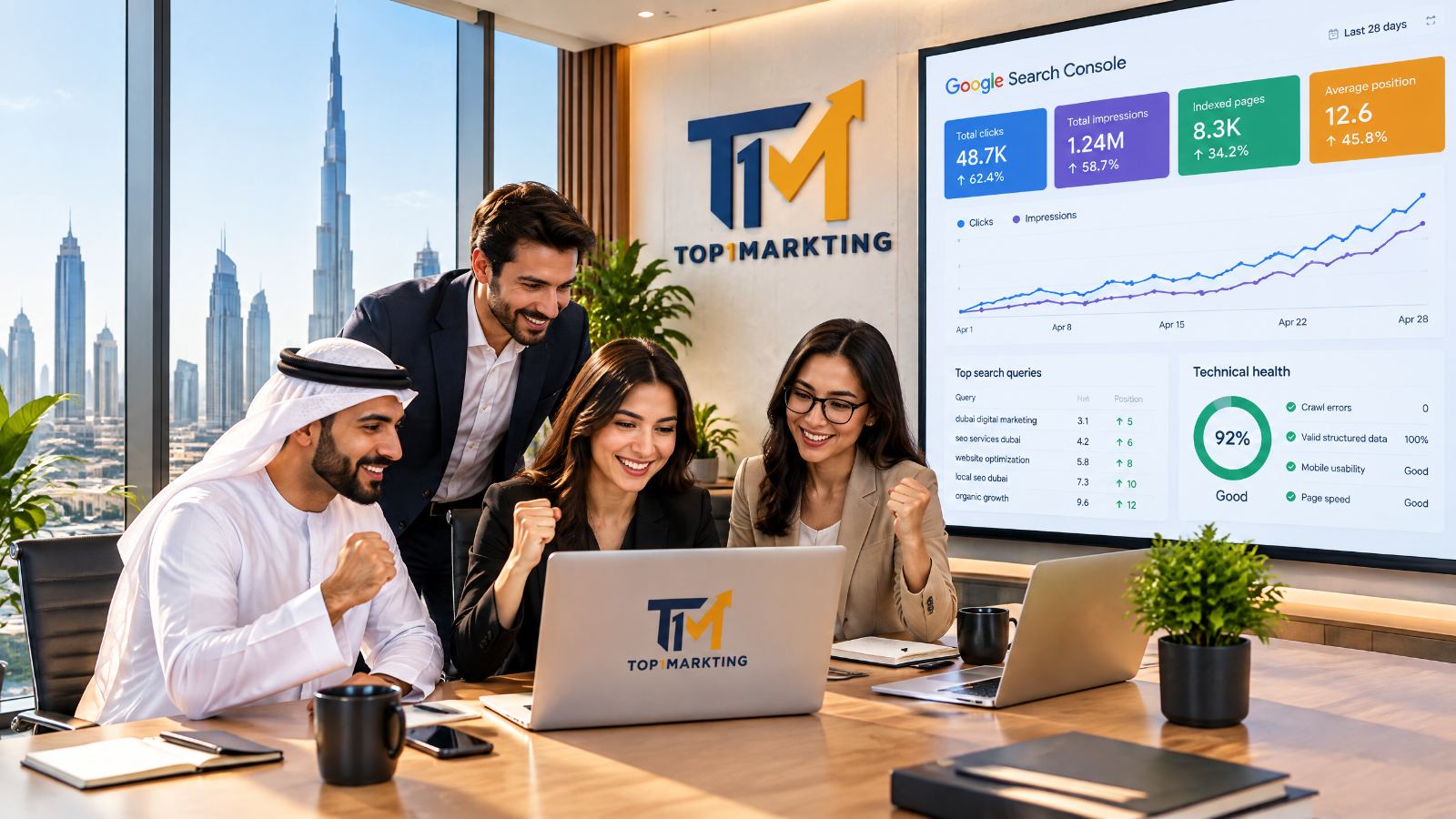
Regular reports help show what has been implemented and how website performance has changed, including impressions, clicks, organic traffic, keywords, pages, and technical issues resolved. Reports should be clear, understandable, and connected to the work completed.
Clear Scope of Work
The scope of work should be clear before the project begins, including the pages to be optimized, Technical SEO, content, internal links, analysis, and monitoring. Clear responsibilities help establish expectations and make progress easier to track.
Why Choose Top1Markting for Website SEO Services in Dubai?
Website Analysis Before Optimization
Top1Markting begins by analyzing the website, understanding its structure, pages, and services, and reviewing keywords, content, and technical elements to determine appropriate optimization priorities.
SEO Strategy Based on the Business
The SEO strategy is developed according to the nature of the website, business, and target audience. The strategy can differ between a company website, service website, e-commerce store, and custom-programmed website.
On-Page SEO
On-Page SEO includes optimizing page titles, content, headings, metadata, images, internal links, and page structure while considering search intent for each page.
Technical SEO
Technical SEO work includes reviewing crawling, indexing, Sitemap, Robots.txt, Canonical tags, links, redirects, website structure, performance, and mobile compatibility.
SEO Content
Content is developed according to keywords, search topics, and user intent, including service pages, articles, FAQs, and content related to targeted products or industries.
Local SEO
For websites targeting customers in Dubai, Local SEO elements can be implemented, including local pages, business information, geographic content, and connections with local business profiles when appropriate.
Building an Internal Linking Structure
Internal links are organized to connect related service pages, articles, products, and location pages, creating a clear navigation structure for users and search engines.
Monitoring Data and Results
Performance indicators such as impressions, clicks, organic traffic, keywords, pages, and conversions are monitored, and the data is used to review priorities and develop the SEO strategy.
Supporting Website Development and Digital Marketing
SEO can be integrated with website development, content, and digital marketing when a project requires a broader strategy covering the website, digital presence, and multiple marketing channels.
Frequently Asked Questions About Website SEO in Dubai
What Is Website SEO?
SEO is a set of practices designed to optimize a website, its content, and its structure to help it appear in search engine results for searches related to the business.
Why Does a Website Need SEO?
SEO helps improve a website's ability to appear in front of users searching for the services or products it offers while improving its content, technical structure, and target pages.
How Much Does Website SEO Cost in Dubai?
Costs vary depending on website size, number of pages, target keywords, competition, technical condition, content requirements, and the scope of optimization. There is no single price suitable for every website.
How Long Does It Take to See SEO Results?
The speed of results varies depending on competition, website condition, scope of improvements, implementation speed, content quality, and other factors. Therefore, there is no fixed timeframe for every project.
Is SEO Suitable for New Websites?
Yes. SEO can be integrated from the planning and development stages by creating a clear website structure, selecting keywords, organizing pages and content, and preparing technical elements.
Can a Custom-Programmed Website Be Optimized for SEO?
Yes. Custom-programmed websites can be optimized by reviewing their technical architecture, URLs, technical elements, content, dynamic pages, sitemaps, and other SEO factors.
Can SEO Be Done for a Company Website?
Yes. Company websites can be optimized through service pages, company pages, project pages, industry pages, location pages, contact information, and an organized internal linking structure.
Is SEO Suitable for E-commerce Stores?
Yes. SEO can be applied to product pages, categories, structured data, internal links, user experience, and overall store architecture.
Does SEO Help Local Websites in Dubai?
Local SEO can be used to improve visibility for websites targeting customers in Dubai through local pages, business information, geographic content, and local business presence.
Can a Website Be Optimized for Mobile and Search Engines at the Same Time?
Yes. Mobile experience and SEO can be improved together through responsive design, page speed optimization, easy navigation, readable content, and mobile-friendly forms and buttons.
Can an Existing Website Be Optimized Without Redesigning It?
In many cases, SEO improvements can be implemented on an existing website without a complete redesign. This depends on the technical structure, platform, programming, and how well the current website supports the project's SEO requirements.
How Are SEO Results Measured?
Performance can be measured through organic traffic, Impressions, Clicks, CTR, keywords, pages, conversions, Leads, and contact requests, with data compared across appropriate time periods.
Can SEO Be Integrated With Digital Marketing?
Yes. SEO can be combined with content, advertising, social media, website development, and analytics as part of an integrated digital marketing strategy.
Can Multiple Branches or Areas in Dubai Be Optimized?
Yes. Multiple branches or areas can be targeted when the business genuinely operates in those locations through useful local pages and accurate business information, while avoiding duplicate pages that provide no additional value.
Start Improving Your Website Visibility on Google With Top1Markting
Website SEO begins with analyzing the website, keywords, competitors, and technical condition, followed by identifying the pages and topics that need improvement according to the business and target audience in Dubai. A strategy can then be developed covering page optimization, content, technical SEO, and internal linking, with ongoing data monitoring and strategy development based on website performance.
If you want to improve your website's visibility on Google and strengthen its search presence, the Top1Markting team can analyze your website and identify SEO opportunities suited to your business and requirements.
To contact Top1Markting:
+971 50 766 2114