

Sales and Sales Representatives Management System Development Company in Jeddah | Custom Software for Tracking Customers, Visits, and Orders – Top1Markting
How can company management identify which customers have been visited, which orders each sales representative has recorded, and which visits require follow-up without reviewing multiple Excel files, conversations, and scattered reports? As sales teams expand and the number of customers and orders increases, monitoring performance and organizing data become more difficult when relying on manual records or disconnected tools.
That is why Top1Markting provides sales and sales representatives management system development in Jeddah, by developing a customized system that brings customer, sales representative, visit, and order data together on one platform. The system includes an administrative dashboard for monitoring sales activities and interfaces that allow representatives to record their activities and update customer information. Rather than relying on off-the-shelf software with fixed features, the solution begins with analyzing the company's business activities and sales cycle, then identifying the required functions, permissions, and reports before development begins.
Whether your company needs to organize customer assignments among sales representatives, monitor field visits, record orders, or review sales team performance, a customized Sales Management System can be developed to match your workflow. It can also support Sales Force Automation and customer data management through functions related to the concept of CRM.
If you are looking for a company to develop a sales management system for businesses in Jeddah, you can contact Top1Markting to discuss your business requirements, determine the appropriate system components, and request a quotation for developing a software solution that helps your management monitor customers, sales representatives, and orders from one place.
Developing a Sales Representatives Management System in Jeddah and Organizing Sales Team Tasks
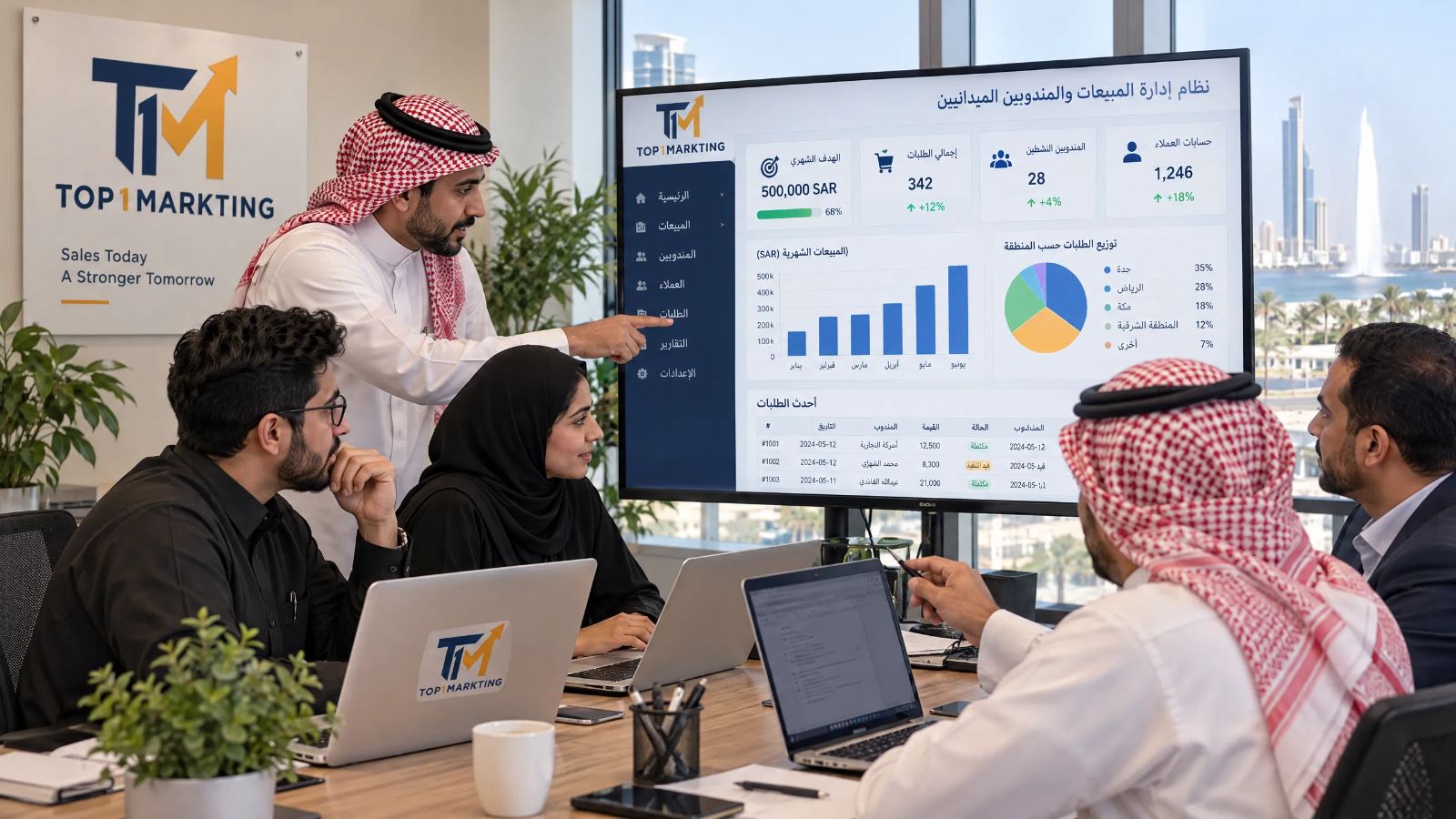
Companies that rely on sales teams need a clear way to organize representatives' responsibilities and identify the customers, tasks, and orders assigned to each user. When separate files and manual reports are used, employee responsibilities may overlap, making it difficult to review each representative's activities or identify unfinished tasks. Therefore, our sales representatives management system development service in Jeddah includes building a unified platform for managing the sales team, with individual accounts, defined permissions, and activity records for each representative.
Creating an Individual Account for Each Sales Representative in Jeddah
The system allows the company to create a dedicated account for each sales representative. Each representative can access their own interface and review the data and tasks assigned to them according to the permissions defined by company management. An account may include the representative's information, user status, assigned customers, scheduled visits, recorded orders, and an activity log that helps management review the operations performed within the system.
The representative's interface differs from the administrative interface. Representatives access the daily functions permitted to them, while management can access a broader range of data, review team activities, and manage accounts and permissions. This structure helps implement User Management within a customized system that matches the company's organizational structure.
Assigning Customers and Tasks to Sales Representatives in Jeddah
When more than one representative deals with customers, the company needs to clearly identify the person responsible for each customer to avoid overlapping follow-ups or duplicate communication. Therefore, a Customer Assignment function can be developed to allow management to assign customers to specific representatives, with the option to distribute tasks according to geographic areas, business activities, or the company's operational rules.
The system can also include options for changing the representative responsible for a customer, transferring open tasks between users, and reviewing unfinished work. This makes the sales representatives tracking program a tool for organizing responsibilities rather than simply a database displaying employee and customer names.
Monitoring the Activities and Performance of Each Sales Representative in Jeddah
Instead of relying on personal reports submitted by representatives, an activity log can be programmed to display the operations recorded through each account, such as customer visits, communications, tasks, and orders. Management can review this data over specific periods and identify the volume of recorded activity for each user according to indicators appropriate to the business.
Sales Tracking and Sales Performance functions help organize monitoring data and prepare reports that can be reviewed and compared. Sales targets can also be added if they are included in the project requirements. If your company needs an official online interface to present its services and receive customer inquiries, company website design in Jeddah can be implemented as a complementary service, while keeping the public-facing website separate from the internal sales management platform.
Developing a Sales Representatives Visit Tracking System in Jeddah and Recording Fieldwork Results
For companies that depend on field visits, sales team monitoring is not limited to knowing which customers are assigned to each representative. Management also needs to know the planned appointments, completed visits, and results of those visits. By developing a sales visit tracking system in Jeddah, each visit can be linked to the customer, representative, and scheduled date, after which notes and required follow-up actions can be recorded.
Creating a Customer Visit Schedule for Sales Representatives in Jeddah
The system can include an organized visit schedule showing the customer to be visited, the responsible representative, the appointment date, and the visit status. Management or authorized users can add visits, modify their dates, and organize priorities, while viewing daily and upcoming visits as well as visits that have been postponed or canceled.
This structure helps reduce reliance on separate spreadsheets and exchanged messages to coordinate fieldwork. It also allows representatives to review their assigned tasks through their accounts instead of searching through multiple sources.
Recording the Start and End Times of Field Visits in Jeddah
A function can be programmed to record the start and end times of a visit through the representative's account, with each record linked to the appointment, customer, and relevant user. Check-in and Check-out data helps create a chronological record of registered visits and review appointments according to the company's operating procedures.
The recording method is determined during project requirements analysis. It may involve a manual action within the application or another method suitable for the intended use, with the necessary permissions configured to prevent unauthorized changes to records.
Recording the Results of Sales Representatives' Visits in Jeddah
Monitoring a visit is not complete simply by recording its time. Management also needs to know what happened during the visit and what action should follow. Therefore, a form can be added to document the result of each visit, including notes, communication details, the proposed next action, and the next follow-up date.
The available result options can be customized according to the company's business activities, such as a customer interested in purchasing, a request for a quotation, a customer requiring follow-up, an unsuccessful contact attempt, or a postponed visit. This helps turn fieldwork data into records that can be reviewed when following up with customers or evaluating team performance.
Adding the Geographic Location of Sales Representatives' Visits in Jeddah When Needed
If the nature of the business requires visit location documentation, a function can be added to record geographic coordinates using GPS and link them to the visit record. The scope of this function and its operating method are determined according to the company's requirements, while considering permissions, user consent, and applicable privacy policies.
This does not necessarily mean continuously tracking representatives. The system can instead be designed to record the location when a specific action is performed, such as starting a visit, if that is what the project requires. When requesting system development, you can specify whether your system only needs visit records or also requires geographic location data.
Developing a Customer Management System and Assigning Customers to Sales Representatives in Jeddah
Sales management needs a centralized database that makes it easier to access customer information, review interaction history, and identify the representative responsible for each account. When data is stored in multiple files, customer records may be duplicated, and some communication or previous visit details may be lost. Therefore, a customer and sales representatives management system in Jeddah can be developed to connect customer information with employees, tasks, and orders within one database.
Creating a Unified Customer Profile in the Sales System in Jeddah
An electronic profile can be created for each customer, bringing together the basic information the company needs, such as name, contact details, organization name, area, business activity, classification, and notes. The profile can also be linked to the responsible representative and the customer's visit, order, and previous communication history.
The data fields are determined according to the nature of the business. A wholesale company may need different information from a company that provides services to businesses and institutions. The objective is to build an organized Customer Database that supports sales and follow-up procedures rather than imposing a fixed template that does not match the company's workflow.
Classifying Customers and Assigning Them to Sales Representatives in Jeddah
Functions can be added to classify customers according to geographic area, business activity, service type, or interaction stage, then assign each group to the appropriate representative. The system can support manual assignment by management or apply predefined distribution rules if required by the company.
The person responsible for a customer can also be changed when geographic assignments are modified or the sales team is reorganized, while maintaining a clear record of changes according to the required permissions. This approach helps organize Lead Management and define each representative's follow-up responsibilities.
Recording Communication, Visits, and Orders for Each Customer in Jeddah
One important function is bringing the customer's interaction history together in one place. This allows management or an authorized representative to review calls, visits, notes, and previous orders without referring to scattered conversations or files.
Each operation can be linked to its date and the user who recorded it, with the last action and next follow-up appointment displayed if one has been scheduled. This information helps the team understand the customer's current stage before contacting them again and reduces the risk of losing information when account responsibility is transferred from one representative to another.
Developing a Sales Order Registration and Tracking System in Jeddah
Recording customer orders and reviewing their progress are among the core functions that can be integrated into a sales management system, particularly for companies whose representatives receive orders during visits or direct communication. By developing a sales order tracking system in Jeddah, a unified record can be created for each order and linked to the customer, representative, and registration date, while allowing management to monitor its status through the administrative dashboard.
Creating Customer Orders Through the Sales Representative's Account in Jeddah
A form can be provided within the representative's account to record customer orders directly instead of sending order details to management through separate messages or files. The form can include customer information, requested products or services, quantities, and prices according to the company's approved data, in addition to notes and any other details required for order review.
The order is automatically linked to the representative's account, the customer, and the creation date. This makes it easier to identify the source of the order and retrieve its details later. Form fields can be customized to match the company's products, services, and order intake procedures.
Tracking Sales Order Statuses Within the System in Jeddah
A workflow can be developed for orders, with customizable statuses based on the company's procedures, such as: New, Under Review, Approved, In Progress, Completed, or Canceled. Management can update each status according to defined permissions, while representatives can view the status of orders associated with their accounts if the system settings allow it.
The Order Management function helps identify orders that require review or additional action instead of tracking each order separately. A change log can also be added to show how an order moves between stages and the notes associated with each update.
Linking Each Order to the Customer, Representative, and Interaction History in Jeddah
To ensure data is connected throughout the system, each order can be linked to the customer's profile, the representative who recorded it, and the related visit if the order resulted from that visit. This allows management to review the customer's previous orders, their details, statuses, and recorded modifications.
Management can also access the interaction history associated with the order, including notes, review information, and actions performed, according to the permissions assigned to each user.
Adding Collections and Invoices to the Sales System in Jeddah When Needed
Some companies may need to monitor collections or invoice information as part of their sales cycle. A dedicated module for these functions can be considered if they fall within the project scope. Integration with an external accounting system can also be explored when invoice or payment data needs to be exchanged.
The implementation of these functions depends on the company's requirements and the systems it already uses. Accounting, inventory management, or automatic invoice generation should not be assumed to be included in a sales management system unless these components are explicitly defined and programmed within the project scope.
Designing a Sales Management Dashboard and Monitoring Team Performance in Jeddah
Management needs a clear view of sales activities instead of reviewing separate records to identify customer numbers, visits, orders, and their statuses. Therefore, a sales management dashboard in Jeddah can be designed to collect the data recorded within the system and display it in an organized format that helps business owners and sales managers review daily activities and monitor team performance indicators.
Displaying Customer, Visit, and Order Metrics in the Sales Dashboard in Jeddah
The dashboard can display indicators such as total registered customers, the number of visits during a specified period, new orders, orders under review, and completed orders. These indicators are updated according to the data recorded within the system, with the option to select the time period management wants to review.
The order and display of indicators can also be customized according to the nature of the business, ensuring that the sales manager sees the most important information without overcrowding the interface with unnecessary elements.
Comparing Sales Representatives' Performance in Jeddah Across Time Periods
Reports can be developed to review representatives' activities and compare the data recorded by each user over a specified period. These indicators may include the number of visits, new customers, and recorded orders, in addition to sales targets if the company uses them and they have been included in the system.
Sales Analytics and Sales Reports functions help turn daily records into reviewable data. Performance evaluation should, however, rely on indicators appropriate to the representative's work rather than on the number of operations alone.
Filtering Sales Reports by Representative, Area, and Date in Jeddah
Search and filtering tools can be added to allow management to generate reports according to the representative, area, time period, or order status. For example, a manager can review the visits recorded by a specific representative during one week, display new orders in a particular area, or compare team activity over a month.
This flexibility makes it easier to access the required information without exporting all data and reviewing it manually every time. Report access permissions can also be defined so that each user can only view the data they are authorized to access.
Developing a Custom Sales System for Your Company in Jeddah with Top1Markting
Sales management methods differ from one company to another. Some businesses depend on field visits, while others focus on receiving orders, assigning customers, and monitoring sales stages. Therefore, system development begins by understanding the current workflow and identifying the problems the company wants to address. These requirements are then converted into clearly defined software functions covering representative accounts, customer management, visits, orders, and the administrative dashboard.
Top1Markting develops customized sales systems according to each project's scope, with user interfaces, permissions, reports, and required integrations defined before development begins. Other functions, such as sales targets, collections, or connections with external systems, can also be discussed when they form part of the company's requirements.
If you are looking for a company to develop a sales and sales representatives management system in Jeddah, send us details about your business, your sales team's workflow, and the functions you need. We can discuss the requirements, define the development scope, and prepare a quotation for your project.
Developing a Mobile Interface for Sales Representatives in Jeddah
Sales representatives need access to customer information, visits, and tasks while away from the company office, without having to return to the workplace or use separate files to record their activities. Therefore, a sales management system can include a mobile interface that allows representatives to perform daily tasks from their phones, update customer information, record visit results, and submit sales orders directly to the central system.
Top1Markting provides sales application development for representatives in Jeddah according to the company's requirements, through a Mobile Sales Application or a mobile-compatible user interface. This supports Sales Force Automation and connects field activities to the administrative dashboard.
Displaying Customers and Daily Visits for Representatives on Their Phones in Jeddah
An interface can be designed to display the list of customers assigned to each representative, along with the daily visit schedule, upcoming appointments, and tasks that need to be completed. Users can open a customer profile, review contact information and previous notes, and view the required visit details without switching between different tools.
Data can also be arranged by visit appointment, task status, or follow-up priority, giving representatives a clear overview of their work schedules through their phones. The information available in the interface is determined according to account permissions, ensuring that each representative can access only the customers and tasks associated with their responsibilities.
Recording Visit Results and Sales Orders Through the Mobile Interface in Jeddah
Instead of writing visit details in phone notes and transferring them to management later, short input forms can be provided to help representatives record the results directly after meeting customers. These forms can include notes, the next action, follow-up status, and the next communication date, according to the fields defined by the company.
Representatives can also be allowed to record sales orders from their phones by selecting the customer, adding the requested products or services, quantities, and required details, then submitting the order to the central system for review and status tracking. This helps reduce data entry steps and directly links each order to the representative and customer.
Receiving Follow-up Notifications and Updating Customer Statuses in Jeddah
A notification system can be added to the mobile interface to inform representatives about tasks, upcoming appointments, and orders requiring action. Notifications can also be sent when a new customer is assigned to a representative, a visit appointment is modified, or an order linked to their account is updated, according to the notification settings approved for the project.
The interface allows representatives to update customer or task statuses after completing the required action. These changes then appear in the system and become available to management according to the defined permissions. Notification types and delivery channels can be selected, whether through the system itself or mobile phone notifications, based on operational requirements.
Choosing Between a Responsive Web Interface and a Standalone Mobile Application in Jeddah
Not every company necessarily needs a standalone mobile application. A responsive web interface may be sufficient if the required functions are limited to displaying customers and visits and recording orders. In other projects, developing a standalone mobile application may be more suitable for field use and operational requirements.
The choice depends on the number of representatives, the nature of their tasks, required functions, user experience, permissions, and integration requirements with mobile device features. Therefore, Top1Markting begins by identifying how the system will be used before selecting the implementation approach, helping the company determine whether a responsive interface or a standalone application connected to the administrative dashboard is more suitable.
Preparing Sales Reports and Analyzing Sales Representatives' Performance in Jeddah
The benefits of a sales management system are not limited to recording customers, visits, and orders. They also include organizing data and converting it into reports that help management review results and compare sales team activities. By developing sales representatives performance reports in Jeddah, the indicators recorded within the system can be collected and displayed according to representative, area, or time period, supporting sales cycle monitoring and identifying tasks that require improvement.
Field Visit Reports and Their Results in Jeddah
Reports can be designed to display the number of scheduled, completed, and postponed visits during a specified period, while identifying the representative responsible for each visit and the associated customer. Management can also review visit results and subsequent actions, such as requesting a quotation, scheduling a new appointment, or recording the customer's need for additional follow-up.
These reports allow data to be filtered by representative, date, or area, helping the sales manager review field activities and compare registered visits across different periods.
Reports on New Customers and Sales Opportunities in Jeddah
The reporting dashboard can include information about customers added during a specific period, classified by area, business activity, or responsible representative. It can also display sales opportunities requiring follow-up according to the interaction stages adopted by the company within the system.
This data helps management identify the sources of registered customers and the volume of opportunities being handled by the sales team. It also allows the company to review customers whose communication process has not been completed or who require a new action.
Sales Order and Sales Reports by Representative in Jeddah
Reports can be prepared to display the number of orders recorded by each representative and their different statuses, such as new, under review, approved, or completed orders. If order financial values are included in the system scope, total order values can also be added and compared between representatives or time periods.
These reports support Sales Pipeline monitoring and help identify stages that require follow-up. Additional indicators can be defined to match the company's internal performance evaluation approach.
Exporting Sales Team Performance Reports in Jeddah
Reports can be made available within the dashboard, with options to export data in the formats required by the company, such as Excel, PDF, or CSV, depending on project requirements. Viewing and exporting permissions can also be defined so that only the sales manager or authorized users can extract reports.
Report contents, columns, and available filters are determined during requirements analysis to ensure that the displayed data is genuinely connected to the business indicators management relies on, rather than being generic tables with limited practical value.
Programming User Permissions and Protecting Sales System Data in Jeddah
Sales systems handle customer information, orders, visit records, and employee data. Therefore, companies need to organize access to this information according to each user's responsibilities. Creating a separate account for each representative is not enough; the system must also define which functions and data each user can view, add, or modify. For this reason, developing sales management system permissions in Jeddah includes configuring access levels that match the company's organizational structure, along with mechanisms for reviewing operations and organizing data protection.
Defining Permissions for Managers, Supervisors, and Sales Representatives in Jeddah
The permissions system can be designed around user roles, such as system administrator, sales supervisor, and sales representative, with the available functions defined for each role. A manager may have permission to manage accounts and review all customers, orders, and reports, while a supervisor's access may be limited to a specific team or operational area. A representative may be restricted to handling the customers, visits, and orders assigned to them.
This can be based on Role-Based Access Control, which organizes access according to job roles. Permissions for adding, editing, deleting, and reviewing records can also be controlled, while identifying which users are allowed to approve orders or change customer assignments according to the company's procedures.
Recording Operations and Changes Within the Sales System in Jeddah
To improve transparency in data handling, an Activity Log can be added to record important operations performed within the system, such as creating a new customer, modifying customer information, registering an order, or changing its status. The log can identify the user who performed each operation and when it occurred, according to the level of detail defined during development.
An administrative interface can also be provided for reviewing the change log, allowing authorized users to see what happened to customer and order records and examine modifications when needed. This helps improve internal process monitoring and identify the source of changes without relying on memory or manual reports.
Backup and Organizing Access to Customer Data in Jeddah
A backup policy can be defined according to the system's nature, data volume, and operational requirements, alongside organized management of login sessions and account access permissions. Security requirements may include password controls, verification mechanisms, session management, and restrictions on access to sensitive functions according to user roles.
Data Security, backup, and recovery procedures are defined within the project scope based on the hosting environment, data sensitivity, and company requirements. The objective is to build an organized system for managing access to customer and order information, with appropriate procedures for handling data if a technical problem occurs.
Integrating the Sales Management System with Other Business Systems in Jeddah
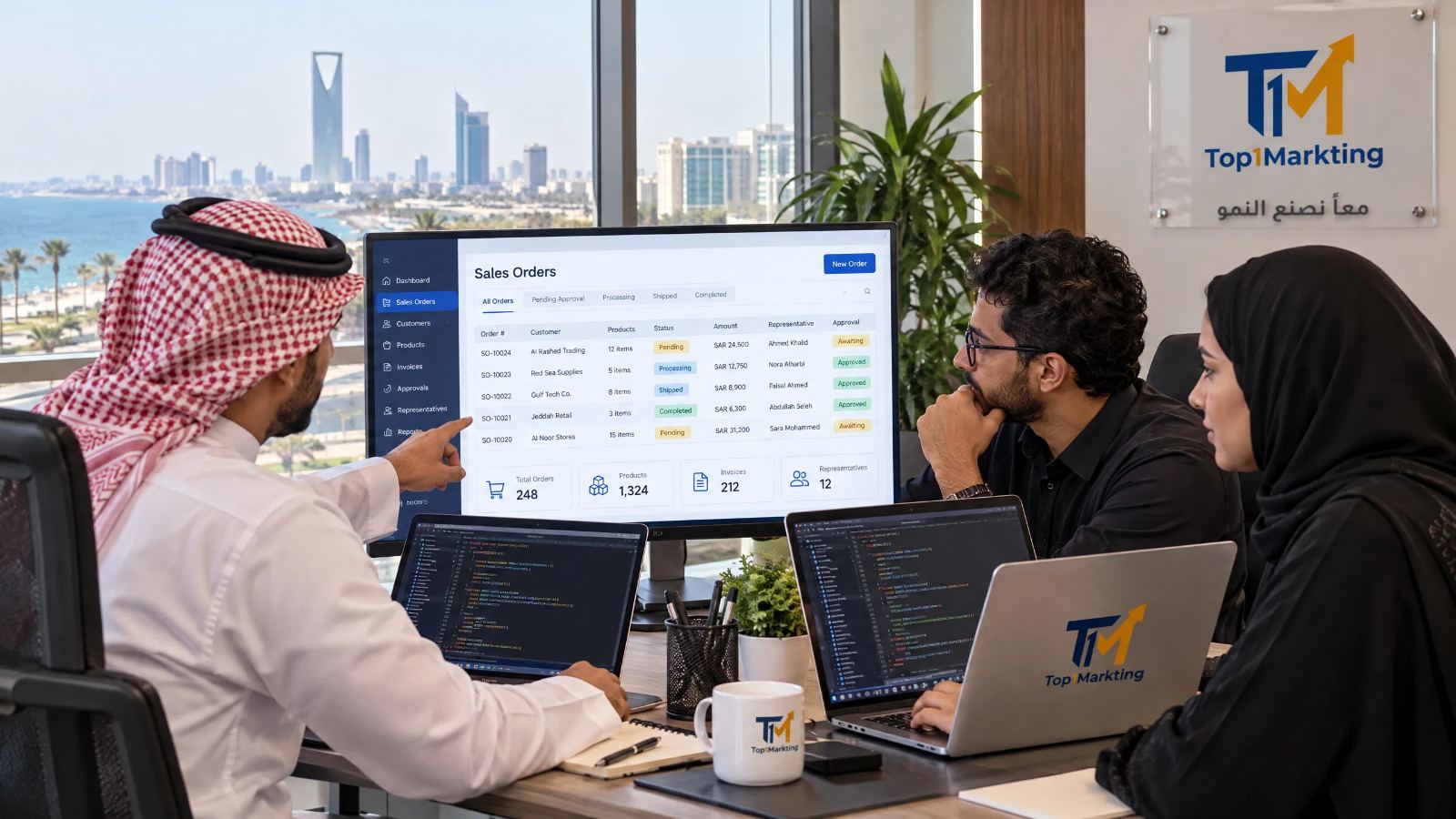
A company may already use a CRM system for customer management or accounting and inventory software. It may need to connect the new sales system to these tools to reduce duplicate data entry and unify procedures. Therefore, integration between the sales management system and external systems in Jeddah can be developed according to the available integration interfaces and the data the company needs to exchange.
Integrating the Sales System with CRM Systems in Jeddah
If the company uses a separate customer relationship management system, integration with the sales system can be considered to synchronize customer data, leads, and interaction records when needed. This begins by identifying which system will serve as the primary data source, which fields need to be exchanged, and the appropriate method for updating records without creating duplicate data.
The integration may include transferring customer data, updating contact information, or linking follow-up stages, depending on the capabilities of the CRM system in use. This step helps organize the relationship between customer management and the daily operations performed by sales representatives.
Connecting the Sales System to Inventory and Accounting in Jeddah When Needed
Some companies may need to connect sales orders recorded by representatives to an inventory system to check product availability, or to an accounting system to exchange order information, financial values, and collection data. These functions can be considered within the project scope after reviewing the systems in use and the integration interfaces they provide.
The analysis includes identifying the data to be sent and received, how it will be updated, and who is responsible for approving each operation. Not all systems can necessarily be connected in the same way; implementation depends on system compatibility, available integration interfaces, and security requirements.
Developing API Interfaces to Exchange Customer and Order Data in Jeddah
When a company needs to exchange data between its sales system and other applications, API Integration interfaces can be developed to define how information is sent and received. This begins by identifying integration points and the required data, such as customer information, orders, and their statuses, then organizing communication between the systems.
Mechanisms must also be designed to handle connection errors, data conflicts, and duplicate requests according to the nature of the integration. If your company uses an existing system and wants to connect it to a sales representatives tracking program, you can provide the system name and required functions so that integration feasibility and implementation scope can be evaluated.
Designing a Custom Sales System for Different Business Activities in Jeddah
Not all companies operate in the same way. Distribution companies need to monitor sales outlets and recurring orders, while supply companies need to organize customer requirements and quotations. Companies selling devices and equipment may depend on visits and technical proposals. Therefore, designing a custom sales system for companies in Jeddah requires identifying the actual sales cycle of each business activity, then programming the functions that support it instead of using a standard program with features that may not suit every company.
Developing a Sales System for Distribution and Food Companies in Jeddah
A sales system can be developed for distribution and food companies to assign customers and sales outlets to representatives, record field visits, and receive product orders through the representative interface. Product information and requested quantities can also be added, with each order linked to the customer and the user who recorded it.
The company may also need reports on representative activities, recurring orders, and customer follow-ups according to purchasing cycles. This helps management review sales and distribution activities. Any additional inventory or delivery functions are defined according to the project scope and are not automatically assumed to be included in the system.
Developing a Sales System for Supply and Procurement Companies in Jeddah
Supply and procurement companies need to monitor target organizations, customer orders, and requirements recorded during meetings and visits. A system can be programmed to bring together customer and target organization profiles, link each organization to the responsible representative, and record its requirements, orders, and negotiation and sales stages.
Functions for tracking quotations can also be added if they are included in the project requirements. Each quotation can be linked to the customer, order, and responsible representative, with its status and related notes recorded. In addition to the internal system, these companies may need website design for supply and procurement companies in Jeddah to present their business activities, services, supply categories, and receive inquiries from interested organizations. The website serves as a public-facing business platform, while the sales system organizes the internal operations of the company's team.
Developing a Sales System for Equipment and Machinery Companies in Jeddah
The system can be customized for equipment and machinery companies by classifying customers according to their business activities, recording the products or equipment they need, and linking them to registered quotations and orders. A record of technical or sales visits can also be added when required, documenting customer needs, notes, and subsequent actions.
Management can review orders by customer, representative, or product type, with the option to add fields for equipment and technical specifications according to the nature of the business. This customization helps make the system compatible with the company's product presentation and sales opportunity tracking procedures.
Developing a Sales System for Industrial Products and Wholesale Companies in Jeddah
Industrial product and wholesale companies need to manage commercial customer accounts, track orders and quantities, and assign customers to representatives. A customer database can be developed and linked to products and orders, with details of requested quantities and order review stages recorded.
Reports can also be designed for sales by product, customer, or representative if the required data is available within the system. This helps management review order activity and identify sales team performance across different periods according to indicators suitable for the company's commercial transactions.
Customizing a Sales Tracking System for Service Companies in Jeddah
The sales cycle for service companies differs from businesses that sell products. It may begin with registering a potential customer, then arranging a meeting or visit to understand their requirements, followed by preparing a proposal or moving to the contracting stage. Therefore, a system can be developed to track leads, meetings, visits, customer requirements, and sales opportunity stages.
Follow-up tasks, reminders for upcoming appointments, and a notes history can also be added, allowing the sales manager to review open opportunities and identify actions awaiting completion. Sales stages and data fields are designed according to the services provided by the company and the way it converts inquiries into contracts.
Stages of Analyzing and Developing a Sales and Sales Representatives Management System in Jeddah
Developing a custom sales system requires more than programming screens for adding customers and orders. The company's workflow must be understood, and the relationships between data, users, and required functions must be defined before development begins. Therefore, the stages of sales management system development in Jeddah begin with requirements analysis, followed by interface and database design, implementation of the agreed functions, testing, and finally system launch and delivery.
Analyzing the Sales Cycle and Company Requirements in Jeddah
The process begins by understanding how the company currently manages sales and how a customer moves from initial contact to a visit, quotation, or order registration. User types are also identified, such as managers, supervisors, and representatives, along with their responsibilities and the data each needs to access.
The analysis includes documenting the required functions, reports, order and visit stages, and potential integrations with other systems. This step helps define the project scope and reduce changes resulting from unclear requirements during implementation.
Designing the Management and Sales Representatives System Interfaces in Jeddah
After the requirements are defined, a user interface concept is prepared. It includes the administrative dashboard, representative interface, and customer, visit, and order forms. The design takes into account the different tasks assigned to each user, allowing the sales manager to review indicators and manage the team while representatives can easily perform their daily tasks.
Usability on phones and computers is also considered, along with menu organization, form fields, and data presentation. Permissions associated with each interface are defined before moving on to programming.
Programming the Database and Core Sales System Functions in Jeddah
This stage includes designing the database that connects customers with representatives, visits, orders, and tasks, then implementing the agreed functions. Data relationships must be organized so that the customer profile can be accessed and their interactions, orders, and related visits can be reviewed.
User accounts, permissions, the administrative dashboard, and representative interfaces are also implemented, along with reports and integrations if they are included in the project scope. The implementation sequence depends on the priorities identified during requirements analysis.
Testing the Sales System Before Launch in Jeddah
Before the system is launched, its core functions are tested to ensure they work according to the requirements. This includes testing login procedures and user permissions, adding and assigning customers, recording visits and orders, reviewing reports, and verifying data transfer between interfaces.
Operational testing can also be performed using scenarios similar to the company's actual workflow, with the aim of identifying problems and modifying functions before approving the final version.
Launching the System, Delivery, and Technical Support in Jeddah
After testing is completed, the operating environment is prepared, the system is launched, and the agreed accounts, permissions, and functions are delivered. Basic procedures can also be documented to help management and representatives use the system, while the scope of technical support, maintenance, and updates is defined according to the agreement between the company and the development provider.
Hosting, training, and post-launch support details are specified in the project proposal so that implementation and delivery responsibilities are clear before the project begins.
Cost of Developing a Sales and Sales Representatives Management System in Jeddah and Factors Affecting the Price
There is no fixed price for developing a sales and sales representatives management system because the cost depends on the number of users, required functions, usage method, integrations, and interfaces to be developed. One company may only need a dashboard and a database for customers and orders, while another may require a mobile application for representatives, visit tracking, advanced reports, and integration with external systems.
Therefore, the cost of developing a sales management system in Jeddah is determined after analyzing requirements and defining the development scope, rather than being based on the system's name alone.
Number of Users and Sales Representatives and Its Impact on System Cost in Jeddah
The number of management, supervisor, and representative accounts affects system design, permission organization, and expected usage volume. Requirements also differ depending on whether each supervisor manages a separate team or management needs to review all representative and area data through a central dashboard.
Therefore, the expected number of users, job roles, and responsibility distribution method should be identified when requesting a quotation so that the account and permissions structure can be designed to suit the company.
Required Customer, Visit, and Order Functions in the Sales System in Jeddah
As the number and variety of required functions increase, analysis, programming, and testing requirements also increase. Functions that affect the cost include the customer database, customer assignment to representatives, visit scheduling, result recording, order management, the dashboard, and reports.
The level of customization for forms, sales stages, and performance indicators also affects the implementation scope. Therefore, it is important to identify the core functions the company needs to operate first and the additional functions that can be implemented in later development phases.
Cost of Adding GPS, a Mobile Application, and Integrations in Jeddah
The cost of a responsive web interface differs from that of a standalone mobile application. Implementation requirements also change when adding geographic visit location recording, mobile notifications, or features that interact with the device's capabilities.
Integrations with CRM, ERP, inventory, and accounting systems also affect the project scope, especially when data synchronization or API development is required. The cost estimate depends on the availability of integration interfaces in the other systems and their compatibility with the new system.
How to Request an Accurate Quotation for Sales System Development in Jeddah
To receive a quotation that reflects your company's requirements, it is preferable to prepare clear information about your current workflow and the functions you need, including:
-
The number of managers, supervisors, and sales representatives expected to use the system.
-
The core functions required for managing customers, visits, and orders.
-
Whether a responsive web interface or a standalone mobile application is needed.
-
The reports and performance indicators management wants to monitor.
-
External systems that need to be connected, such as CRM, inventory, or accounting systems.
-
Technical support and maintenance requirements after launch.
If the company also needs an online sales interface through which customers can place orders, ecommerce store design in Jeddah can be considered alongside the sales system. In this scenario, the store may serve as the customer-facing sales interface, while the internal system manages representatives, customers, orders, and tasks, with the integration method defined according to the project architecture.
If you want to know the cost of developing a sales and sales representatives management system for your company, contact Top1Markting and share the number of users, required functions, and systems you currently use. We can discuss the implementation scope and prepare a quotation that suits your project requirements.
How to Choose a Sales Management System Development Company in Jeddah
Choosing a company to develop a sales management system does not depend on implementation cost alone. It is also related to how well the development provider understands the company's business activities, sales team management methods, and daily operations. A successful system must address actual requirements, such as assigning customers to representatives, recording visits, tracking orders, and providing clear reports that help management evaluate workflow progress.
When comparing software development companies in Jeddah, it is important to ensure that the proposed offer clearly defines the required functions, implementation stages, and project deliverables. This helps your company obtain a customized system that can be used and developed according to its needs.
Choosing a Company That Understands the Sales Cycle and Sales Representatives' Work in Jeddah
Before contracting with a management systems development company in Jeddah, make sure it can analyze your company's sales cycle, beginning with identifying and assigning customers to representatives, then scheduling visits and recording their results, and finally creating orders and reviewing them through management.
The software development company needs to understand the relationship between the customer, representative, visit, and order, as well as how data moves between these elements within the system. This analysis helps convert actual business procedures into clearly defined software functions instead of implementing generic screens and features that may not match the way your team operates.
Ensuring Clarity in the Development Scope and Project Deliverables in Jeddah
It is important to review the scope of work before development begins and ensure that the functions included in the agreed version are clearly defined. This includes customer, representative, visit, and order management modules, in addition to user-specific interfaces and the administrative dashboard.
The available reports, user permission levels, and required integrations with other systems, if any, should also be clarified. It is preferable to define what technical support and maintenance include after launch, as well as how modification requests or new functions will be handled, so that each party's responsibilities are clear from the beginning.
Evaluating the System's Scalability After Launch in Jeddah
The company's requirements may change as the number of representatives increases, the customer base expands, or new stages are added to the sales cycle. Therefore, it is important to choose a custom software development company that focuses on building a scalable system rather than simply implementing a set of functions that meet current needs.
Ask about the possibility of adding new modules, modifying visit and order registration procedures, and adding users with different roles and permissions. It is also useful to understand whether the system can be integrated with other applications or systems in the future, after reviewing integration requirements and available API interfaces.
Comparing Sales System Development Company Proposals in Jeddah
When comparing software development proposals, do not make price the only deciding factor. Compare the functions offered by each company and how well they match your business requirements, as well as the clarity of the design, programming, testing, and delivery stages.
Also review the system testing process before launch, how functions and the scope of work are documented, and whether the proposal defines implementation, modification, support, and maintenance responsibilities. A clear proposal helps you evaluate what you will actually receive and avoid disagreements about required features during project execution.
In addition to the internal system, the company may need to strengthen its digital presence to attract new customers and introduce its services. SEO services for improving your company's website visibility in search results in Jeddah can be used as a complementary marketing service, not as a function within the sales management system.
Sales and Sales Representatives Management System Development by Top1Markting in Jeddah
Top1Markting provides customized software development services for companies that need to organize sales operations and monitor field teams through a platform that matches their internal procedures. Developing a sales and sales representatives management system begins with understanding how the company operates, then defining the required modules, interfaces, and reports before moving to the design and programming stages.
Whether your company needs to organize customer data, monitor field visits, record sales orders, or review representative performance through a central dashboard, accurately defining requirements helps build a software solution that supports actual business needs.
Defining Sales System Requirements Before Programming Begins in Jeddah
The implementation process begins by discussing operational details with company management to define the system scope and the functions each user needs. Requirements analysis includes identifying the number of representatives and administrative users, how customers will be assigned, and how visits will be recorded and their results tracked.
The steps for receiving and reviewing sales orders are also defined, along with the reports management needs to access and the interfaces required for representatives, supervisors, and managers. If the company uses other systems, integration requirements and the possibility of exchanging data are evaluated according to the available technical capabilities.
Developing System Functions According to the Company's Workflow in Jeddah
After the requirements are defined, the system modules are designed and programmed to match the agreed workflow. Development may include modules for customer and representative management, visit organization, sales order registration and status tracking, as well as a dashboard displaying the data and indicators management needs.
User permissions are configured according to responsibilities, with an interface developed for representatives working in the field. A responsive web interface that works on mobile phones can be implemented, or a standalone application can be developed when needed, depending on usage patterns and project requirements.
Requesting a Quotation for a Sales Management System in Jeddah
If your company relies on sales representatives and needs to organize customer, visit, and order data, you can contact Top1Markting to discuss your workflow and identify the required software functions. We help transform management and representative requirements into clearly defined specifications for a customized system that suits your business activities.
Top1Markting – Custom Software Development for Businesses
Saudi Arabia contact number: +966549881368
-
Request a sales system tailored to your company.
-
Discuss your requirements for managing sales representatives and visits.
-
Request a quotation for a customer and order tracking system.
Developing a Sales Management System for Companies in North Jeddah
Companies managing customers and sales outlets in North Jeddah need to organize customer assignments among representatives and define each representative's responsibility for visits and required follow-ups. A sales management system helps create a unified database, record visit appointments and communication results, and link orders to each customer.
The system can serve companies operating in Al Shati, North Obhur, South Obhur, Al Muhammadiyah, Al Naeem, An Nahdah, Al Basateen, Al Murjan, Al Zahra, As Salamah, Al Khalidiyah, Al Asalah, Al Yaqout, Al Lulu, Ash Shiraa, Al Amwaj, As Sawari, and An Nuzhah.
Through a sales representatives tracking system in North Jeddah, management can review the customers assigned to each representative, view registered visits and tasks requiring follow-up, and prepare reports that help organize team activities according to geographic areas and business requirements.
Developing a Sales Representatives and Company Tracking System in Central Jeddah
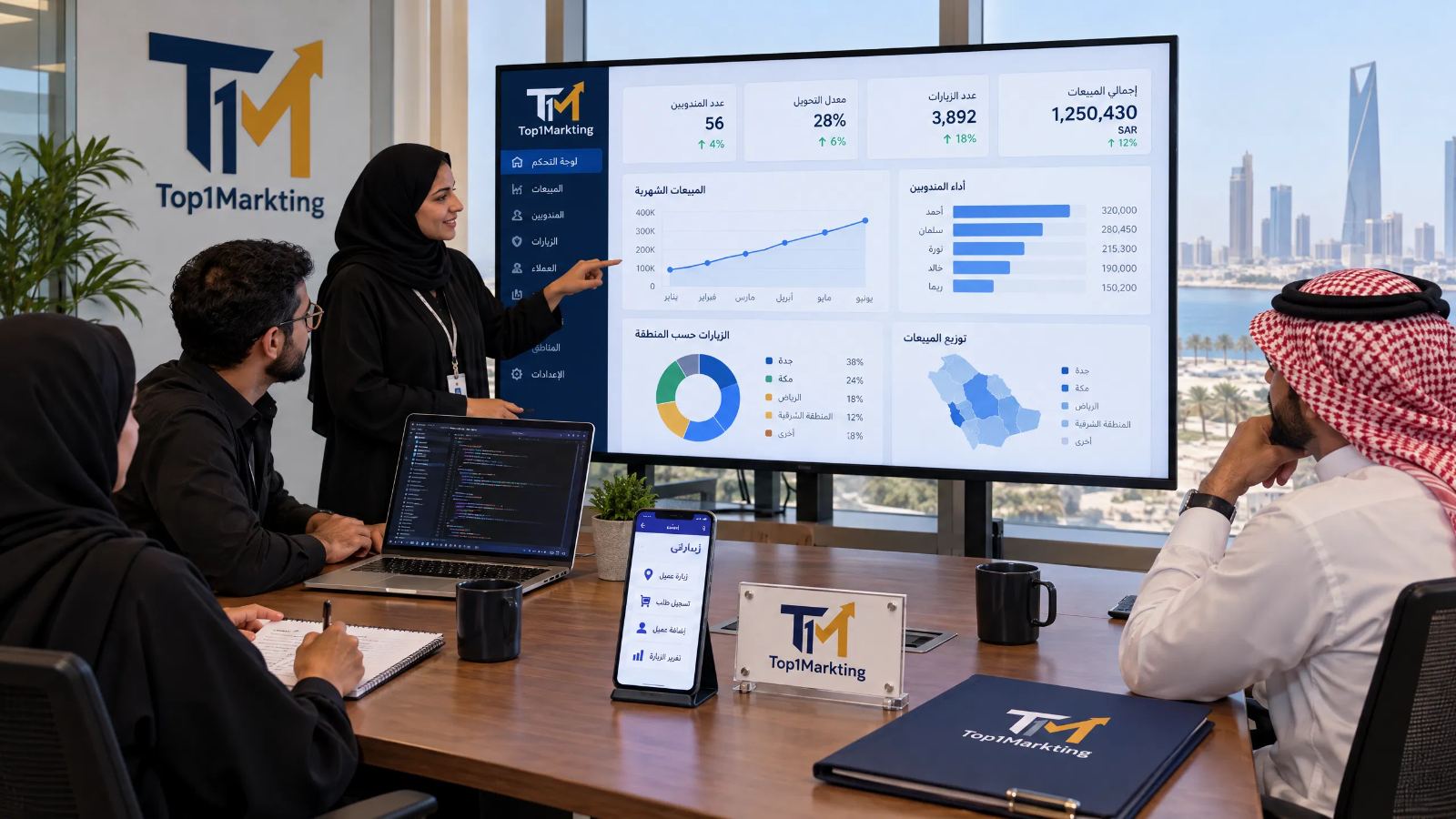
When a company deals with a large number of customers across several areas in Central Jeddah, managing customer data, communication history, and visits through separate files becomes difficult. Therefore, a system can be developed to link each customer to the responsible representative and bring communication data, visits, and orders together in one profile accessible through the dashboard.
The system can serve sales teams operating in Al Rawdah, Al Hamra, Al Andalus, Al Aziziyah, Mishrifah, Ar Rehab, Ar Ruwais, Ash Sharafiyah, Bani Malik, An Naseem, Al Wurud, Al Faisaliyah, Al Bawadi, Al Marwah, As Safa, Ar Rabwah, Al Ammariyah, East Al Baghdadiyah, West Al Baghdadiyah, Al Kandarah, and As Sahifah.
The customer management program allows the team to monitor each organization's record, identify the responsible representative, and review previous visit results and orders. Sales reports also help management evaluate team activities based on recorded data and identify customers who need new communication or additional follow-up.
Developing a Sales and Customer Visit Tracking System in East Jeddah
Companies organizing field visits in East Jeddah need a clear way to schedule visits and link them to customers and representatives instead of relying on separate spreadsheets or inconsistent reports. A system can be developed to create visit schedules, define appointments, and record each visit's results and the required subsequent action.
The potential geographic service area includes Al Hamdaniyah, Al Marwah, As Samer, Al Manar, Al Ajwad, Ar Rayyan, Al Kawthar, As Salihiyah, At Tawfiq, Al Furusiyah, Al Falah, Ar Rahmaniyah, Buraiman, East Umm Hablain, West Umm Hablain, Al Waha, Ash Shuruq, Muraykh, Quwaizah, Umm As Salam, Al Harazat, and Ar Rughama.
Through a sales management system in East Jeddah, customers can be assigned to representatives according to geographic areas or the company's defined business rules. The system can record visit statuses and notes and link them to customer profiles. Geographic location recording can also be added when needed, according to the agreed usage method, permissions, and project privacy requirements.
Implementing a Sales Management System for Companies in South Jeddah
Supply, distribution, and wholesale companies dealing with multiple customers in South Jeddah need to organize orders and link them to customers and representatives so that management can review each order's status and identify the person responsible for recording and following it up.
A sales system can be developed to serve companies operating in Al Jamiah, Ar Rawabi, Al Fayha, Ath Thaghr, An Nazlah Al Yamaniyah, An Nazlah Ash Sharqiyah, Al Qurayyat, Ath Thaalibah, Ghulail, Batarmin, Mada'in Al Fahd, Al Waziriyah, Al Mahjar, Al Khumrah, Al Fadilah, As Sanabel, Al Ajaweed, North Prince Fawaz, South Prince Fawaz, Prince Abdulmajeed, Al Fadl, Al Adl, Al Jawharah, Al Farouq, As Sarawat, Al Qurainiyah, Ad Dahiyah, and Ash Shifa.
Through a customer order registration system, representatives can create orders and link them to customer profiles, while management monitors orders according to the statuses and procedures adopted by the company. Sales reports can also be prepared by representative, customer, or time period, helping management review team activity and organize sales and distribution operations.
Frequently Asked Questions About Sales and Sales Representatives Management System Development in Jeddah
What Is the Function of a Sales and Sales Representatives Management System for Companies in Jeddah?
A sales and sales representatives management system helps organize customer data, assign customers to the sales team, schedule and record field visits, and track customer orders through one platform. It also allows management to review representative activities and access reports according to the functions defined during the company's requirements analysis.
Can a Custom Sales System Be Developed According to the Company's Business Activity in Jeddah?
Yes. A customized sales system can be developed according to the company's specific workflow, whether it operates in distribution, supply, wholesale product sales, or service provision. The appropriate modules are defined according to the business activity, such as customer, representative, visit, order, and report management, instead of relying on off-the-shelf software that may not match internal procedures.
Can Sales Representatives' Visits Be Monitored Through the System in Jeddah?
Yes. A visit schedule can be programmed to display appointments, target customers, the responsible representative, each visit's status, and its results. Geographic location recording can also be added when needed, according to the usage method, permissions, user consent, and project requirements.
Can Customers Be Assigned to Sales Representatives Within the System?
Yes. A function can be added to assign customers to representatives according to rules defined by the company, such as geographic area, customer type, or follow-up responsibility. This helps identify the representative responsible for each customer, organize communication and visits, and review interaction history.
Can a Sales Representative Record Customer Orders from Their Phone?
A mobile-compatible interface can be provided, or a standalone mobile application can be developed depending on the project scope. Through this interface, the representative can record the customer's order, requested products or services, quantities, and notes, then submit the order to management for review according to the company's approval workflow.
Can the Sales Management System Be Connected to Inventory or Accounting Software?
Integration with inventory, accounting, ERP, or CRM systems can be evaluated, provided that the systems in use are compatible and the required integration interfaces are available. The integration scope and data exchange method are defined during requirements analysis. These integrations are not automatically included in every sales system.
What Is the Difference Between a Sales Management System and a CRM Program?
A CRM system primarily focuses on managing customer relationships, customer information, interaction history, and sales opportunities. A sales management system can include additional operational functions, such as assigning customers to representatives, scheduling visits, recording orders, and monitoring team performance. CRM and sales management functions can be combined in a customized platform according to the company's requirements.
What Factors Determine the Cost of Developing a Sales Management System in Jeddah?
Development costs depend on the number of users and representatives, the volume of required functions, how customers, visits, and orders are managed, and the level of detail required for the dashboard, reports, and permissions. Requirements for a mobile interface or standalone application and integration with other systems also affect the project scope and final cost.
Can New Functions Be Added to the Sales System After It Goes Live?
The system can be developed and new functions can be added in the future, depending on its software architecture and the contractual scope. Additions may include new reports, additional permissions, collection management modules, or integration with other systems, after reviewing the technical requirements and their impact on the existing system.
How Can I Request a Sales and Sales Representatives Management System from Top1Markting in Jeddah?
You can contact Top1Markting and explain your company's business activity, the number of representatives, how customers, visits, and orders are managed, and the reports and integrations you need. After reviewing these details, the required functions and implementation scope can be defined, and a quotation can be prepared to suit your project requirements.
Top1Markting – Custom Software Development for Businesses
Contact number: +966549881368