

E-Commerce Store Development Company in Madinah | Store Programming, Feature Expansion, and Improved Shopping Experience
0549881368
Do you already own an e-commerce store, but need new features, custom programming, or improvements that make it easier to manage products and orders? Your store may be operating normally, yet it may not provide all the functionality your business requires. You may also be experiencing difficulties managing inventory, looking to improve the shopping cart and checkout process, or needing to integrate your store with payment gateways, shipping companies, or external systems.
In such cases, developing your existing e-commerce store may be the right solution instead of building an entirely new one. The difference between creating and developing a store is that creation starts with building the interfaces and essential functions, while development focuses on reviewing the existing store, understanding its technical structure, improving its capabilities, and adding the features required by the business owner.
Top1Markting provides e-commerce programming and development services, including evaluating the needs of stores in Madinah and identifying suitable modifications based on the platform in use and the nature of the business. Development work may include:
-
Developing the shopping cart and improving the checkout process.
-
Adding new product options, such as sizes, colors, and multiple attributes.
-
Improving the control panel to simplify product, order, and customer management.
-
Integrating the store with payment gateways and shipping companies through available integrations.
-
Synchronizing inventory and data with other systems when needed.
-
Developing API interfaces to connect the store with external services and systems.
-
Fixing programming errors and improving existing functionality.
-
Updating store features and expanding its capabilities to support business growth.
Requesting store development does not necessarily mean changing the platform or rebuilding the entire website. The appropriate solution depends on reviewing the existing system, how its current features operate, and the available development options. A project may only require updating specific components, adding custom features, or improving the database and technical integrations, depending on the store's condition and the owner's requirements.
Whether your store serves customers in Quba, Al Awali, Al Aziziyah, Shuran, or other neighborhoods of Madinah, you can discuss your development requirements and identify the appropriate scope of work.
Send your store URL to Top1Markting, explain the features or modifications you want to implement, and contact us at 0549881368 to receive an initial assessment of your development requirements and discuss a quotation based on the project scope.
Best E-Commerce Store Development Company in Madinah for Programming Your Store's Features
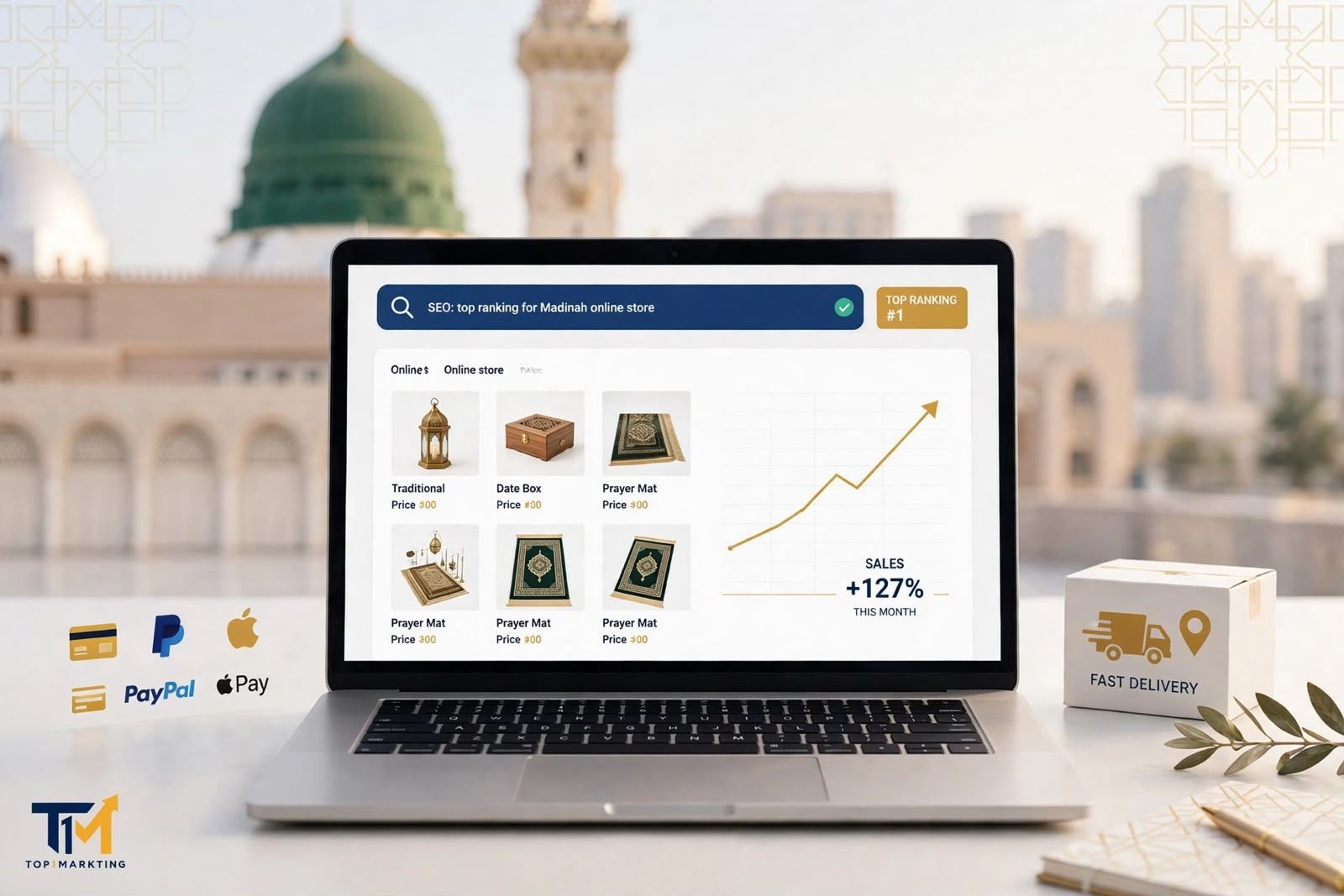
Choosing the best e-commerce store development company in Madinah is not simply about implementing programming changes quickly. It also depends on the development team's ability to understand your business, review your existing store, and identify technical solutions that address its actual requirements.
Your store may need a new feature, an improved way to manage products and orders, a solution to a cart or payment issue, or integration with an external system. Each situation has different requirements that should be evaluated before development begins.
The development process starts by reviewing the platform, technical structure, plugins, and existing features. The next step is to define the functional requirements and prioritize them. This helps avoid unnecessary additions or modifications that may conflict with other store components. A clear plan should also cover the scope of work, programming stages, functionality testing, and delivery process.
When looking for the best e-commerce programming company in Madinah, it is important to choose a provider that understands the e-commerce business, not just the programming side. Successful modifications depend on how well they support the customer experience, product management, inventory, orders, payment methods, and shipping, while allowing the store to be developed further in the future.
How to Choose a Company Specialized in E-Commerce Store Development in Madinah
Before hiring an e-commerce development company, start by identifying the problem or feature you want to improve. Then evaluate the development team's ability to understand your business requirements and review your current platform.
Consider the following criteria:
-
Understanding the nature of your business and products: The development team should understand the types of products you sell, how they are displayed, the available purchasing options, and the nature of the orders your store receives.
-
Reviewing the existing store structure: The platform, theme, plugins, database, and current functionality should be examined before recommending any modifications.
-
Clarifying requirements before programming: The requested feature, how it should work, and the data it will handle should be clearly defined rather than starting development based on a general description.
-
Identifying what can be developed: Some projects may only require modifying a specific part of the store, while others may need parts of the programming structure to be reorganized. The difference should be explained after the initial review.
-
Agreeing on testing and delivery: Make sure you understand how new features will be tested, which scenarios will be reviewed, and what will be delivered when the project is completed.
-
Considering future expansion: Discuss the possibility of adding more features or integrations later to prevent the current solution from making future development difficult.
Criteria for Comparing E-Commerce Programming Companies in Madinah
When comparing different e-commerce programming companies in Madinah, do not base your decision on price alone. A lower-cost proposal may not include all the required features, testing, or integration work.
It is better to review the technical proposal and scope of implementation and make sure the following details are clear:
-
Clarity of the technical proposal and scope of work: Does the proposal specify the features to be developed, the included modifications, and what falls outside the project scope?
-
Understanding the required integrations: Has the company reviewed how the store will connect with payment gateways, shipping companies, inventory systems, accounting software, and other external services?
-
Handling programming issues: Does the work plan include investigating the causes of errors rather than simply addressing their visible symptoms?
-
Defining implementation stages: Are there clear stages for reviewing, developing, testing, and delivering the work?
-
Support and follow-up: Does the agreement explain how feedback and post-delivery issues will be handled, including the limits of available support?
-
Previous work samples: You can review documented previous projects when available, focusing on the features implemented and how relevant they are to your requirements.
These criteria help you choose an e-commerce development specialist in Madinah who can turn your requirements into a clear implementation plan rather than relying on general promises about store development.
What Should You Review Before Hiring an E-Commerce Store Development Company?
Before starting the project, prepare the information that will help the company evaluate your store and determine the scope of work accurately.
The most important points include:
-
Store ownership and access permissions: Make sure you have the necessary administrative permissions and can provide the development team with appropriate access under suitable security controls.
-
Platform and plugins in use: Explain the name of the platform, its version if possible, and the themes and plugins used by your store.
-
Features requiring modification: Prepare a list of current issues and new features you want to add, explaining how you expect them to work.
-
External systems: Identify the payment gateways, shipping companies, inventory management systems, or other services that need to be integrated.
-
Data that must be preserved: Explain the importance of product, customer, order, and transaction records so that the appropriate data-handling approach can be considered before changes are made.
-
Security, testing, and delivery: Discuss how modifications will be tested, how data will be protected, and how functionality will be reviewed before the changes go live.
-
Hosting and database permissions: Some development tasks may require technical access to the hosting environment or database. The required access should be determined according to the project, using appropriate and secure permissions.
Top1Markting provides e-commerce development services based on each project's requirements, starting with reviewing the store and defining the scope of work, then implementing the agreed modifications and testing the features.
If you are looking for a company to program your store's features, you can send your store URL and a list of the required modifications to discuss the available solutions.
Developing an Existing E-Commerce Store in Madinah Instead of Creating a New Store
Not every store needs to start from scratch to gain better functionality or provide a smoother shopping experience. Developing an existing e-commerce store in Madinah may be the most suitable solution when the platform is already operating but needs updated features, new capabilities, or technical fixes that improve management and purchasing processes.
The development process begins by reviewing the current store, its platform, programming structure, and connected plugins. The components that require modification are then identified. The requested work may involve developing the product page, improving the shopping cart, updating the control panel, or integrating the store with an external service.
In such cases, it may be possible to develop specific components without changing the entire store, provided the existing structure allows it.
If your business does not have an e-commerce store yet, the more suitable option may be to use an e-commerce store design company in Madinah. However, if your store is already operating and needs additional features, integrations, or technical fixes, developing the existing store should be the primary focus.
When Does Your E-Commerce Store Need Programming Development?
You may notice that your store is functioning, but some processes are no longer suitable for the way you manage your business or for your customers' expectations.
In such cases, you may need to develop specific features instead of continuing to rely on temporary solutions.
The most common signs that your store needs a technical review include:
-
Recurring problems during order processing: Such as incorrect order status updates, errors when adding products to the cart, or problems confirming purchases.
-
The need for unavailable features: When your business requires additional product options, custom order fields, or operational rules that the current features do not support.
-
Difficulty managing products and inventory: Such as needing to improve the control panel, organize quantity updates, or monitor product availability more effectively.
-
The need to integrate external systems: When you want to connect the store with a payment gateway, shipping company, accounting system, or inventory management platform.
-
Slow performance or technical errors: If certain pages or features do not work as expected, it is important to review the causes before deciding how to fix them.
-
Changes in sales methods or business expansion: Your store may need new sales options, a different order management structure, or additional features that support the products and services your business has started offering.
The appearance of any one of these problems does not automatically mean that you need to change the entire platform. The decision depends on examining the current structure and determining whether it can be modified or expanded.
Developing Existing Store Features Without Completely Changing Its Identity and Design
In many projects, the store's existing identity and design are suitable for the business, while the main requirement is to improve specific functions.
Therefore, it may be possible to implement modifications to selected components while preserving the current interface, whenever technically feasible.
Developing an existing store may include:
-
Modifying product page functions and adding new information or options.
-
Developing the shopping cart or checkout process.
-
Improving the administration panel to simplify product and order management.
-
Adding inventory-related features or improving product data organization.
-
Developing the functionality of certain plugins or improving their compatibility with other store components.
-
Updating parts of the system to fix errors or improve performance.
Before implementation, the compatibility of the modifications with the current design, theme, and plugins should be reviewed. Adding a new feature may affect another function if the relationship between them is not properly evaluated.
The store should also be tested on different devices to ensure that updates do not disrupt the purchasing process or order management.
How to Identify Your Development Requirements Before Implementation
Identifying development requirements in advance helps reduce unnecessary modifications and provides a clearer picture of the project scope.
You can prepare for the initial review by following these steps:
-
Prepare a list of current issues: Write down the errors or difficulties you experience while managing the store or that customers encounter during the purchasing process.
-
Prioritize the requested features: Start with functions that affect order processing or product management, then move on to additional improvements.
-
Identify the intended users: Explain whether the feature is intended for customers, administrative employees, or the order fulfillment team.
-
Clarify the required integrations: Mention the names of external services that need to be connected, if applicable.
-
Send the store URL and available information: This helps the development team review the platform and identify any additional technical information required before preparing the technical proposal.
Top1Markting evaluates the needs of existing stores and identifies what can be developed according to the platform and technical structure in use.
Send your store URL and specify the features you want to modify so that we can review whether the current platform can be developed and determine the appropriate scope of work.
Programming New E-Commerce Features and Functions in Madinah
An e-commerce store may need features that are not available by default on its current platform, or it may require changes to certain processes to match the nature of its products and sales system.
This is where custom e-commerce feature programming becomes important, instead of relying on general-purpose plugins that may not cover all the requirements.
E-commerce feature development in Madinah may include adding custom product and order fields, developing color, size, and type options, programming different pricing rules, and adding features that allow customers to customize products before purchasing.
Operational features can also be developed to help management organize orders and monitor data according to the business's requirements.
Before implementing any feature, its functionality and the data it needs to handle must be defined. Its relationship with products, the shopping cart, orders, and the control panel should also be reviewed.
The feature must be compatible with the database and existing functions so that it works properly without creating conflicts or new errors.
Programming Custom Features According to Store Requirements
Each store has different requirements depending on its products, sales methods, and operational procedures.
Therefore, custom feature programming starts by identifying the scenario in which the feature will be used, then converting it into technical requirements that can be implemented and tested.
The programming process may include:
-
Defining the requested feature: Explaining what the feature should do, when it should appear to the user, and what result is expected.
-
Identifying the required data: Determining the information the feature needs to read or store, such as product details, purchasing options, or order information.
-
Defining user permissions: Clarifying what customers can modify and what is restricted to administrative employees or users with specific permissions.
-
Connecting the feature to store components: Reviewing its relationship with products, orders, the shopping cart, the control panel, and the database.
-
Testing the feature: Trying different usage scenarios and ensuring the correct results appear before making the feature available to customers.
Examples include adding custom product fields, creating additional order options, or developing an internal mechanism to organize order processing according to rules defined by the business owner.
Developing Product and Category Pages
A store may need to improve its product and category pages when the current information does not provide enough detail or when the business requires a more organized way to present products and specifications.
Possible modifications include:
-
Improving how product information is displayed, including descriptions, specifications, images, and important details.
-
Adding custom attributes and specifications suitable for the product type.
-
Developing sorting and filtering options when customers need easier access to products.
-
Organizing categories and product relationships to simplify section management and browsing.
-
Improving how information and product options appear on mobile devices.
-
Reviewing the connection between product and category pages, the shopping cart, and other related features.
Modifications should also consider how products are managed through the control panel. Administrators should be able to update information and options without requiring programming intervention every time, whenever the platform allows it.
Adding New Options and Features to the Shopping Experience
Some businesses require more detailed purchasing options than those available by default in their stores.
Custom programming can help evaluate these requirements and turn them into practical features that suit the products.
Examples include:
-
Size and color options: Allowing customers to select product specifications and connecting each option to the appropriate data or inventory when required.
-
Product customization: Adding options that allow customers to specify certain details or enter required information before purchasing.
-
Additional checkout fields: Collecting data or instructions that the business needs from customers.
-
Quantity and special order options: Developing mechanisms suitable for products that require different quantities or purchasing arrangements.
-
Business-specific features: Adding options for products that require specific specifications before preparation or shipping.
These features require reviewing the relationship between purchasing options, prices, inventory, and final orders to ensure that information moves correctly from the product page to the cart and then to the administration panel.
If you have an idea for a new feature or need to add functionality that is not currently available in your store, send your requirements to Top1Markting so we can review the possibility of implementing them and determine the required programming, integrations, and testing scope.
Developing the Shopping Cart and Checkout Process to Improve the Shopping Experience in Madinah
The shopping cart and checkout page influence how easily customers move from selecting a product to confirming a purchase.
Therefore, your store may need shopping cart development and checkout improvements if customers experience difficulties changing quantities, cannot clearly view the total cost, or encounter errors while entering information or selecting payment and shipping options.
The process begins by reviewing the complete purchasing journey, from adding a product to the cart to receiving the order confirmation.
The review includes how quantities are updated, how products are removed, how customer information fields are organized, how product prices and shipping costs are displayed, and how notifications and confirmation messages appear during the process.
Development is not limited to improving page appearance. It also requires ensuring that information is transferred correctly between the cart, order management system, payment services, and shipping services.
The purchasing journey should also be tested on mobile devices because the arrangement of elements, clarity of buttons, and input fields can affect the checkout experience on smaller screens.
Developing the Shopping Cart and Reducing Checkout Steps
The shopping cart should clearly display selected products and allow customers to modify their details easily before proceeding to checkout.
Its development may include:
-
Improving how products are displayed in the cart, including product names, options, quantities, and prices.
-
Making it easier to change quantities or remove products without errors in data updates.
-
Clearly displaying product values, totals, and any additional costs known at this stage.
-
Fixing problems that may appear when updating the cart or moving between purchasing pages.
-
Organizing the transition to the checkout page and removing unnecessary steps whenever the store structure allows it.
Different usage scenarios should be tested, such as adding multiple products, changing quantities, removing an item, returning to product pages, and then continuing the purchase.
This helps ensure that the cart displays updated information correctly.
Improving the Payment Page and Customer Information
The payment page and customer information form are important stages in the purchasing journey.
Therefore, the required fields, payment and shipping options, and order summary should be reviewed before customers confirm their purchases.
Development work may include:
-
Reviewing customer information fields: Identifying the information required for an order and organizing it clearly while avoiding unnecessary data collection.
-
Organizing payment options: Displaying the available payment methods according to the integrations enabled in the store and ensuring that each selection leads to the correct process.
-
Clarifying the order summary: Displaying products, quantities, prices, shipping costs, and the total before order confirmation.
-
Fixing data validation errors: Reviewing messages displayed when customers enter incomplete or incorrect information and clarifying what is required.
-
Testing order confirmation: Ensuring that order information and status are recorded correctly after the required steps are completed.
The integration between the payment page and the selected payment gateway must also be tested according to the platform's capabilities and the provider's requirements. Different scenarios should be reviewed, including successful transactions, rejected payments, and incomplete processes.
Developing the Mobile Shopping Experience
Your store needs a clear shopping experience on mobile devices because customers may browse products, add items to the cart, and complete purchases using smaller screens.
Therefore, all purchasing steps should be tested across different screen sizes rather than relying on a single device.
Possible improvements include:
-
Adjusting button and input field sizes for easier touch interaction.
-
Arranging information and interface elements clearly on smaller screens.
-
Reviewing how product images, details, and purchasing options are displayed.
-
Ensuring that customers can easily open the cart, modify quantities, and proceed to checkout.
-
Testing customer information forms and payment and shipping options on different screen sizes.
-
Reviewing notification and confirmation messages to ensure they remain clear during order processing.
The mobile experience should provide the same essential functions available in other versions of the store while considering differences in display and interaction methods.
The complete purchasing journey should be tested after modifications to ensure that existing features remain functional.
If customers experience difficulties with your shopping cart or payment page, send your store URL to Top1Markting and explain the issues you notice during the purchasing process so we can review the customer journey and discuss suitable programming solutions in Madinah.
Integrating Your E-Commerce Store in Madinah with Payment Gateways and Shipping Companies
An e-commerce store needs organized integrations with payment gateways and shipping companies to ensure that order information moves correctly between the store and service providers.
If you experience difficulties tracking payments, have to enter shipping information manually, or notice that order statuses are not updated automatically, you may need to develop your e-commerce integrations in Madinah and review how the platform communicates with the services you use.
Payment gateway integration includes reviewing the provider's requirements, implementing the technical connection through APIs and available documentation, and testing payment success and failure notifications and transaction recording.
Shipping company integration requires reviewing how order, recipient, and address information is transmitted, receiving shipment numbers and tracking details, and updating delivery statuses within the administration panel.
Integration is not simply about establishing a connection between systems. It is also necessary to verify the accuracy of exchanged data and handle rejected payments, connection failures, and unsuccessful shipment creation.
For this reason, Top1Markting starts by reviewing the platform and the services that need to be connected, then defining the programming and testing scope before activating the integration in the live environment.
Integrating the Store with Online Payment Gateways
If you want to provide online payment methods in your store, you should select a provider whose services match your business requirements and operating needs, then review the available integration method for your store platform.
Integration procedures vary depending on the payment gateway, technical documentation, terms of service, and platform requirements.
Programming payment gateway integration may include the following steps:
-
Reviewing payment provider requirements: Examining integration documentation, required information, authentication methods, and merchant account settings.
-
Implementing the technical integration: Connecting the store to the payment gateway through APIs or the integration method supported by the provider and platform.
-
Reviewing payment notifications: Ensuring that notifications for successful, failed, or incomplete transactions are received and handled according to the specified cases.
-
Testing transaction recording: Reviewing how transaction information is stored and connected to the correct order in the store.
-
Considering security requirements: Applying the connection, verification, and permission mechanisms specified by the provider and avoiding unsafe handling of sensitive payment information.
Different scenarios should be tested, including successful payments, rejected transactions, and connection interruptions during processing.
This helps prevent a failed transaction from being recorded as an order with an incorrect status.
It is also important to ensure that the payment status displayed in the administration panel reflects the actual verified transaction result.
Programming Integration with Shipping and Delivery Companies
Connecting your store with shipping companies helps organize the transfer of order information to delivery services and reduces the need to re-enter data manually.
The development scope depends on the integration interfaces provided by the shipping company and the way orders are managed in the store.
Integration with shipping and delivery companies may include:
-
Sending order information: Transferring product and other required information to create a shipment according to the shipping company's requirements.
-
Organizing recipient and address information: Ensuring that the recipient's name, contact number, address, and necessary details are sent in an accepted format.
-
Receiving shipment or tracking numbers: Saving the number provided by the shipping company and connecting it to the order in the store.
-
Updating delivery status: Receiving shipment updates and displaying the status in the administration panel. Customer-facing updates may also be available depending on the integration.
-
Handling shipment creation failures: Recording error reasons or responses from the service and allowing the order to be reviewed and retried through an appropriate process.
Cases such as incomplete address information, rejected shipment creation, or delayed integration responses should be reviewed.
The process of sending an order, receiving tracking information, and updating shipment status should be tested before relying on the integration in daily operations.
Monitoring Orders, Payment Statuses, and Shipping from the Control Panel
After integrating the store with payment gateways and shipping companies, the team needs a clear way to review each order and identify its current stage.
Therefore, the control panel can be developed to display payment and shipping information and connect it to the order record, making it easier to monitor operations and identify cases that require intervention.
Possible monitoring features include:
-
Displaying order status: Showing the current stage of an order, such as received, being prepared, or handed over to shipping, according to the store's workflow.
-
Organizing payment statuses: Showing whether a transaction is successful, rejected, pending, or requires review, based on the information provided by the payment service.
-
Tracking shipping and delivery: Displaying the shipping company, tracking number, and latest available shipment update.
-
Reviewing delayed orders: Making it easier to locate orders with incomplete payments, failed shipment creation, or missing updates.
-
Providing operational information: Organizing the data the store team needs to monitor orders and respond to customer inquiries.
Monitoring accuracy depends on integration quality, data recording methods, and how information is updated by external services.
Therefore, the transfer of statuses between the store and service providers should be tested, and procedures should be defined for delayed or incomplete data.
If you need to connect your store with a payment gateway or shipping company, send your store URL and the names of the services you use to Top1Markting, explaining the issues or required features so we can review integration possibilities and determine the appropriate implementation scope.
Developing the Store Control Panel and Managing Products, Inventory, and Orders
An e-commerce store's efficiency is not limited to the customer experience during purchasing. The administrative side also affects order processing speed, product organization, and inventory monitoring.
The existing control panel may become unsuitable as the number of products increases, sales operations expand, or the team needs additional permissions, reports, and functions.
E-commerce control panel development in Madinah focuses on reviewing existing administrative features and identifying the components that need improvement or new programming.
This may include organizing administration sections, developing product creation and editing screens, improving quantity and order monitoring, adding user permissions, or creating reports that help store owners monitor operations.
Development begins by understanding how the business currently operates and identifying repetitive tasks and problems faced by those responsible for managing the store.
The next step is to determine which features should be developed while ensuring compatibility with the database, products, orders, and integrations in use.
Developing a Custom Control Panel for Store Management
A store may need a control panel that better matches its workflow, especially when the current interface does not provide all the features administrators require.
It may be possible to develop specific parts of the administration interface or add custom screens according to the platform's capabilities and technical structure.
Control panel development may include:
-
Organizing administration sections: Arranging functions and information to simplify access to product, order, inventory, and customer management.
-
Improving access to important functions: Placing frequently used tasks in clear workflows and reducing unnecessary navigation between screens.
-
Developing data entry and update screens: Improving product creation forms, product detail editing, and order information review.
-
Organizing users and permissions: Defining what each user can view or modify according to their responsibilities within the business.
-
Considering ease of use: Designing clear administration screens that help store managers complete tasks without unnecessary complexity.
Modifications should preserve essential functionality. Permissions and usage scenarios must also be tested before making the updated control panel available to the team.
Improving Product, Inventory, and Order Management
Product, inventory, and order management require organized and connected data, especially when a store has multiple categories, product options, or sales channels.
The store may need additional administrative features to simplify information updates, quantity monitoring, and order status management.
Possible improvements include:
-
Organizing product creation and editing, including names, descriptions, prices, images, and attributes.
-
Developing category management and connecting products to the appropriate sections.
-
Monitoring available quantities and updating inventory according to the store's operating procedures.
-
Organizing order statuses and fulfillment stages.
-
Reviewing order history to simplify access to previous records.
-
Fixing inventory synchronization issues when the store is connected to an external system or multiple sales channels.
When integrations are involved, it is important to identify which system is responsible for updating inventory data.
The store may be the primary source of inventory information, or another system may manage stock quantities.
Identifying the data source and synchronization rules helps reduce discrepancies between systems.
Adding Sales Reports and Monitoring Features
Store owners may need reports that are more closely related to their daily operations than the default reports available in the administration panel.
Monitoring features can be developed to simplify the review of orders, products, and operational indicators according to the store's recorded data and connected systems.
Examples include:
-
Order reports: Displaying order quantities and statuses during a period selected by the administrator.
-
Product information: Organizing product data and reviewing quantities or categories based on available information.
-
Order status monitoring: Making it easier to identify new orders, orders being prepared, or orders requiring review.
-
Operational indicators: Displaying information that helps management monitor workflows according to the nature of the business and available data sources.
-
Organized information display: Providing filters or search methods that make it easier to access required records.
Report accuracy depends on how information is recorded, how complete it is, and whether data remains consistent between the store and connected systems.
Therefore, the required indicators and their data sources should be defined before programming the report to ensure that the results reflect actual business operations.
If you want to develop your store's administration panel or simplify product, inventory, and order monitoring, ask Top1Markting to review your current control panel and specify the administrative features you need to improve so we can evaluate the appropriate scope of work.
Connecting Your E-Commerce Store to External Systems and APIs in Madinah

Some stores need more than selling and order management functions within their platforms. They may also need to connect with the business's internal systems and external services.
For example, a company may need to transfer customer information to a CRM system, synchronize orders and inventory with an ERP system, or connect its store to an internal platform used by its employees.
This is where integrating the store with external systems and programming APIs becomes important, allowing data to be exchanged according to clear rules.
The integration process begins by identifying the systems that need to be connected, the source and destination of the data, and the functions that must operate between the systems.
The available API documentation is then reviewed, including authentication methods, permissions, and data formats. The synchronization mechanism and procedures for handling connection failures or data discrepancies are also defined.
Some businesses may require features beyond the store itself, such as developing an internal portal, an operations management system, or an integrated environment connecting multiple services.
In such cases, you can explore the services of a website programming and development company in Madinah to understand broader programming solutions that may be considered alongside store development.
Programming APIs and Integrating External Services
APIs allow data and requests to be exchanged between the store and other services according to the connection rules provided by each system.
However, implementing an integration requires reviewing technical documentation and ensuring that the required data is available and that the connection method meets the requirements of both parties.
API programming for e-commerce stores may include:
-
Reviewing API documentation: Examining available operations, connection requirements, authentication methods, and usage limits.
-
Identifying exchanged data: Determining which information the store will read or send, such as products, orders, customers, and inventory.
-
Implementing API requests: Programming data transmission and reception and validating responses according to the service interface.
-
Handling errors: Defining how to deal with connection interruptions, response timeouts, rejected requests, or incomplete data.
-
Testing the integration: Trying different operations and scenarios before relying on the connection in daily operations.
The project may require REST API or another integration mechanism provided by the external system.
The choice depends on the capabilities of the platform and the service being connected, rather than using one specific technology for every project.
Connecting the Store to Customer and Sales Management Systems
When a business uses a separate system to manage customers or monitor sales, connecting it to the store may help reduce repeated data entry and improve transaction record organization.
Integration with CRM and ERP systems may include:
-
Synchronizing customer information between the store and CRM system according to appropriate permissions and consent requirements.
-
Transferring order information to the sales or operations management system.
-
Organizing transaction records and connecting them to the relevant customer or order.
-
Reducing the need to enter the same information manually into multiple systems.
-
Considering the integration of product and inventory information with an ERP system when it is responsible for managing those records.
-
Identifying the primary system for each data type to prevent conflicts when multiple systems update the same information.
The data permitted for exchange, authorized users, and handling of simultaneous updates should be clearly defined.
Scenarios involving the creation, modification, or cancellation of records should also be tested to ensure that changes are transferred according to the agreed rules.
Developing Custom Integrations According to Business Requirements
Not all businesses use the same systems or follow the same operational procedures.
Therefore, some projects may require custom integrations connecting the store with multiple services or internal systems.
In these cases, the integration scope is defined according to the processes the business wants to organize and the expected outcome.
Custom integration development includes:
-
Identifying the systems in use: Listing the platforms and services used by the business and determining which ones need to connect to the store.
-
Reviewing integration capabilities: Examining available APIs, technical documentation, and permissions for each service.
-
Designing the data exchange mechanism: Defining the information transferred between systems, the direction of transfer, and when synchronization occurs.
-
Defining required functions: Clarifying what each system should do, such as updating orders, transferring customer data, or synchronizing inventory.
-
Documenting and testing the integration scope: Identifying included operations, success and failure scenarios, and procedures for reviewing results before activation.
Authentication, access permissions, and data protection during communication should also be considered. A process for recording operations should be defined to help investigate errors when necessary.
This helps create an integration that can be monitored and developed further as the business's requirements evolve.
If you need to connect your store with a CRM, ERP, or external service, send your store URL, system names, and required features to Top1Markting so we can review integration possibilities and determine the appropriate programming and integration scope for your business in Madinah.
Improving E-Commerce Store Speed and Technical Performance in Madinah
A slow e-commerce store or recurring programming errors may affect the customer experience and their ability to browse products and complete orders.
If your store pages take too long to load, the shopping cart responds slowly, or problems appear when opening product and category pages, you may need to improve your e-commerce store speed and technical performance in Madinah by examining the causes and addressing them directly.
The solution does not always involve simply reducing image sizes or removing plugins.
The problem may be related to the server, database, CSS and JavaScript files, page element loading methods, or the queries executed by the store.
Therefore, performance optimization requires reviewing the actual performance of pages and functions, identifying resources that delay loading, and prioritizing development work according to the impact of each issue.
Top1Markting reviews store performance and identifies the technical areas that need improvement, whether they relate to page loading speed, function responsiveness, or usage errors.
This includes testing modifications after implementation and ensuring that they do not negatively affect the shopping cart, payment process, product management, or orders.
Testing Store Speed and Identifying the Causes of Slow Performance
Identifying the cause of slow performance is the first step before choosing the appropriate technical solution.
The problem may be limited to one page, appear across all store sections, or be related to a specific function such as search or adding products to the cart.
Performance reviews may include:
-
Measuring the performance of important pages: Testing the homepage, product pages, category pages, shopping cart, and checkout page to identify which areas need improvement.
-
Identifying resources that delay loading: Reviewing files, images, and programming elements that take too long to load or delay content display.
-
Reviewing image and file sizes: Examining images and CSS and JavaScript files and considering ways to optimize loading or reduce file sizes without affecting quality or functionality.
-
Examining server requests: Reviewing server response time and the number of requests required by a page to determine whether the issue is related to hosting resources or request processing.
-
Reviewing the database when necessary: Analyzing slow queries and examining how data is retrieved if database operations contribute to the performance issue.
-
Prioritizing improvements: Ranking issues according to their impact on page speed and important functions so that the most critical problems are addressed first.
This review helps distinguish between general loading issues and problems related to specific functions, allowing the development team to select suitable solutions instead of making random changes to the store.
Improving Product and Category Page Performance
Product and category pages require special attention because they may contain multiple images, detailed information, purchasing options, and repeated elements.
When these resources are not managed properly, pages may become slow or unresponsive, especially when customers browse the store on mobile devices.
Performance improvements may include:
-
Optimizing how product images load while considering image size, dimensions, and quality.
-
Reviewing repeated programming elements loaded across multiple pages.
-
Improving page responsiveness when displaying products, options, and categories.
-
Reviewing how product lists load when the store contains a large number of items.
-
Studying how images and content are displayed according to the page type and device.
-
Testing pages on mobile devices and desktop computers to ensure suitable performance across different screen sizes.
It is also important to ensure that page loading improvements do not disrupt features such as size and color selection, price updates, or adding products to the cart.
The objective is to improve performance while preserving the functions customers need to complete their purchases.
Fixing Technical Issues That Affect Store Usability
The problem may not be limited to loading speed.
Customers may encounter errors when opening a particular page, search functionality may stop working, or a plugin may not be compatible with other store components.
These cases require a technical investigation to identify the source of the error before implementing a fix.
Possible solutions include:
-
Fixing functional errors that affect product browsing or order processing.
-
Reviewing pages that stop working or display error messages.
-
Checking plugin and theme compatibility with the platform and other functions.
-
Reviewing database connection problems when they affect information loading or saving.
-
Examining error logs when available to identify the source of the issue.
-
Testing affected functions after repairs and ensuring that no new errors appear in related store components.
The store should be tested after every significant modification, especially changes related to products, the shopping cart, payments, and orders.
A technical change in one part of the system may affect another function that depends on it. Therefore, testing should include all scenarios related to the modification.
If your store experiences slow performance or recurring errors, send your URL to Top1Markting and identify the pages or functions causing problems so we can review performance and determine the appropriate technical improvement scope.
Developing SEO-Friendly E-Commerce Stores and User Experience in Madinah
E-commerce store development is not limited to adding features and improving page speed. It can also include reviewing the technical structure that helps users find products and enables search engines to discover store pages and understand their organization.
Therefore, it is important to consider the fundamentals of developing an SEO-friendly e-commerce store in Madinah when modifying URLs, categories, product pages, and themes.
Development work may include reviewing product and category URL structures, organizing access to important pages, examining titles and meta descriptions, fixing broken links or duplicate pages when present, and studying suitable structured data for products.
Mobile compatibility should also be reviewed according to the platform's capabilities.
It is important to distinguish between the technical optimization included in a development project and ongoing SEO management.
Establishing a suitable technical structure does not necessarily replace keyword analysis, content development, page performance monitoring, and continued search visibility improvements.
Preparing the Store's Technical Structure for Search Engines
An organized technical structure helps users access store pages and understand the relationship between products and categories.
A store review may therefore include:
-
Reviewing URL structure: Examining product and category URLs and ensuring that they are organized consistently with the store's structure.
-
Ensuring access to important pages: Reviewing navigation and checking that no technical obstacles prevent users or search engines from accessing the required content.
-
Organizing pages and categories: Reviewing the hierarchy between sections and products and making navigation easier through a clear structure.
-
Handling duplicate pages: Identifying cases where multiple URLs may lead to similar content and studying the appropriate solution according to the platform.
-
Reviewing technical indexing issues: Checking problems that may prevent certain pages from being discovered or accessed when they appear in monitoring tools.
-
Reviewing structured data: Adding or reviewing product structured data when appropriate and consistent with page content and search engine requirements.
These procedures do not guarantee that store pages will appear at a specific ranking position. They are part of improving technical structure, accessibility, and content understanding, while search visibility is also affected by other factors related to content, competition, and website quality.
Improving Product and Category Pages
Product and category pages need an organized structure that combines clear information, ease of use, and search-engine-friendly content.
Development work may include:
-
Organizing page titles and meta descriptions according to the content of each page.
-
Improving content structure and presenting product information and specifications clearly.
-
Reviewing internal links between categories, products, and related pages.
-
Improving how product information is displayed, including descriptions, images, options, and important purchasing details.
-
Reviewing how content appears on mobile devices.
-
Ensuring that theme modifications do not affect page elements or accessibility.
Product and category pages are not identical across all stores.
Some businesses may need to display detailed technical specifications, while others need to highlight sizes, colors, or product uses.
Therefore, the development approach should be determined according to the nature of the products and customer requirements.
When Does Your Store Need a Separate SEO Service?
E-commerce development may include basic technical optimization, but it does not automatically cover all ongoing search engine optimization activities.
If your goal is to expand your store's search visibility, target multiple commercial keywords, improve content, and monitor performance, you may need a separate and ongoing SEO service.
Preparing the store's technical structure during development does not necessarily include all ongoing SEO activities.
Your store may subsequently need keyword analysis, content reviews, and search visibility monitoring.
You can explore the services of an SEO company in Madinah to improve website visibility on Google when you need specialized search engine optimization management.
You may need separate SEO management in the following situations:
-
When you need a keyword strategy targeting products, categories, and commercial search intent.
-
When you need to develop and optimize product and category content according to search intent.
-
When you need to monitor page performance, search visibility, and optimization opportunities.
-
When you require an ongoing SEO strategy that includes content reviews, technical improvements, and performance monitoring.
-
When expanding your targeting to new keywords, products, or markets.
In this way, programming development focuses on building features and improving the technical structure within the project scope, while SEO management focuses on analyzing search opportunities, optimizing content, and monitoring performance continuously.
Both services can work together when a store needs technical development and improved search visibility.
Developing E-Commerce Stores According to Business Types in Madinah
E-commerce development requirements vary from one business to another.
A clothing store needs organized size and color options, while a perfume store may need different bottle sizes and product collections. An electronics store needs to display technical specifications, warranties, and availability information.
Wholesale stores may require different rules for quantities, pricing, and commercial order management.
For this reason, e-commerce development solutions in Madinah do not rely on adding the same fixed set of features to every business.
Instead, they begin by studying the products, sales methods, and operational procedures, then identifying the functions that can be developed or programmed to suit the store's requirements.
Some requirements may be handled using existing platform features, while others may require custom programming or integration with an external system.
Developing a Clothing Store and Adding Size and Color Options
A clothing store needs a clear way to display product variations selected by customers before purchasing, such as size and color, while ensuring that each option is properly connected to the product and inventory when required.
Development work may include:
-
Organizing product variations so available sizes and colors are displayed clearly.
-
Adding size and color options and connecting them to the main product.
-
Considering inventory integration for each variation when supported by the platform.
-
Improving how customers select options and confirming the selected variation before adding the product to the cart.
-
Reviewing how size and color information is transferred to order details and the administration panel.
This helps reduce confusion when customers select products and makes it easier for the store team to review order details and prepare the correct items.
Developing a Perfume Store and Organizing Product Options
A perfume store may need to organize products according to bottle sizes, types, or collections, while providing a clear way to display and manage available options through the control panel.
Possible features include:
-
Organizing different bottle sizes and connecting each size to the appropriate product.
-
Adding product options or perfume collections according to the sales model.
-
Developing product display features that clarify size, type, and other important details.
-
Organizing inventory according to variations when each bottle size or option has a separate quantity.
-
Reviewing how customer selections are transferred to the cart and final order.
The appropriate features depend on how products are currently managed within the store.
Some options may already be available on the platform, while others may require modifications or custom development.
Programming an Electronics Store and Managing Specifications and Inventory
Electronics stores need to display technical specifications that may influence purchasing decisions, such as capacity, dimensions, connectivity type, or compatibility with other devices.
The store may therefore need to improve how this information is organized and make it easier for customers to search for products according to their specifications.
Development work may include:
-
Organizing technical specifications and displaying them in clear fields on product pages.
-
Adding warranty options when required by the business's policies.
-
Developing specification-based filtering to help customers find suitable products.
-
Organizing quantities and availability statuses and connecting them to inventory information.
-
Reviewing how specifications appear on mobile devices and making product comparisons easier.
The specifications that need to be managed should be identified in advance so that the data structure is suitable for the products and product pages do not become cluttered with unorganized fields.
Developing a Wholesale Store and Connecting Orders to Supply Operations
Wholesale sales may differ from individual retail sales because they can involve large quantities, prices that vary according to order size, or special procedures for preparing supplies.
Therefore, a wholesale store may need features that help organize these operations.
Possible development features include:
-
Adding options for ordering large quantities according to product requirements.
-
Setting quantity-based pricing rules when required by the business and supported by the platform.
-
Organizing supply orders and monitoring their details and preparation stages.
-
Considering integration with inventory and sales systems to exchange quantity and order information.
-
Developing a mechanism for tracking commercial orders and recording their details in the administration panel.
The implementation method varies according to the business's sales policies, pricing structure, and supply procedures.
Other business types may also need specialized development.
For example, furniture and interior design stores may require size, color, and delivery options. Food and consumer product stores may need organized packaging, quantity, and expiration-date information when applicable. Home product stores may require diverse categories and specifications, while auto parts stores may need to organize compatibility details, vehicle models, and part numbers.
If you manage a store in one of these industries in Madinah, you can send your store URL, product type, and requested features to Top1Markting so we can review your business requirements and identify the features that can be implemented according to your platform.
Developing Corporate and Business E-Commerce Stores in Madinah's Neighborhoods
The requirements of e-commerce stores operated by companies and institutions may differ from those of small stores, depending on product volume, number of users, and methods of managing orders and inventory.
Therefore, an existing store can be developed or new features can be added for businesses in different neighborhoods of Madinah, with the technical solution determined according to the business and platform.
A commercial business in Quba or Qurban may need to improve product and order management, while a business in Al Awali, Shuran, or Al Aziziyah may focus on integrating its store with payment and shipping services or improving the administration panel.
Other businesses in Al Areed, Al Difa, Al Iskan, Al Jumuah, Bani Dhafar, Al Rayah, Al Hijrah, Al Jurf, Sayyid Al Shuhada, Al Khalidiyah, King Fahd, Al Harrah Al Sharqiyah, Al Harrah Al Gharbiyah, or Wadi Mudhainib may also need features suited to their sales and operational requirements.
The scope of service does not depend on the business's location alone. It is determined by the store type, existing issues, required features, and technical capabilities of the platform.
Some companies may need an e-commerce store for online sales alongside a corporate website that presents the business, its services, contact information, and other details.
Businesses that require this additional service can explore corporate website design services in Madinah to define the role of each platform according to their objectives.
An e-commerce store focuses on displaying products, processing purchases, and managing orders, while a corporate website focuses on presenting the company, its services, and business information.
A company may need both platforms if its objectives involve online sales as well as introducing customers to its services and business activities.
The store development process begins by reviewing the business requirements, whether the company operates in Quba, Al Awali, Al Aziziyah, Shuran, or another neighborhood in Madinah.
The next step is identifying the functions that need to be modified or added.
These may include developing product and inventory management, organizing orders, integrating payment and shipping services, improving employee permissions, or connecting the store with the company's internal systems.
If your company or institution in Madinah needs to develop an existing e-commerce store, send your store URL and specify the business type and features you want to improve.
This information helps review the platform, identify technical requirements, and determine the appropriate implementation scope without assuming that you need a new store or a complete system replacement.
E-Commerce Store Development Prices and Costs in Madinah
E-commerce store development prices in Madinah vary according to the condition of the existing store, the nature of the modifications, and the required programming features.
A project may involve a simple interface modification or adding an option to a product page, while another store may need custom feature programming, control panel development, or integrations with payment, shipping, customer management, and inventory systems.
Therefore, there is no fixed cost suitable for every store. The cost of e-commerce store development in Madinah is determined after reviewing the platform and defining the actual scope of work.
Development pricing is also affected by the number of required modifications, feature complexity, database and security requirements, the number of external integrations, and the testing required before delivery.
Reviewing the store first helps identify the necessary tasks and prepare a technical and financial proposal explaining the programming cost, project stages, included work, and follow-up arrangements.
What Factors Determine E-Commerce Development Prices in Madinah?
The cost of developing an e-commerce store is affected by several technical and implementation factors, including:
-
Size of the required modifications: Modifying an interface element differs from reorganizing multiple pages or developing several components of the user experience.
-
Number of new features: As the number of requested features increases, the programming and testing scope also increases.
-
Nature of the existing platform: The platform, its programming capabilities, plugin condition, and database structure affect the development method and workload.
-
Programming complexity: Adding a simple field or option differs from building a custom system for order management, pricing, or user permissions.
-
Number of external integrations: Connecting the store with payment gateways, shipping companies, CRM, or ERP systems affects development costs according to each integration's requirements.
-
Testing and delivery requirements: The project needs to include testing new features, verifying data integrity, reviewing the shopping experience, and defining the work to be delivered under the agreement.
These factors help determine the development scope more clearly before approving the cost and starting implementation.
Cost of Adding New Features and Integrating Systems with the Store
The cost of programming new store features varies according to the nature of each feature and how closely it is connected to other system components.
Adding a new form field or a simple product option may be less complex than programming a complete system involving databases, permissions, and multiple operational procedures.
Integrating the store with external systems requires reviewing data exchange methods and the requirements of each service.
Examples include:
-
Online payment gateways: Connecting the store to a payment service, monitoring transaction statuses, and handling successful or failed payment notifications.
-
Shipping companies: Exchanging order and address information, creating shipments, receiving tracking numbers, and updating delivery statuses according to integration capabilities.
-
CRM systems: Connecting customer, inquiry, and order information with a customer relationship management platform according to the required fields and synchronization method.
-
ERP systems: Exchanging inventory, product, order, and invoice information according to the external system's structure and available integration permissions.
-
Store control panel: Development may require adding screens for managing new features, modifying user permissions, or providing additional reports and information.
The cost of improving the shopping experience also depends on the extent of changes required in the shopping cart, payment page, and checkout process, as well as whether the interfaces or related programming logic need to be modified.
How to Get a Suitable Quotation for Developing Your Store
To receive an e-commerce development quotation that reflects your project's requirements, prepare information that helps evaluate the store and identify the required work.
This may include:
-
Sending your store URL so its current condition can be reviewed.
-
Identifying the platform in use, whether it is a ready-made platform or a custom-developed system.
-
Listing the features you want to add or modify and explaining how they should work.
-
Identifying external systems that need to be connected, such as payment, shipping, CRM, or ERP services.
-
Explaining current technical problems, such as order errors, slow pages, or difficulties managing products.
-
Mentioning any requirements related to inventory, customers, permissions, or reports.
After reviewing this information, the development scope, programming features, integrations, and testing requirements can be identified.
A technical and financial proposal can then be prepared, explaining the development cost and expected implementation period according to project size and complexity, along with the included delivery and follow-up services.
Send your store requirements to 0549881368 to request a quotation based on the required development scope in Madinah.
E-Commerce Store Development Offers and Discounts in Madinah – Ask About Available Offers
If you are looking for e-commerce store development offers in Madinah or want to know whether discounts are available on store programming services, you can contact Top1Markting and ask about current offers.
The financial proposal varies according to the store's condition, the features to be developed, and the integrations required by the project.
Therefore, it is best to review the requirements before determining the appropriate quotation.
Whether you need to develop an existing store, add new features, modify the control panel, or connect the store with payment, shipping, and administrative systems, defining the development scope helps clarify the required work and expected cost.
To receive a suitable proposal, send your store URL and specify the modifications you want to implement, including the platform in use and any external systems that need to be connected.
The implementation, testing, and delivery details can then be discussed and defined within the project scope before work begins.
Ask About Available E-Commerce Programming and Development Offers
You can contact us to inquire about:
-
Existing e-commerce store development offers in Madinah.
-
Available offers for programming additional features and functions.
-
The cost of developing the control panel and managing products and orders.
-
Pricing for connecting the store with payment gateways and shipping companies.
-
The cost of integrating the store with CRM and ERP systems.
-
Offers for improving the shopping experience and fixing technical issues.
Asking about available offers does not mean that a fixed discount or percentage reduction is guaranteed. Any available offer and its terms will be clarified when you contact the company.
Call 0549881368 now to ask about available offers and request a quotation for developing your e-commerce store in Madinah.
Why Choose Top1Markting to Develop Your E-Commerce Store in Madinah?
Developing an existing e-commerce store requires understanding how it operates, the problems affecting its administration and customers, and the modifications needed to meet the business's requirements.
For this reason, Top1Markting's e-commerce development process focuses on evaluating requirements before recommending programming solutions, reviewing existing features, and defining the implementation, integration, and testing scope.
Instead of adding unrelated modifications, development begins by identifying the features that need improvement, studying the appropriate technical solution for the platform, and clarifying the agreed work before implementation.
This allows store owners to understand what will be developed, how new features will be tested, and what will be included in the delivery.
A Specialized Team for Developing Custom Store Features
The development process begins by understanding the store's programming requirements and the nature of the business using it.
The existing features are then reviewed to identify the functions that need to be added or modified.
This stage includes:
-
Understanding how products, orders, and customers are managed within the store.
-
Reviewing existing features and identifying current problems or limitations.
-
Defining the features to be added, such as product options, pricing mechanisms, or user permissions.
-
Discussing the appropriate technical solution according to the current platform's capabilities.
-
Determining whether the requirements need a programming modification, custom development, or an external integration.
This assessment helps select an implementation method that suits the store's actual needs instead of assuming that every store requires the same programming solution.
Programming Solutions That Suit Stores and Businesses
E-commerce stores have different requirements depending on their products, sales methods, and daily operations.
One store may need improved product management features, while another may require better order processing or external system integrations.
Depending on project requirements, development may include:
-
Programming custom features that suit product presentation and sales methods.
-
Fixing technical issues that affect store usability or operations.
-
Connecting the store with payment gateways, shipping companies, and administrative systems.
-
Developing the control panel to simplify product, inventory, and order management.
-
Improving the shopping experience by reviewing the cart and checkout process.
-
Considering the business type, customer requirements, and store operating methods.
Suitable features are determined after reviewing the store so that modifications address actual business needs rather than adding unnecessary functionality.
Clear Work Stages and Development Scope Before Contracting
Agreeing on project details before programming begins helps reduce uncertainty and clarify implementation and delivery responsibilities.
The following elements should therefore be clearly defined:
-
Features and functions included in the development project.
-
Required modifications to interfaces or the control panel.
-
External integrations to be implemented.
-
Programming, testing, and review stages.
-
Work, files, or modifications to be delivered.
-
Follow-up and post-delivery support procedures according to the agreement.
This allows store owners to review the scope, cost, and expected timeline before signing a contract and discuss any additional requirements that may require changes to the proposal.
E-Commerce Store Development Stages with Top1Markting in Madinah
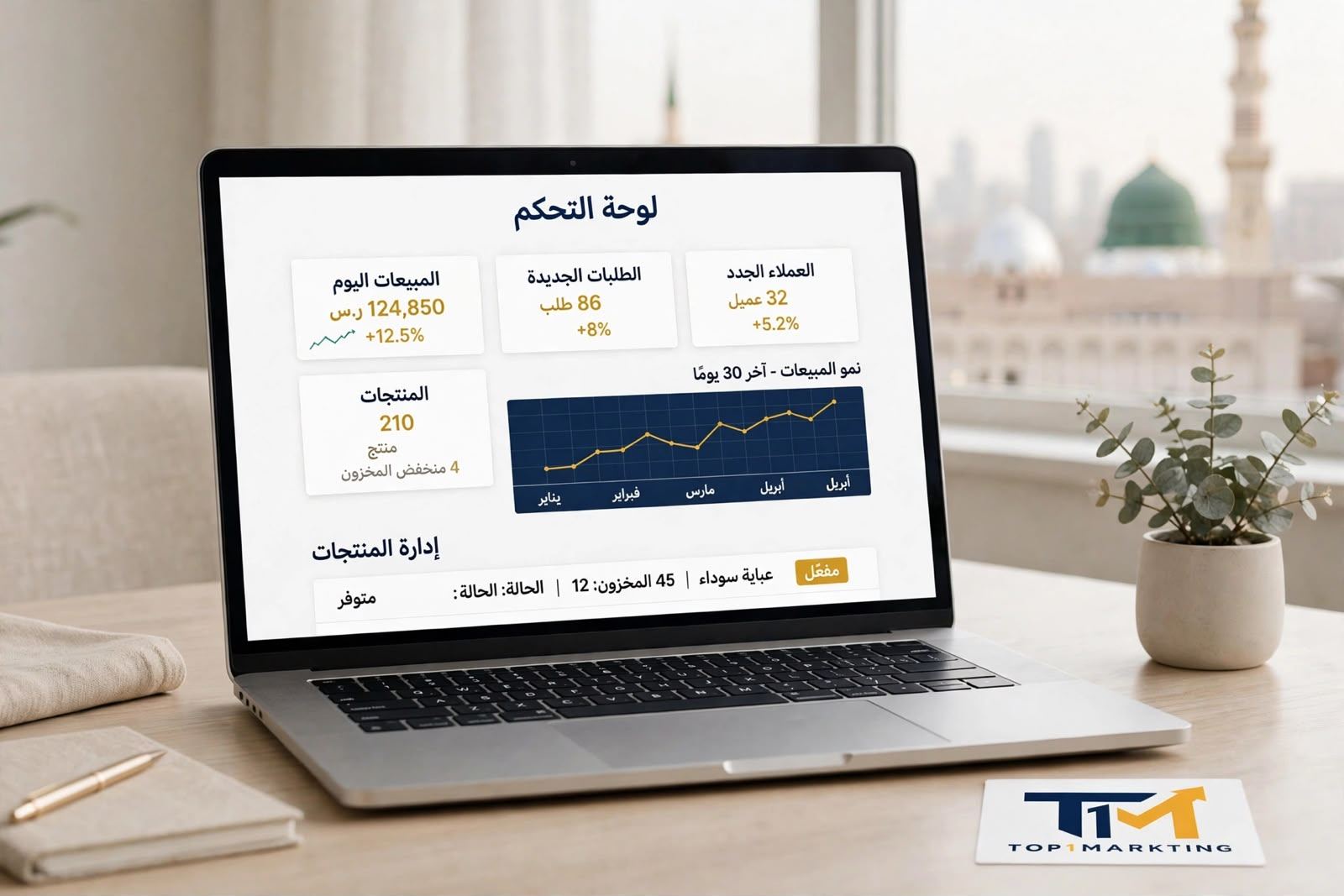
E-commerce store development involves several stages, starting with understanding the customer's request and reviewing the existing store, followed by identifying the required features, implementing them, testing them, and completing delivery.
Following clear steps helps organize the project and ensures that programming modifications address the actual needs of the business.
The development process with Top1Markting includes receiving the store URL, reviewing the platform and existing features, identifying problems and new requirements, and then agreeing on the scope, cost, and timeline according to the project specifications.
Programming, integrations, and testing then begin, followed by reviewing and delivering the completed work according to the agreement.
Inspecting the Store and Identifying Development Requirements
The first stage involves reviewing the e-commerce store to understand its current structure and how essential functions operate, then identifying the components that require development.
This step includes:
-
Reviewing the platform in use: Identifying the store system, its capabilities, and related technical limitations.
-
Examining existing features: Reviewing product, order, and customer management, the shopping cart, payments, and the control panel.
-
Identifying problems: Detecting errors or difficulties that affect the shopping experience or store management.
-
Defining required features: Listing new functions, modifications, and integrations needed by the business.
-
Prioritizing requirements: Identifying essential tasks that should be implemented first and additional features that may be included in later stages when needed.
The possible technical solutions are then discussed, and the scope, cost, and expected timeline are determined according to the size and complexity of the development requirements.
Implementing Programming, Integrations, and Testing
After agreeing on the project scope, the development team begins implementing the specified modifications and programming features.
This may include developing store interfaces, the control panel, or the operating logic of specific features according to the agreed requirements.
Potential tasks include:
-
Programming new features and modifying existing functions.
-
Developing user interfaces or control panel screens when necessary.
-
Integrating the store with the agreed payment gateways, shipping companies, and external systems.
-
Reviewing data exchange between the store and connected systems.
-
Testing new features against expected usage scenarios.
-
Testing purchasing steps, orders, and integration-related updates.
-
Fixing issues and errors included within the agreed scope of work.
Testing is not limited to confirming that a new feature appears on the screen. It also includes reviewing how it works and how it affects other store components to prevent modifications from disrupting essential functions.
Delivering the Development Work and Following Up on Feedback
After programming and testing are completed, the implemented features and modifications are reviewed to ensure that they match the project scope.
The delivery stage includes:
-
Reviewing the final features and agreed modifications.
-
Confirming that external integrations work according to the specified test scenarios.
-
Reviewing the user experience and store management functions.
-
Delivering the work, files, or modifications included in the agreement.
-
Explaining how to use new features when necessary.
-
Defining the feedback and post-delivery support process according to the contract.
These steps help store owners understand what has been implemented and how to use the new features, while clarifying which tasks are included in the project and which may require a separate request.
Request E-Commerce Store Development in Madinah from Top1Markting
If your e-commerce store needs new features, technical fixes, control panel improvements, or a better shopping experience, you can contact Top1Markting to discuss your requirements and identify suitable programming solutions.
Whether you manage a store in Quba, Al Awali, Al Aziziyah, Shuran, or any other area of Madinah, you can send your project details for an initial review and to determine the appropriate development scope.
To help evaluate your store and prepare a clear quotation, it is best to prepare the following information before contacting us:
-
E-commerce store URL: So the store can be reviewed and its current features examined.
-
Platform in use: Mention the platform or programming system if known.
-
Features requiring development: Such as product options, order management, the control panel, or purchasing features.
-
External systems: Identify payment and shipping services or CRM and ERP systems you want to integrate.
-
Current technical problems: Explain the errors or difficulties you experience when managing the store or when customers use it.
-
Store management requirements: Mention your needs related to products, inventory, orders, customers, permissions, and reports.
Top1Markting Contact Information
Company: Top1Markting
Phone and WhatsApp: 0549881368
Official Website: https://www.top1markting.com
You can send your store URL and explain the features you want to add or modify so that we can discuss the requirements, identify the necessary development, integrations, and testing, and then provide a quotation based on the project details.
Call 0549881368 now to discuss developing your e-commerce store in Madinah.
Send your store URL, specify the features you need to develop, and request a quotation for programming new functions and integrating external systems.
Contact Top1Markting to begin reviewing your store's requirements and identifying the appropriate steps for development.